


If social media disappeared tomorrow, would your business survive? It’s a sobering question that most entrepreneurs avoid thinking about until algorithm changes tank their organic reach or their favorite platform changes its rules overnight. The harsh reality is that building your business on rented digital land puts your livelihood at the mercy of tech billionaires and their quarterly profit goals.
Smart business owners know there’s a better way: building an email list you actually own. With email marketing delivering an average ROI of $42 for every $1 spent, your email list isn’t just a backup plan, it’s your most valuable marketing asset. Whether you’re starting from zero subscribers or looking to supercharge your existing list growth, this guide will show you the 10 proven strategies that turn website visitors into engaged subscribers and subscribers into loyal customers.
Why Building an Email List Should Be Your #1 Priority
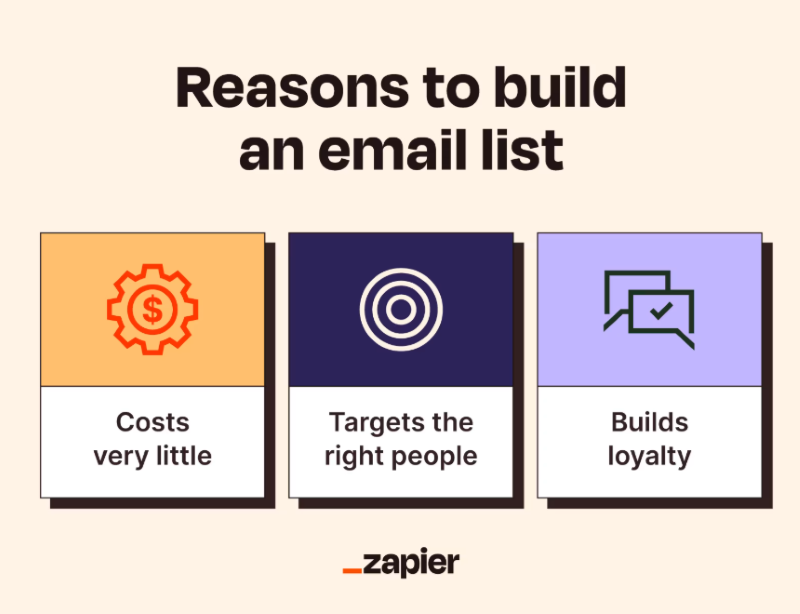
Before diving into tactics, you need to understand why email marketing consistently outperforms every other digital channel. The key benefits that matter to entrepreneurs:
- Return on investment (ROI). An email list may seem simple enough, but email marketing ROI is substantial, coming in at $42 or every $1 spent. This blows other forms of marketing like social media marketing out of the water.
- Platform independence. When you generate an email list, you essentially own the list of email addresses, and they are yours to do with what you will. Provided that you create an opt-in form and your audience knows their email addresses are being used, your email list is yours.
- Direct access without algorithms. When your audience members sign up for your email list, you have direct access to those lead magnets without relying on an algorithm. This can be particularly valuable in today’s marketing landscape, when your target audience can be obscured behind an algorithm mishap.
- Higher conversion rates than social media. Although much attention is given to social media marketing tools and social media lead generation, email campaigns remain extremely valuable because they boast higher conversion rates than social media. Conversion rates can be the difference between monetary struggle and success, so this is not a statistic to ignore or take lightly.
10 Proven Strategies to Build Your Email List
Your email list should be filled with email addresses that sign up willingly and continue to visit your product or landing pages. To ensure email marketing success, you must first build a strong email list, whether derived from social media channels, your site, or another place altogether. First…
1. Choose the Right Email Marketing Platform
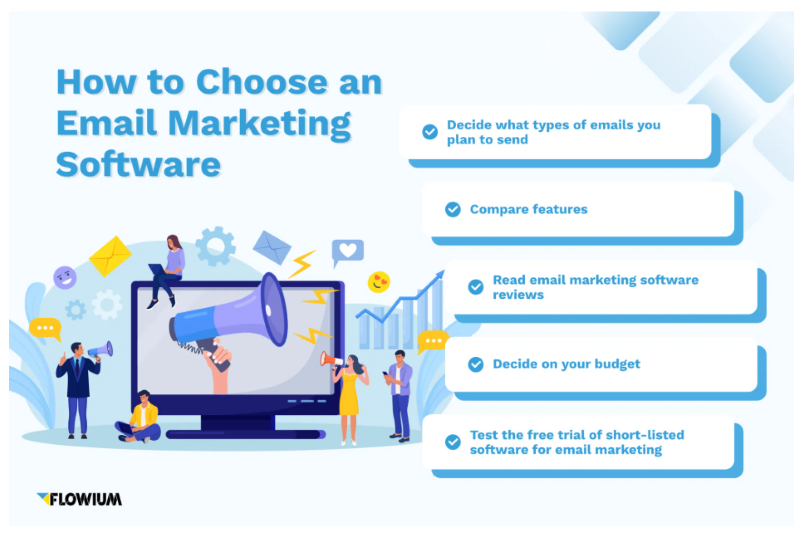
Email marketing platforms are the framework of your email campaigns, so choosing the right one for you is essential. As you peruse different options, consider important features, including:
- Email automation.
- Signup forms.
- An email signature.
- Referral programs.
- A/B testing.
Even if you do not immediately utilize all of these features, they can help create smooth campaigns and ultimately improve your ability to carry out a successful marketing venture.
Budget should also be considered; if you are spending more monthly on your email marketing platform than you are bringing in, that is a problem. Determine how much money you can put toward email campaigns, and stick to that budget.
For small businesses, Mailchimp and Kit, which I use, are often the go-to. It is easily recognizable and offers basic templates with which to work. Other platforms like HubSpot can be great for small businesses, too, as they combine email platforms with general business management software.
2. Create Irresistible Lead Magnets Your Audience Actually Wants
Lead magnets are a necessary part of building your email list, and are a great way to provide a double opt-in, to ensure your campaign is complying with all regulations. Some common lead magnets that really work include contests or giveaways, checklists, eBooks, and discounts. Each of these also provide an organic means of sending out welcome emails and teaching your audience about your business or brand.
The right lead magnet for your audience will depend on your subscriber base and the product or services you offer. An extremely small business, for instance, may not be able to withstand a significant discount, but a giveaway can help promote your products. Determine which lead magnet will support your business without detracting from your objectives or interfering with income.
A business offering tips for writing effective blog posts, for instance, might offer a free five-minute consultation in exchange for joining an email list. A clothing company might offer a 10% discount on a first purchase. These lead magnets are tailored to match a specific audience and product.
3. Optimize Your Website’s Signup Forms
Your email list sign ups should be clearly identifiable and are best when they show up early on in the process of visiting your landing page or a product page. These sign up forms can be delivered in a pop up upon first visiting your site, or can be delivered only after an audience member has expressed interest in a resource or offer.
To optimize your form, focus on transparency and speed. A simple first name, opt-in form, and email address is more than enough! Ensure that the lead magnet comes along with a clear call to action, and your opt-in form is ready and optimized to retain customer interest.
Remember that your signup forms should match your design aesthetic and tone. A casual, laid-back brand will seem to be at odds with a highly formal signup form. A more authoritative business should similarly not use casual language or a trendy design. Match the design of your brand, landing pages, and opt-in forms to ensure cohesion.
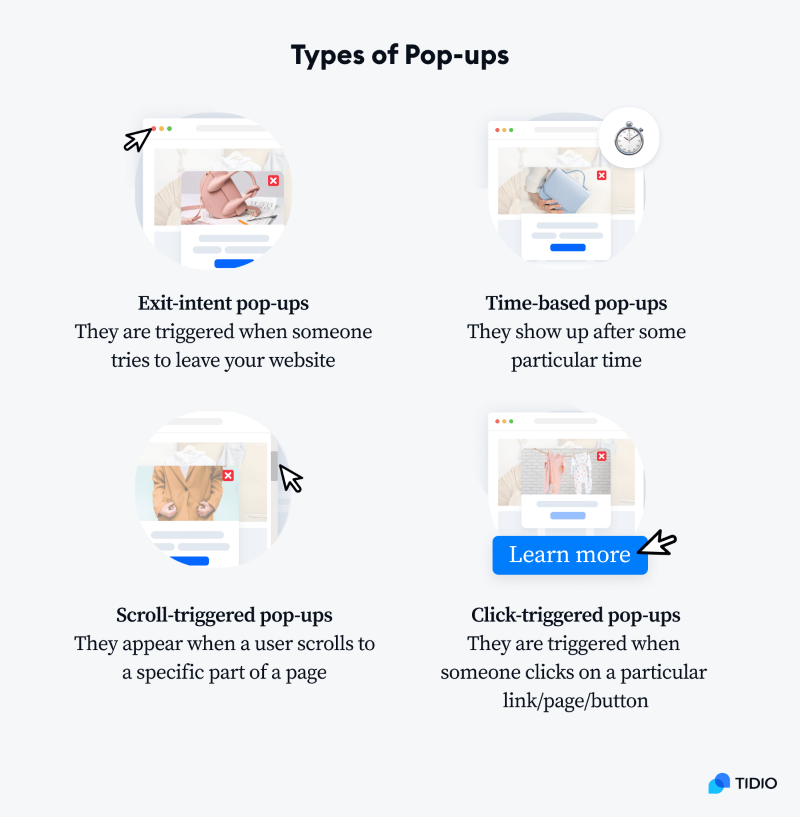
Pop ups can be an excellent way to deliver email signup forms, but they can also be bothersome for visitors. To make sure that any pop-up forms deliver information or CTAs without frustrating visitors to your site, consider the timing, trigger, and design elements at play.
Perhaps no pop-up form is quite as popular as the one that triggers immediately upon visiting a site. These can be useful, as they immediately grab your audience’s attention. They can also distract from the initial goal of your visitor. Save immediate pop-up forms for those who have already expressed interest in a newsletter sign up form or other means of being contacted.
Triggers for pop ups can include using a specific QR code, expressing interest in a product or service, or even landing on a specific page on your site.
Ultimately, your goal is to provide value without using list-building tactics that frustrate or irritate your audience.
Further Reading: 15 Best Free Email Marketing Services to Check Out
5. Build High-Converting Landing Pages
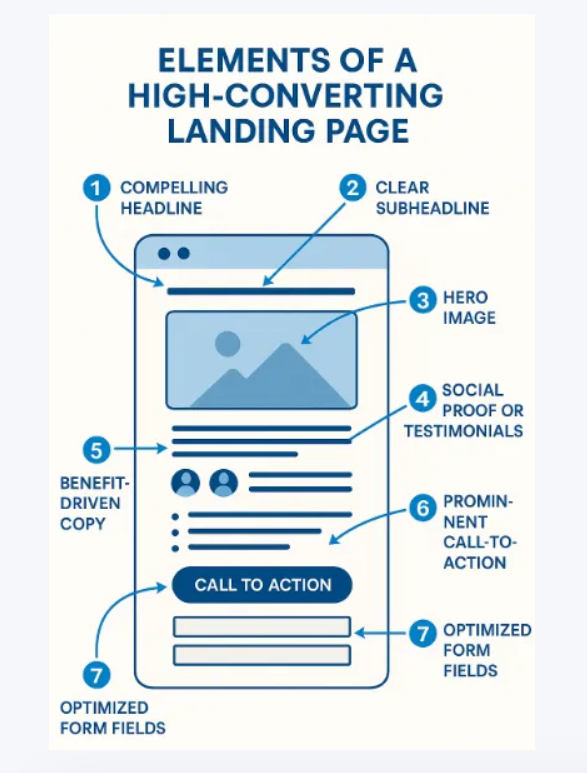
Landing pages are important to improve user experience, build customer loyalty, and ultimately encourage your audience to use your list-building tactics. Landing pages that convert are ultimately ones that effectively convey your value proposition. Your landing page should excite, intrigue, and possess a sense of urgency, to help your audience navigate to your newsletter signup form.
QR codes can be excellent tools to use, if your audience is seeing products or services in real-time. If most of your traffic is coming exclusively online, other useful tools include your social media platform (to direct users to your site), blog posts, and collaborations, as all of these can help promote your value proposition and increase your audience range.
To optimize your landing pages, make your value proposition clear, and make sure that your preferred keywords are prominent and searchable. If, for instance, you are offering a free consultation as part of your sales funnel, use the phrase “free consultation” and keywords related to your particular niche.
6. Leverage Social Media to Drive Signups
Social media platforms can also be used as part of your list-building tactics. From Facebook ads promoting a giveaway, to Instagram Stories linking directly to a landing page, your social media platforms can be extremely useful in building up an active campaign.
Different platforms are ideal for different means of signing up, or to drive different audience segments. LinkedIn, for instance, is going to be an ideal platform to drive business-related conversions. Instagram is more likely to be a visual-based digital marketing strategy. Facebook can be used to build email lists via designated groups.
Further Reading: How to Add an Email Subscription Facebook Sign Up Form
7. Run Strategic Contests and Giveaways
Contests and giveaways can be great list-building tactics, but they can also attract subscribers who are just looking to score a prize. Make sure that all contests and giveaways are tailored to your niche, and deliver some type of product or service directly from your brand or company.
A social media account, for instance, that runs Facebook ads promising a huge giveaway of over 20 items is likely to garner a lot of attention, but will also attract people from niches wholly unrelated to yours–people who will likely unsubscribe or unfollow as soon as the giveaway is over.
Any contest or giveaway you produce should directly relate to your niche, showcase one of your products or services, and deliver quickly (if not immediately) after the contest has closed.
8. Set Up Welcome Email Sequences That Convert
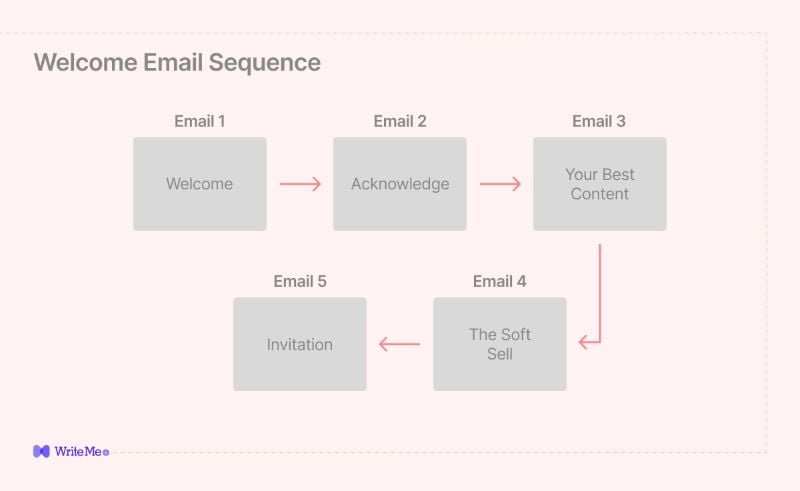
An automated welcome email is often seen as an integral part of your overall email marketing strategy, but these emails are not to be taken lightly. Your welcome email is essentially your first impression, and can set the tone for your entire email marketing campaign. Use email segmentation to make sure each welcome email is tailored to your audience.
Your welcome email should offer a window into what your audience can expect, but should also provide a way to engage. Whether that email encourages a follow-up response, comes with a discount code or free gift, or simply encourages new subscribers to reach out if in need of guidance, make sure it encourages some form of engagement to keep your audience interested.
Further Reading: How to Write Effective Follow-Up Emails
9. Use Content Marketing to Naturally Capture Leads
Content strategy includes so many different forays into the marketing realm, but many people fail to acknowledge the role of list building in an overall content strategy.
Take a blog post, for instance. A blog post provides a simple and unobtrusive way to encourage readers to sign up for a newsletter, further information, or specific resource. Social media content can provide a preview of a landing page that encourages your audience to subscribe.
Content marketing provides an excellent avenue through which to encourage your audience to sign up for emails without being pushy or aggressive.
Further Reading: How to Create the Perfect Content for Your Email Marketing
10. Launch a Referral Program That Gets Used
Referral programs can also effectively convert subscribers to active promoters. This can be an excellent way to invite new subscribers and build a stronger, more robust email list. Referral programs can be simple–think “refer a friend, get $10 toward your first purchase!” or more complicated (i.e. a points or coin system to cash in for rewards).
Referral programs are useful, because they incentivize your audience to not only share your newsletter, but to also continually engage. Depending on which email marketing service you use, referral programs may already be built in and ready for use.
Common Email List Building Mistakes to Avoid
The most common pitfalls I see in email list building include the following:
- Buying email lists. I understand this can be tempting, but it can violate best practices, and will never perform as well as an organically grown email list built by genuine interest.
- Making forms too long. Forms that are long or ask for a great deal of personal information can set off alarm bells in the heads of would-be subscribers. Typically, you do not need a great deal of information to build your email list, so start small and slowly learn more about your audience.
- Poor popup timing. Popups can feel a little intrusive at even the best of times, so poor popup timing can be particularly irksome for your audience. Avoid popups that arise before a page has even loaded, or one that comes up automatically, regardless of audience behavior.
- Not providing value. When you build an email list, you are essentially trying to build trust with your audience and demonstrate your value. If you do not provide value, you are not building trust with your audience, nor are you building a relationship and encouraging engagement.
Further Reading: Creative Email Marketing Ideas for Modern Marketers
Your Email List is Your Business Insurance Policy
Building an email list isn’t just another marketing tactic; it’s building a bridge directly to your customers that no algorithm can destroy. The entrepreneurs who thrive in the next decade will be the ones who stop chasing the latest social media hack and start building real relationships with their audience.
You now have 10 proven strategies to get started. Pick the 2-3 that feel most doable for your business right now, implement them consistently, and watch your subscriber count grow. Remember: every subscriber represents someone who chose to hear from you. Stop renting your audience. Start building the email list that will fuel your business for years to come.
Actionable advice for your digital / content / influencer / social media marketing.
Join 13,000+ smart professionals who subscribe to my regular updates.
