


WordPress boasts an unrivaled flexibility. There’s an opportunity to customize every component of your website. That certainly applies to themes.
For years, some developers opted to build custom themes from (or near) scratch. Whether starting from a blank screen or a starter framework like Underscores (rest in peace), the goal is to craft a theme that suits your project.
This approach predates the Block Editor, which was introduced way back in WordPress 5.0. It was a time when developers used plugins like Advanced Custom Fields to create a custom page-building experience. There was also a need to hard-code complex layouts within the theme’s template system.
In short, it was often the best way to create a custom website that was also client-proof. However, WordPress and its theme ecosystem have evolved. Custom layouts can be built with a default installation, and block themes allow for greater design flexibility.
That leads to the question: Do from-scratch WordPress themes still make sense in modern times? Let’s explore their role (or not) in the theme development landscape.
Mixing WordPress Blocks & Templates
Traditionally, a from-scratch theme is also a “classic” theme. They use PHP templates and the old-school WordPress Customizer interface.
This path offers developers more control behind the scenes. We can build features that serve a narrow use case and better protect against breakage. It has often been used to customize the content area of pages with layouts that weren’t easily replicated inside WordPress – without using a page builder, at least.
The Classic Editor’s limitations sometimes made this approach a necessity. Adding modern block-based layouts to the mix changes things, however.
Classic themes can use blocks within pages and posts. Plus, modern conveniences like the Query Loop block enable functionality that was previously difficult to achieve without writing code. And we can’t forget about the many custom block plugins on the market. They offer advanced design and dynamic data options.
Blocks can also be locked within the editor, which prevents a mischievous client from doing too much damage. So, there goes the client-proofing argument.
This limits what can be accomplished with PHP theme templates. It’s still possible to embed a layout via hard-coding or using a block template part. However, that doesn’t seem as practical.
Blocks can usually do the job without the need for additional PHP, HTML, or CSS. It feels like one less reason to use a from-scratch theme.
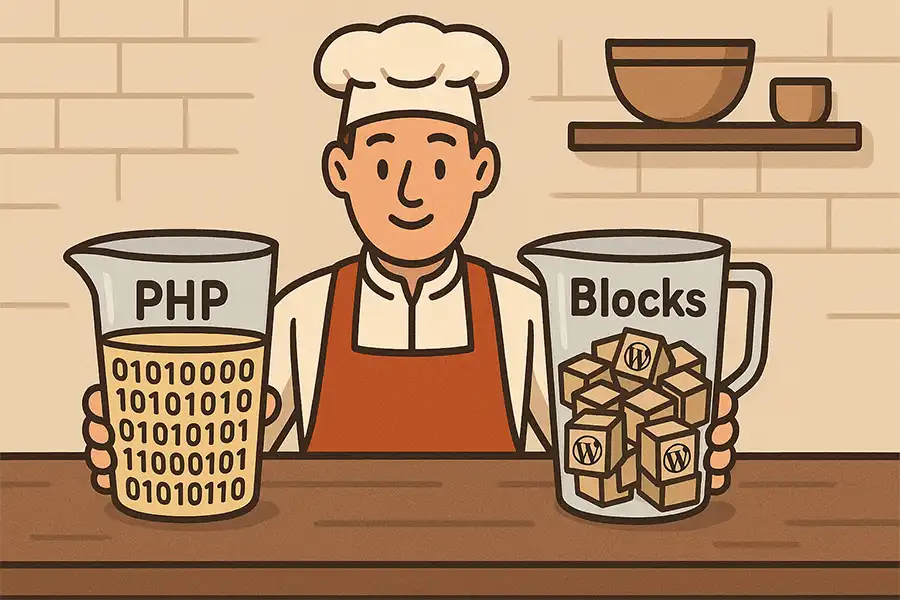
Building From Scratch Goes Deeper Than Design
OK, perhaps any design advantages of from-scratch themes have evaporated. There are still some potential gains to be had.
The third-party theme market continues to struggle with bloatware. Classic themes aiming to be everything to everyone aren’t always the best option. Some offer poor performance and accessibility. You are also ceding control of dependencies and security.
This is where a custom theme shines. You can create a purpose-driven product that addresses a specific need. There are numerous benefits to this approach.
The use of JavaScript is a prime example. Going custom means not having to load scripts you don’t need. Scripts can be optimized to avoid performance hits. Plus, you won’t have to wait for a theme author to update those dependencies.
There is also something to be said about version control. Third-party themes can release updates at any time. That can clash with the needs of large enterprise projects. A new feature could cause unexpected issues. A custom theme allows developers to avoid this risk and add features as needed.
Theme settings and customization are another area where building from scratch has an advantage. You can develop settings to suit any need and limit what users can do. Third-party themes may offer too much access. Maybe client-proofing is still a thing, after all?
When To Go Custom
Despite the rise of block-based websites, there are still reasons to start from scratch. So, when should you consider going this route?
Maybe the use cases are narrower these days. But custom themes are helpful when you have a strict set of parameters to work within, such as:
- You need version control of the theme’s styles and features;
- Some items need to be hard-coded into a template;
- You want custom settings not included with a third-party theme;
- You need tight theme integration with plugins like WooCommerce;
- There are strict accessibility requirements;
These are all reasons to forego the theme ecosystem and build it yourself. You’ll have a result that, for better or worse, a commercial product can’t match. Why? Because it’s tailored to your project’s needs. You don’t have to settle.
This does put the onus on you to test and maintain the theme, however. It includes updating dependencies and ensuring compatibility with the latest version of PHP. There are also security considerations. So, think carefully about what’s best for you and your project.
The bottom line is that, even with changes in WordPress theme development, going custom is still a viable option. That is, as long as you’re doing it for the right reasons.
Top
