

The world of social media marketing is at a tipping point.
For years, businesses have poured growing budgets into paid social media to counteract dwindling organic reach. But as ad costs climb and user skepticism toward sponsored content grows, a reliance on paid social is becoming an unsustainable strategy.
The question for forward-thinking brands is no longer if they should invest in organic, but how they can win with it.
I’ve been helping businesses navigate this shift for over a decade after writing one of the first books on social media marketing strategy, Maximize Your Social, and here’s what I know: organic social media isn’t dead. It’s evolved. And the brands that understand this evolution will dominate their markets in 2026 while their competitors keep throwing money at increasingly expensive ads.
Key Takeaways
✅ Organic social media builds authentic relationships without paid promotion—it’s the foundation of long-term brand loyalty and sustainable marketing ROI
✅ Engagement rate matters more than follower count in 2026; algorithms reward genuine interaction over vanity metrics
✅ According to Sprinklr, user-generated content drives 28% higher engagement than brand-created content, making it essential for organic growth
✅ LinkedIn research shows prospects exposed to both organic and paid content are 61% more likely to convert—organic builds the trust that makes paid effective
✅ Track engagement rate, reach, and CTR—not just likes—to measure true organic success
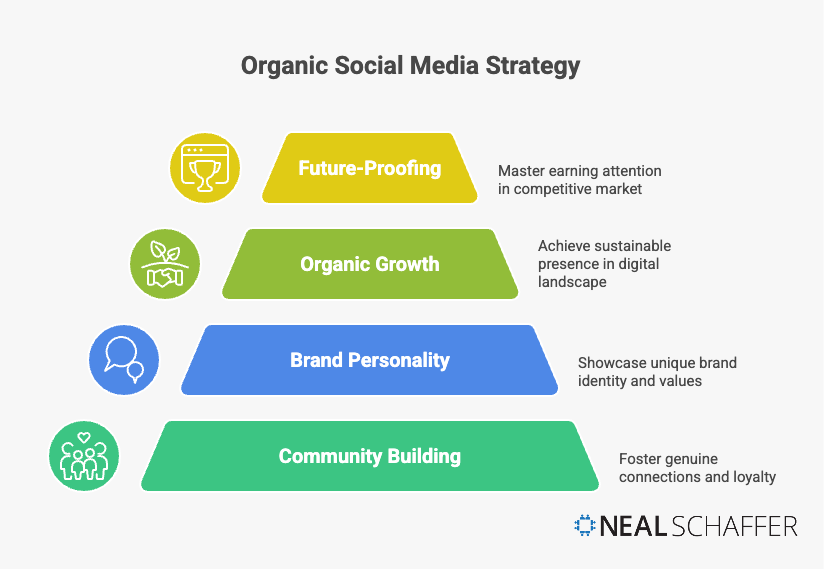
Organic social media refers to all the content and engagement you generate on social platforms without direct payment. This is the community-driven side of social media marketing, where you build genuine connections, showcase your brand’s personality, and foster loyalty.
It stands in stark contrast to paid social media, which involves boosting content through structured ad campaigns and dedicated ad spend. While paid strategies offer immediate visibility, their effects often vanish the moment the budget runs out.
Many brands pair their organic presence with simple tools like a landing page builder so there’s a clear path for new visitors from social to your site.
Looking ahead to 2026, the brands that thrive will be those that master the art of earning attention, not just buying it. This article is your blueprint for building a powerful social media strategy designed to grow your presence organically, future-proofing your brand in an increasingly competitive digital landscape.
| Organic Social Media | Paid Social Media |
|---|---|
| Free to post content | Requires ad budget |
| Builds long-term relationships | Provides immediate visibility |
| Effects compound over time | Effects stop when budget stops |
| Requires consistent effort | Can scale quickly with money |
| Higher audience trust | Can feel promotional/interruptive |
| Slower initial growth | Faster initial results |
In a world obsessed with conversions and immediate ROI, the value of organic social media can seem intangible. But its long-term impact on business health and sustainability is undeniable.
According to LinkedIn’s marketing research, prospects exposed to both a company’s paid and organic content are 61% more likely to convert. That’s the difference between a marginal campaign and a successful one.
Think about it: Organic content builds the credibility that makes your paid ads believable. Without that foundation, your ads are just noise in an already crowded feed.
When organic content resonates with users, it cultivates a stronger community feel because it’s perceived as authentic and valuable, not just another advertisement. This genuine connection is a rare and powerful asset in today’s business environment.
Furthermore, a strong organic presence is your best defense against consumer skepticism. New users discovering your brand online are naturally doubtful. To build trust, focus on showcasing testimonials (including those from influencer collaborations), positive reviews, engaging videos, and user assessments. Making your content accessible and transparent establishes credibility and builds lasting brand awareness.
How Will Organic Reach Change in 2026?
The narrative that organic reach is dead is not just outdated, it’s simply wrong.
Organic reach on social media platforms hasn’t disappeared; it has evolved. As platform algorithms grow more sophisticated and user feeds become more saturated, the rules of engagement have fundamentally changed.
Is Your LinkedIn Not Delivering Results?
Just released: my new book to help professionals, entrepreneurs, and business owners maximize LinkedIn for real growth.
With years of LinkedIn expertise, Maximizing LinkedIn for Business Growth offers actionable steps to build your brand, expand your network, and drive results.
Start leveraging LinkedIn like never before—grab your copy now! Click the cover or button below to buy on Amazon.

Here’s the reality: Today, according to Social Insider, Instagram’s average organic reach rate sits at approximately 3.5% per post, while Facebook averages just 1.65%. These numbers represent a significant decline from years past. According to Rival IQ’s Social Media Industry Benchmark Report, engagement rates dropped across every major platform—Facebook fell 36%, Instagram 16%, TikTok 34%, and X (Twitter) took the biggest hit at 48%.
For brands unwilling to adapt and instead continue their reliance on paid social media alone, this new reality feels like a final nail in the coffin. For savvy marketers, however, it signals a quiet resurgence of authentic, value-driven organic content.
Platform Organic Reach Rates (2025)
| Platform | Average Organic Reach Rate | Average Engagement Rate |
|---|---|---|
| 3.5% | 3.4% | |
| 1.65% | 1.7% | |
| TikTok | Varies widely | 2.8% |
| Higher for thought leadership | 3.7% | |
| X (Twitter) | Declining | 0.5% |
Source: Socialinsider, Hootsuite
The key shift is in the definition of success. In the past, a massive follower count was the ultimate prize. By 2026, the most important metric will be your engagement rate, as it reveals the true depth of connection you have with your target audience.
Platforms are prioritizing content that sparks genuine conversation and interaction, meaning a smaller, highly engaged community is far more valuable than a large, passive one.
As Instagram head Adam Mosseri explained: “The top three signals that matter most for ranking are watch time, likes and sends. So when looking at your insights, pay close attention to average watch time, likes per reach, and sends per reach.” (Social Media Today)
To stay relevant, brands must lean into content formats that algorithms favor. Short-form videos like Stories and Reels significantly boost brand visibility and increase engagement. According to research from Socialinsider, TikTok achieves an average engagement rate of 2.80%—substantially higher than static content on most platforms.
The future of organic reach isn’t about broadcasting to the masses; it’s about connecting deeply with the right people on Instagram, LinkedIn, TikTok, YouTube, or wherever your audience spends time.
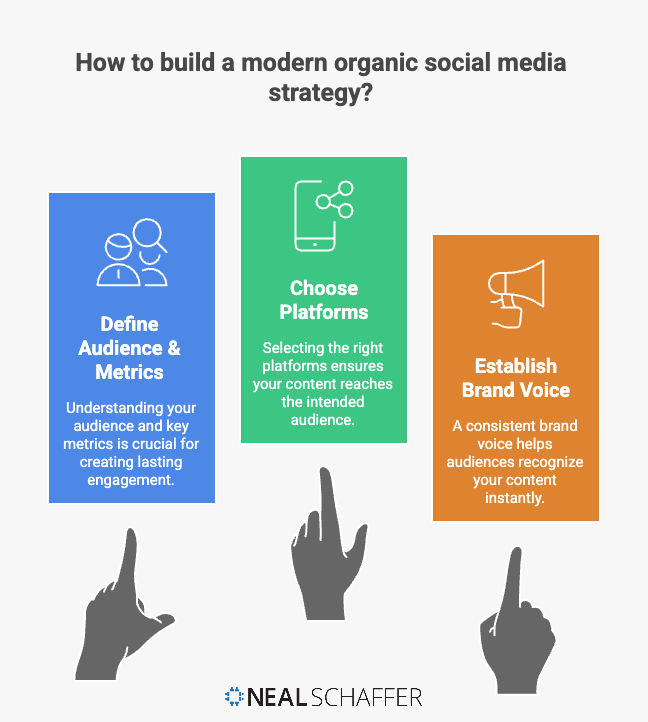
A successful organic social media presence doesn’t happen by accident; it’s the result of a deliberate and well-crafted content strategy. Like any business initiative, building a modern organic plan begins with clearly defined goals.
Step 1: Define Your Audience and Key Metrics
The first and most critical step is to define your audience and key engagement metrics. These are the foundational pillars that allow you to build something that actually lasts. Without a deep understanding of who your target audience is—their pain points, interests, and online behavior—your content will fail to connect.
According to Sprout Social’s research, 54% of marketing leaders will use overall engagement as their primary measure of social media success. Not reach. Not impressions. Engagement.
Step 2: Choose the Right Platforms
Once you know who you’re talking to, identify the platforms where they spend their time. Depending on demographics and user intent, different networks will be preferable:
- A B2B tech company will likely prioritize LinkedIn
- A fashion brand will focus on Instagram and TikTok
- A local service business may find Facebook groups most valuable
As marketing expert Briana Doe notes: “There are so many platforms and ways that brands can show up online. It’s tempting to believe you have to be everywhere… Provide what your current and prospective audience members are looking for—be intentional instead of trying to be everything to everyone.” (Sprout Social)
Step 3: Establish a Consistent Brand Voice
With your audience and platforms defined, you must establish a consistent brand voice. This is the personality of your company, and it should permeate every post, comment, and direct message.
Your core messaging should remain the same across Instagram, Facebook, and LinkedIn, but tailor the content to fit each platform’s unique format. This approach helps audiences recognize your content instantly and demonstrates that you aren’t just thoughtlessly copying and pasting.
What Are the Proven Tactics to Grow Organic Reach in 2026?
In theory, growing a business with organic social media is straightforward. In practice, it requires a commitment to authenticity and community-building that many businesses find challenging.
1. Find Your Authentic Voice
Engage with your audience directly and in a manner that feels honest and upfront. This means moving beyond a purely sales-focused mindset. Great storytelling can create the perfect ecosystem for meaningful relationships.
According to Sprout Social research, 46% of consumers say content originality is what makes their favorite brands stand out on social media. Share the story of your company’s beginnings, the mission that drives you, and the values you stand for. This narrative-driven approach makes your brand relatable and memorable.
2. Make User-Generated Content a Cornerstone
User-generated content (UGC) is the ultimate form of social proof. UGC drives 28% higher engagement than branded content and achieves 4x higher click-through rates. It’s perceived as 2.4x more authentic than brand-created content.
Encourage customers to share their experiences with your products or services, and then celebrate that content on your own channels.
3. Empower Your Employees as Advocates
Having employees speak for your organization makes the brand seem more human and trustworthy. According to the DSMN8 Employee Advocacy Benchmark Report, content shared by employees achieves significantly higher engagement rates than content shared through brand channels alone.
I’ve written extensively about employee advocacy statistics that prove its impact—a program can result in a 5x increase in web traffic and 25% more leads.
Customers trust employees more because employees are perceived as providing real facts instead of simply pushing a corporate narrative. An employee advocacy program also benefits your team by helping them improve their careers and expand their professional networks.
The most successful brands in 2026 aren’t spending the most on retargeting ads. They’re building authentic communities through strategic organic content.
Duolingo: Personality-Driven Content
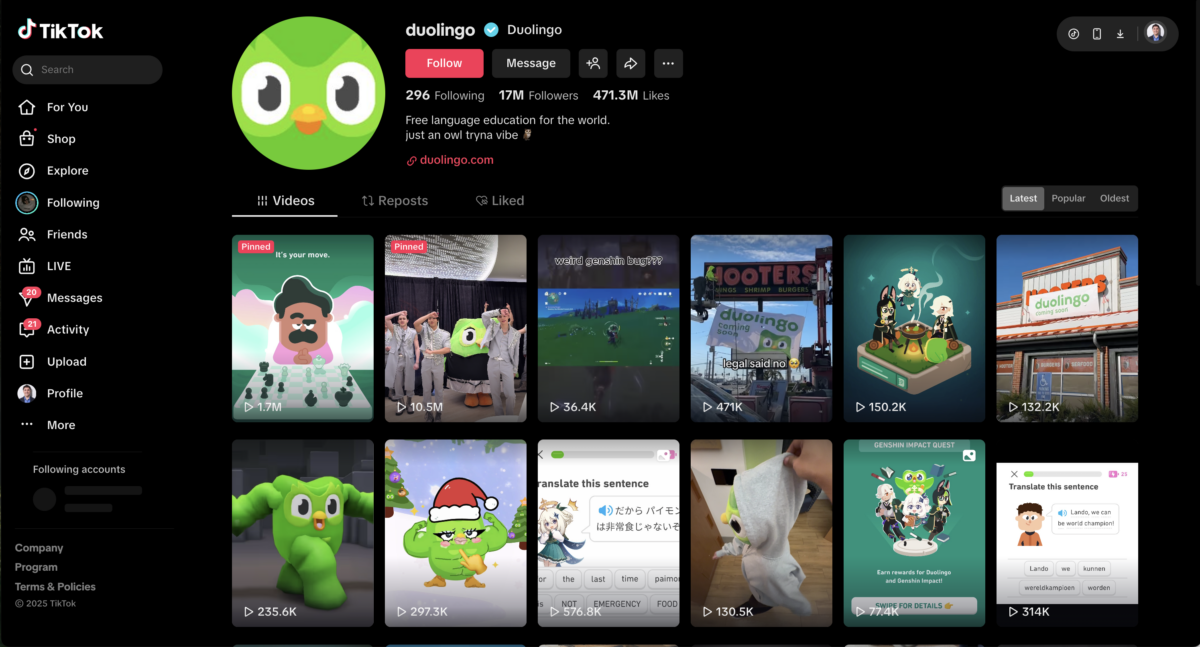
Language-learning app Duolingo has become a social media phenomenon by giving their mascot a bold, irreverent personality. Rather than posting polished educational content, Duolingo leans into trending formats, self-deprecating humor, and playful interactions with followers.
Key Takeaway: Platform algorithms increasingly reward authentic, entertaining content over sterile brand messaging.
GoPro: User-Generated Content at Scale
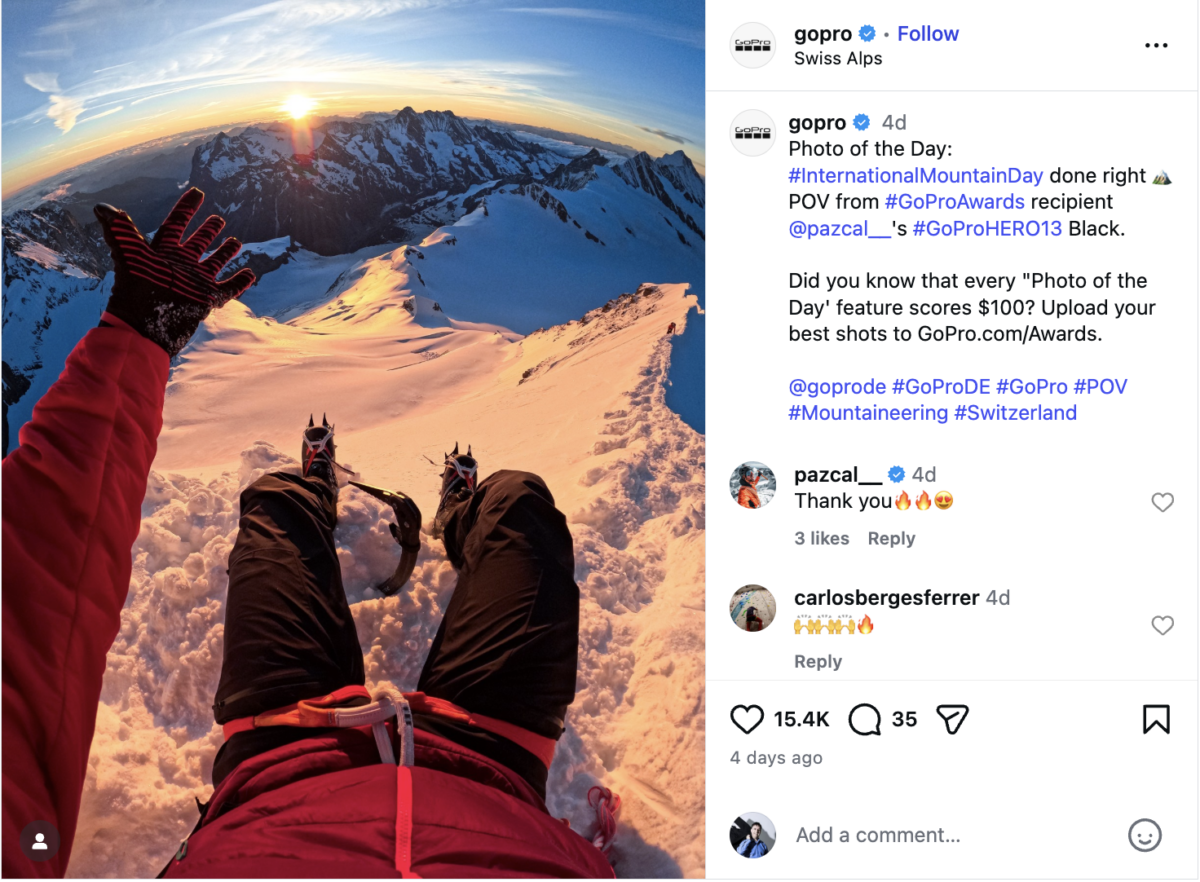
GoPro built its social presence by encouraging users to share footage with branded hashtags, creating an endless stream of authentic content. By featuring customer content across channels and making sharing easy, GoPro has dramatically reduced production costs while increasing engagement and authenticity.
Key Takeaway: Your customers are already creating content. Make it easy to share, then celebrate their contributions publicly. I’ve covered numerous influencer marketing examples that follow this same principle.
Starbucks: Employee Advocacy
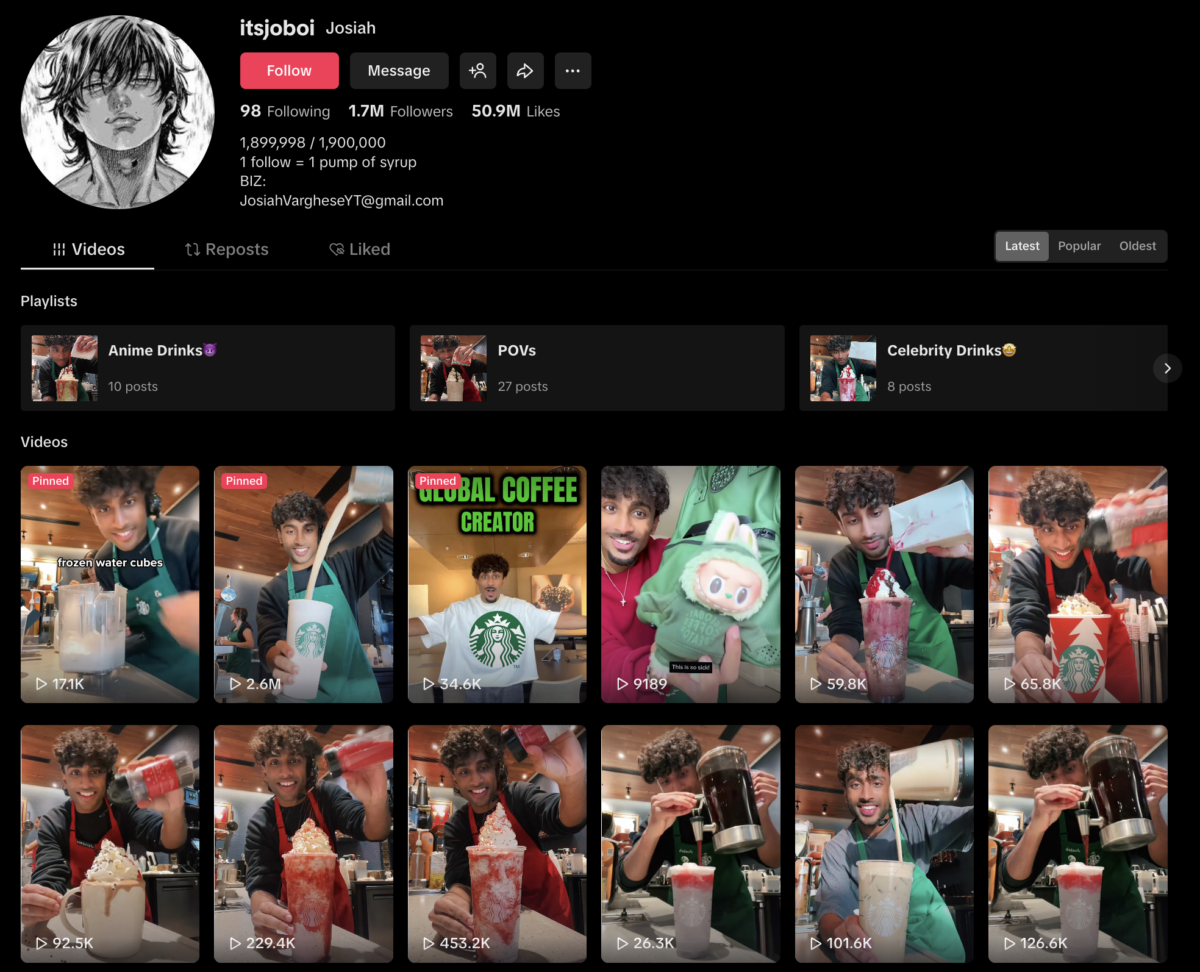
Starbucks empowers employees to share brand content and workplace stories across personal accounts. Content shared by employees receives significantly higher engagement than brand channels, translating to millions of earned impressions for Starbucks.
Key Takeaway: Your employees are your most credible advocates. When they authentically share your story, audiences listen.
Airbnb: Emotional Storytelling
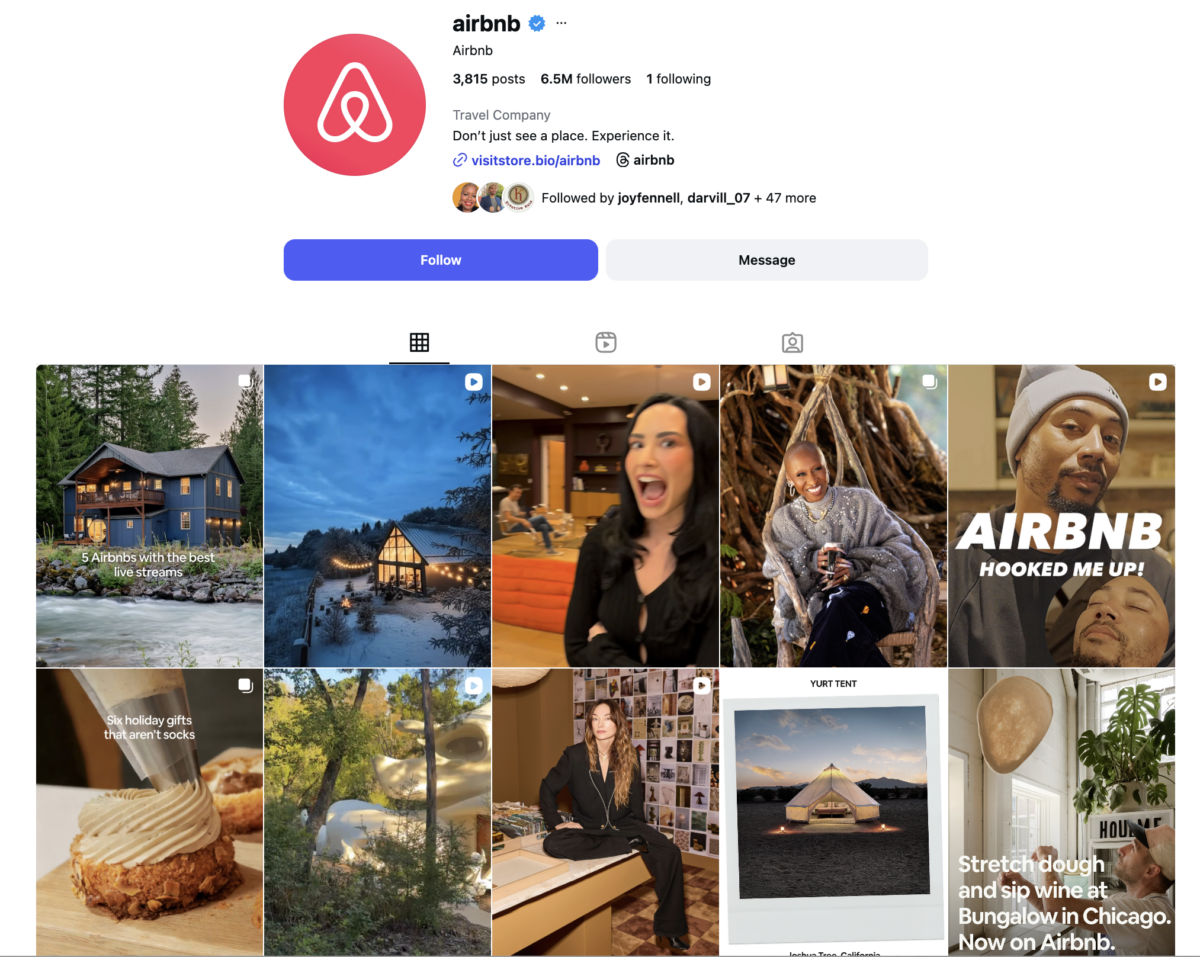
Rather than promoting listings directly, Airbnb curates visual narratives showcasing unique stays and transformative travel moments. This positions Airbnb as a lifestyle brand associated with adventure and belonging, not just a booking platform.
Key Takeaway: Sell the experience and emotional benefit, not just the product. People engage with stories, not sales pitches.
Even well-intentioned brands sabotage their organic reach by repeating common errors. Here are the most damaging mistakes—and how to avoid them.
1. Inconsistent Posting
Social media algorithms reward regular posting because consistent activity signals relevance. Disappearing for weeks then posting multiple times in a day looks like spam.
According to Hootsuite’s research, optimal posting frequency varies by platform:
| Platform | Recommended Frequency | Notes |
|---|---|---|
| 3-5 posts/week + daily Stories | Mix feed posts with Reels | |
| 1-2 times/day | Quality over quantity | |
| 1-2 times/day | Weekdays perform best | |
| TikTok | 3-5 times/week minimum | Consistency beats volume |
| X (Twitter) | 2-3 times/day | Tweets have short lifespans |
| Threads | 2-3 times/day | Conversational content works best |
Create a sustainable content calendar you can maintain—three times weekly beats daily posts followed by silence.
2. Treating Every Platform the Same
Copy-pasting identical content across platforms fails because each has unique audience expectations and algorithm preferences. A LinkedIn article won’t work on TikTok. Develop a core message adapted to each platform’s native format—repurpose strategically, not lazily.
3. Ignoring Engagement
According to Sprout Social, 73% of social users agree that if a brand doesn’t respond on social, they’ll buy from a competitor. When followers comment or message, they’re signaling interest. Dedicate 15-20 minutes daily to respond to comments and participate in conversations.
4. Over-Promoting Without Providing Value
One of the most common mistakes is posting only promotional content. People open social media to be entertained or informed, not sold to. Follow the 80/20 rule: 80% valuable content (education, entertainment, inspiration), 20% promotional.
5. Chasing Vanity Metrics
You can have 50,000 followers and generate zero sales if they’re not genuinely interested. Focus on engagement rate, click-through rate, and conversions—not follower count.
The debate between organic and paid social is often framed as a choice between two opposing forces. The reality is that the most successful brands understand they are two sides of the same coin.
Think of your organic presence as the foundation. It’s where you build credibility, foster community, and establish an authentic brand voice. This is the long-term work of relationship-building that creates a loyal audience that trusts what you have to say. Without a strong organic foundation, your paid efforts will feel hollow and transactional.
Paid social media then acts as an amplifier. You can use strategic ad spend in Facebook Ads or Instagram Ads to inject your top-performing organic content into the feeds of new audiences through targeting, dramatically expanding views and reach.
This approach is far more effective than promoting sterile, ad-only content, because you’re boosting posts that have already proven their value with your existing community.
| Role of Organic | Role of Paid |
|---|---|
| Builds trust and credibility | Amplifies best-performing content |
| Tests content before ad spend | Reaches new target audiences |
| Develops community relationships | Drives immediate traffic/conversions |
| Establishes brand voice | Retargets engaged users |
| Provides social proof | Scales proven winners |
While this article focuses on growing without paying for reach, the ultimate goal is to build an organic engine so powerful that any investment in paid media yields an exponential return.
To prove the value of your organic efforts and continuously refine your approach, you must move beyond vanity metrics and focus on the key performance indicators (KPIs) that truly matter.
Primary Metrics to Track
Engagement Rate: Calculate by dividing total engagements (likes, comments, shares, saves) by your total followers. A high engagement rate tells platform algorithms that your content is valuable, leading to greater organic reach. Use Instagram analytics or platform-native tools to track this consistently.
Audience Growth Rate: How quickly are you attracting new, relevant followers?
Organic Reach & Impressions: How many unique users are seeing your content without paid promotion?
Website Click-Through Rate (CTR): How effectively is your social content driving traffic back to your website? Track this using Google Analytics with UTM parameters.
Share of Voice: How does your brand’s presence compare to competitors in online conversations?
What’s a Good Engagement Rate?
According to Hootsuite’s industry benchmarks, average engagement rates vary significantly:
| Platform | Average Engagement Rate | “Good” Engagement Rate |
|---|---|---|
| 3.4% | 4%+ | |
| 1.7% | 2%+ | |
| 3.7% | 4%+ | |
| TikTok | 2.8% | 4%+ |
Using the social media analytics tools built into each platform, alongside more comprehensive social media management software, will provide the insights needed to identify content gaps and double down on what resonates most with your audience.
The future of organic social media belongs to brands that prioritize authenticity over ad spend. Success will be measured not in fleeting impressions but in lasting relationships.
Here’s my challenge to you: Before you increase your ad budget, audit your organic presence. Are you creating content your audience actually wants to engage with? Are you responding to comments? Are you empowering your employees to share your story?
The brands that master organic social media in 2026 won’t just save money on advertising, but they’ll also build something more valuable: a community that actively wants to hear from them.
Get serious about your social media marketing strategy. Start with the fundamentals. Build authentic connections. The results will compound over time in ways that paid advertising simply cannot match.
By focusing on genuine connection and community, you’ll build a brand that thrives in 2026 and beyond.
If you need help with your organic social media strategy and implementation, check out Maximize Your Social, my more recent book on digital marketing strategy Digital Threads, or contact me to set up a call to understand your needs and how I might be of service.
Organic social media is a long-term strategy. Most brands see measurable engagement improvements within 60-90 days of consistent posting, but building a substantial community typically requires 6-12 months. Accounts that post regularly see steady growth, while sporadic activity struggles regardless of content quality.
Optimal frequency varies by platform, but consistency matters more than volume. Based on Hootsuite’s research: Instagram (3-5 posts/week + daily Stories), Facebook (1-2/day), LinkedIn (1-2/day), Twitter/X (2-3 daily), TikTok (3-5/week minimum). It’s better to post three times weekly on schedule than daily for two weeks then disappear.
Yes—but often indirectly. While paid ads create immediate conversions, organic content builds trust that converts over time. LinkedIn research found prospects exposed to both organic and paid content are 61% more likely to convert. Track website clicks, lead forms, and promo code usage to measure direct revenue impact.
Organic reach is earned through quality content and engagement (followers see posts, hashtag discovery, shares). Paid reach is purchased through ads or boosted posts. While organic reach has declined on most platforms, it remains essential for building authentic community and long-term brand equity.
No. Engagement rate matters more than follower count. Platforms prioritize genuine interaction regardless of account size. A 2,000-follower account with 10% engagement will outperform a 50,000-follower account with 1% engagement in algorithm distribution.
Actionable advice for your digital / content / influencer / social media marketing.
Join 13,000+ smart professionals who subscribe to my regular updates.
