


I’ve talked a lot lately about the importance of content marketing. After all, besides straight-up advertising, this is one of the most effective ways to build leads and increase sales. However, an important part of content marketing is the creation of the content you plan to post. Whether that’s a short TikTok video, an extensive tutorial, or a blog post, everything requires individual attention to perfect.
Content writing is arguably one of the more important aspects of marketing your goods and services on the Internet. There are a few reasons for this, including the fact that your website content is critical for SEO. Therefore, in some sense, the answer to what is content writing is “making your website visible and usable to most people.”
With 90% of businesses worldwide having a content marketing strategy in place, the demand for skilled content writers has never been higher. This growing recognition of content’s importance is reflected in budget allocations, with nearly 70% of businesses planning to increase their content marketing investments. Whether you’re looking to hire content writing talent or become a content writer yourself, understanding this field is essential for success in today’s digital landscape.
With that in mind, let’s look at what content writing entails, the skills you need to succeed, and some ways to write better content and thereby increase your traffic.
What is Content Writing?
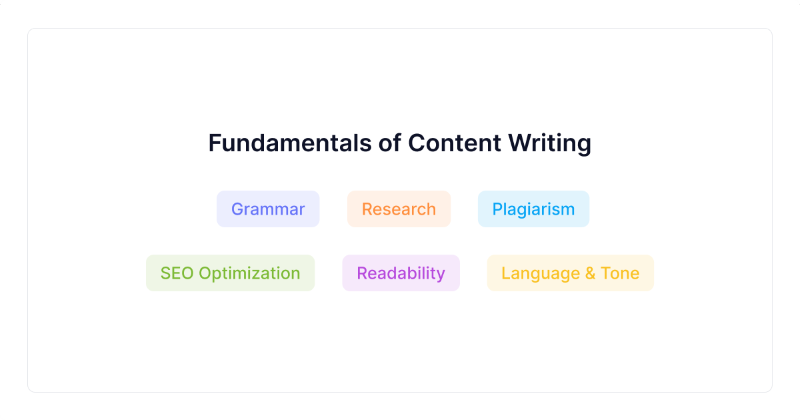
Content writing is the process of creating written digital content for a variety of purposes, such as websites, blog posts, social media posts, and other digital marketing materials. This stands in contrast to writing books or magazines for print media that will be placed in libraries and booksellers.
That’s not the case with content writing. While many websites have paywalls or subscriptions, the nature of content writing generally is free distribution. One of the few exceptions is when the content itself is a website’s product, like a news organization or trade publication.
Regardless of industry, content writers create content that is engaging, informative, and tailored to the needs of their target audience. The idea is to keep people reading — or at least, to get the user to take the next step. Sometimes that next step is filling out a lead generation form, emailing sales, or even just interacting with the content further.
At its core, content writing serves as your opportunity to tell your brand’s story. Great content writers convey meaningful, helpful, and insightful messages to inspire and move an audience to take action. When done right, that action is making a purchase.
The 6 Purposes of Content Writing
There are important reasons why marketers leverage content to achieve a company’s goals that go far beyond boosting traffic and generating leads. The purpose of content writing is to create engaging, informative, and targeted content that serves specific purposes:
To inform: Content writers create content that educates readers on topics related to their industry or business. This helps build trust with potential customers and establishes the writer as an expert in their field. In fact, research shows that consumers who engage with educational content early in their journey are 131% more likely to purchase from that brand compared to those who don’t.

To persuade: Content writers use persuasive language and techniques to convince readers to take action or purchase a product or service. You’ll see me talk about the benefits of influencer marketing, which is something that I’m especially good at.
To entertain: Content writers create entertaining content that engages readers and keeps them coming back for more. This can increase brand awareness and loyalty among customers.
To engage: Content writers create content encouraging readers to interact with the brand by leaving comments, sharing posts, or participating in surveys or polls. This type of engagement helps boost social media profiles and increases organic reach.
To promote: Content writers use promotional tactics such as giveaways, contests, and discounts to drive traffic and sales for their client’s businesses.
To generate leads: Content writers create material designed to capture the attention of potential customers and encourage them to take action, often through lead magnets like whitepapers or by prompting users to contact the business directly.
Essential Skills for Content Writers
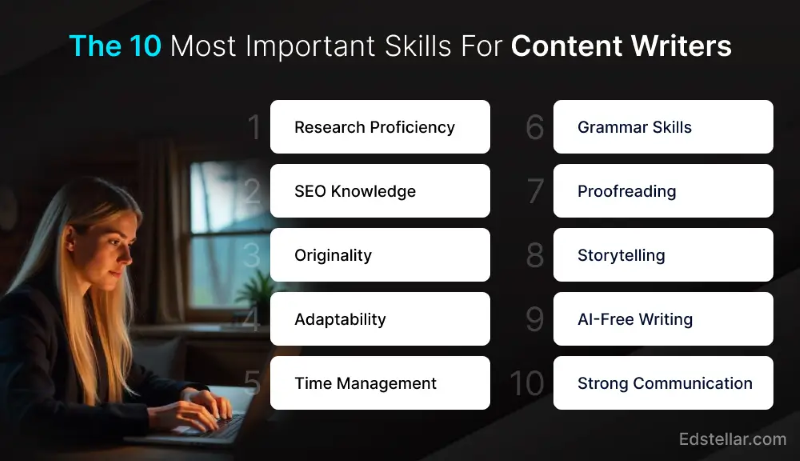
Before diving into the types of content writing, it’s important to understand what skills make a successful content writer. Here are the core competencies every content writer should develop:
Writing fundamentals: A solid grasp of grammar, vocabulary, and sentence structure is non-negotiable. Strong writing skills ensure your content is error-free and professional. Beyond technical correctness, great content writers know how to choose the right words and tell stories that capture attention.
Research skills: Research enables writers to gather information from various sources and present it in an organized manner, adding depth and credibility to the writing. Whether you’re writing an article about industry trends or a technical guide, content writers should have an eye for credible sources and know how to fact-check information.
Search engine optimization (SEO) knowledge: Understanding how to incorporate relevant keywords naturally, write effective meta descriptions, and structure content for search engines is crucial for ensuring your excellent writing actually gets found and read.
Adaptability: Content writers need the ability to adjust their style, voice, and approach to different formats, audiences, and platforms. Writing a LinkedIn post requires a different approach than crafting an email newsletter or creating a technical whitepaper.
Is Your LinkedIn Working?
Just released: my new book to help professionals, entrepreneurs, and business owners maximize LinkedIn for real growth.
With years of LinkedIn expertise, Maximizing LinkedIn for Business Growth offers actionable steps to build your brand, expand your network, and drive results.
Start leveraging LinkedIn like never before—grab your copy now! Click the cover or button below to buy on Amazon.

8 Most Popular Types of Content Writing
Now that you understand what is content writing and the skills involved, let’s look at some common applications. Content writing can be divided into several different types depending on the purpose and goals of the content.
1. SEO Content Writing
This type of content focuses on optimizing webpages for search engine algorithms to increase organic traffic from search engines like Google or Bing. SEO content writers use keywords strategically throughout their content to ensure it ranks higher in search engine results pages (SERPs).
Further Reading: 7 Best Content Optimization Strategies for 2026
2. Blogging
Blogging involves regular blog posts about topics related to a particular industry or niche. Blogs are often used by businesses to provide helpful information to customers and build relationships over time. Business blogs frequently include company announcements, case studies, and other in-depth material.
3. Social Media Posts
Social media posts are short pieces of written content designed specifically for platforms like Twitter, Facebook, Instagram, and LinkedIn. These posts typically include images or videos along with text and are used to engage followers and promote products or services.
Further Reading: 7 Types of Social Media Content to Create to WOW Your Fans
4. Copywriting
Copywriting focuses on creating persuasive and compelling copy to promote products or services. This often takes the form of product pages, website content, or sales materials. Unlike an informational article, copywriting is designed to convince readers to take action, such as buying a product or signing up for a service. Understanding the key differences between copywriting and content writing can help you determine which approach best serves your goals.
5. Technical Writing
Technical writing involves creating content about complex topics in an easy-to-understand manner. This type of writing is often used to explain how to use a product or service, provide instructions for a process, or explain technology features. Perhaps the most famous example is a user manual, though these are usually posted on the website for informational purposes.
6. Email Writing
Email writing encompasses creating effective messages for various purposes, from newsletters to automated email marketing sequences. Successful email writing involves understanding how to craft compelling subject lines that get opened, body content that gets read, and calls-to-action that get clicked.
7. White Papers
White papers are in-depth pieces of content that provide detailed information about a particular topic. They’re often used by businesses to educate customers and prospects and frequently serve as lead magnets because they tend to be technical and valuable.
8. Content Marketing
Content marketing encompasses all types of content writing to strategically promote a brand or product. Content marketers create content designed to educate, inform, and engage readers to build relationships and ultimately drive sales.
How to Become a Content Writer

Whether you’re looking to hire content writing talent or pursue this career path yourself, understanding the journey is valuable. The good news is that there are multiple pathways into this field.
Educational Background
While there’s no single educational path required, most successful content writers have some foundation in writing. Many have bachelor’s degrees in English, journalism, communications, or related humanities fields. However, many successful content writers are self-taught through online courses, writing workshops, and practical experience. Quality education in writing skills forms the foundation of successful content creation.
Building Your Portfolio
A strong portfolio is essential for any aspiring content writer. Start by creating sample pieces that showcase different types of content writing – blog posts, social media content, email newsletters, or product descriptions. Consider starting your own blog as both practice and a portfolio piece. This demonstrates your ability to maintain consistency and handle the technical aspects of publishing content.
Developing Your Niche
While being a generalist is possible, developing expertise in specific industries or content types can make you more valuable. Consider what knowledge or interests you bring to the table and where your previous experience gives you insights others lack. Whether you focus on healthcare, technology, or digital marketing, specialization can help you command higher rates and attract better clients. For instance, if you’re interested in the software industry, developing expertise in SaaS content marketing strategies can open doors to high-value clients in this growing sector.
Further Reading: How to Create Content: A Step-by-Step Guide for Beginners
Gaining Practical Experience
Look for opportunities to write, even if unpaid initially. Volunteer for nonprofits, help local businesses, write guest posts, or take small projects through freelancing platforms. Each project adds to your portfolio and teaches you something new about working with a client, meeting deadlines, and adapting your writing style.
12 Essential Content Writing Tools
The right tools can significantly improve your efficiency and quality of work:
Writing and editing tools:
These tools are essential for proofreading and ensuring your content meets professional standards.
SEO and research tools:
Design and visual tools:
Visual content and videos enhance written material and improve user engagement across all platforms. Consider exploring different infographic layouts for presenting complex information visually to your audience.
Project management tools:
Effective content planning is crucial for success, and having the right editorial calendar tools can help you maintain consistency and meet deadlines across multiple projects.
Start with free options and invest in paid tools as your needs and income grow. For a comprehensive overview of available resources, explore additional free content marketing tools that can enhance your content creation process without breaking the budget.
AI and Content Writing

The rise of AI tools like ChatGPT has significantly impacted content writing. While some worry AI will replace human writers, the reality is more nuanced. AI tools excel at generating first drafts, helping with research, brainstorming ideas, and overcoming writer’s block.
However, AI-generated content often lacks the nuance, personality, and deep understanding of audience needs that human writers bring. The most successful approach is using AI as a tool to enhance human creativity, not replace it.
When using AI in your content writing process, always fact-check AI-generated information, add your unique perspective, and ensure the final product serves your audience’s specific needs.
Further Reading: My 15 Recommended AI Writer Tools
12 Tips to Write Better Content
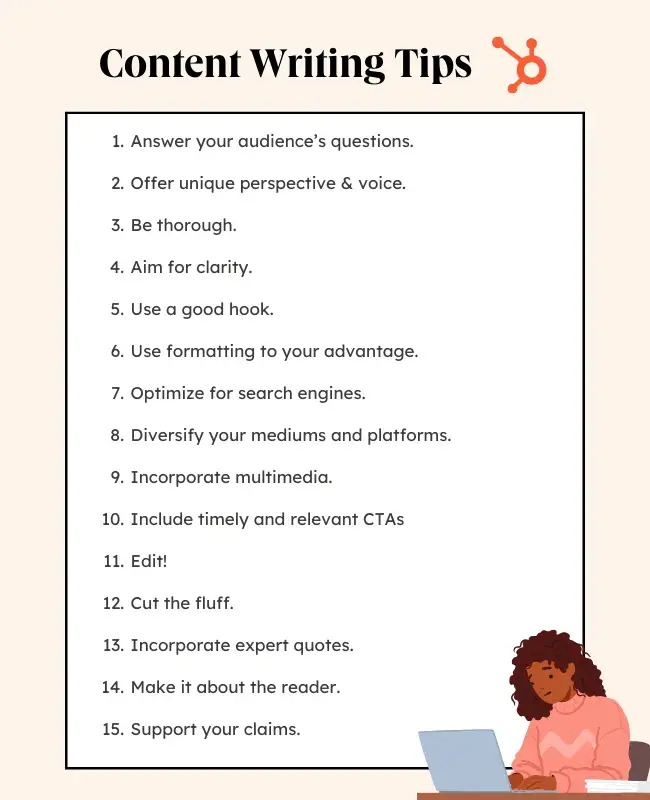
Now that we understand what is content writing, let’s look at ways you can write better content. A universal rule of thumb is that better quality writing yields superior results. And with Google’s recent insistence on ranking quality content better than its inferior counterparts, great writing has never been more important.
1. Know Your Audience
No matter how well you write, the end product will be less effective if you fail to know your audience. Understanding what will help your audience starts with your buyer persona. You want to understand whom you are writing for – typically, people who are most likely to buy your products or those you want to sell products to.
2. Research Your Topic Thoroughly
Whether your topic is simple or complicated, it’s important to have your facts straight. Nothing is more unprofessional than putting up false information because you failed to do your research. You typically want to look like a subject matter expert, whether you’re writing a comprehensive article or a brief social media post.
Further Reading: What is Content Writing? 13 Ways to Write Better Content
3. Craft an Enticing Title
Writers talk a lot about great headlines, and there’s a reason for this. When you’re browsing a news site, chances are you read the stories with interesting headlines first. With content writing, your competitor is probably writing about the same things, so you want an enticing title that invites people to read your content instead of theirs.
4. Write a Great Hook Relevant to Your Audience
After reading the title, people typically read the first paragraph – the hook. This attention-grabbing text pulls readers in and encourages them to read the rest. Because time spent on your page helps with SEO, always try to reel people in with a good hook that’s relevant to your audience and on topic.
5. Incorporate Storytelling Techniques
Everybody loves a good story, and your potential customers are no exception. Companies can talk about customer stories, such as how a product or service solved real customer pain points. The goal is to make sure the story you tell demonstrates authenticity.
6. Keep It Precise and Actionable
Everyone’s time is valuable. Your customers don’t have time to waste on fluff that doesn’t provide value. While you don’t want boring writing, avoid belaboring the point or deceiving readers. Create a focused list of key points and stick to them. Wasting people’s time backfires.
7. Make Sure Your Content is Unique and Original
Nobody likes a copycat, especially Google. Google penalizes copycat material on the SERPs. Your content writing needs to be something new and fresh. Otherwise, your content will fade into the background and lose out on traffic that should be yours.
8. Focus on Quality over Quantity
If somebody answers what is content writing with “throw as many words at people as possible,” you may end up with spammy content. If people start reading your spammy content and leave, it will hurt your SEO because Google emphasizes high-quality content. A copywriter knows that every word must serve a purpose.
9. Use Visuals to Enhance Your Content
Plain blocks of text with nothing to break it up is so last century. Nowadays, everyone wants to see visuals in written content. You should always include visual elements when possible, though the degree varies based on content type. Remember that visual design significantly impacts how much users trust your content, making this more than just an aesthetic choice.
10. Optimize for SEO
You should always optimize your content writing for SEO. If you don’t optimize for SEO, your content will likely be buried on the second page of Google. SEO is too competitive these days for content to perform well automatically.
11. Include Clear Calls-to-Action
Your content should guide readers toward taking the next step, whether that’s subscribing to your newsletter, downloading a resource, or contacting sales. Make sure your calls-to-action are relevant to the content and appropriate for where your audience is in their buyer journey.
12. Monitor Performance and Analyze Results
Even the best content writer sometimes requires adjustments. Monitor your content marketing efforts through detailed analytics. All social networks have analytics for commercial accounts, and you get Google Analytics with your website. Once you have the numbers, analyze them and make necessary changes to maximize results. Track metrics like time spent on page, bounce rates, and conversion rates to understand what resonates with your audience.
Content Writing: Your Path to Digital Marketing Success
Answering the question “what is content writing” isn’t as easy as you might’ve imagined at first. One reason for this is the sheer variety of writing that can be marketing related. From understanding the essential skills and various types of content to learning how to become a content writer and leveraging the right tools, this field offers tremendous opportunities.
The landscape continues to evolve, with AI tools changing how we approach the creative process and new platforms creating fresh opportunities. However, the fundamental principles remain: understanding your audience, providing genuine value, and crafting compelling messages that drive action. With marketers dedicating up to 70% of their annual budgets to content initiatives, the investment in quality content writing has never been more critical.
Fortunately, armed with this comprehensive understanding of content writing, the required skills, and best practices, almost anyone can create successful campaigns. At the end of the day, this valuable tool is something that no brand should pass up. In our increasingly digital world, the ability to communicate effectively through written content isn’t just an advantage—it’s essential for success.
Actionable advice for your digital / content / influencer / social media marketing.
Join 13,000+ smart professionals who subscribe to my regular updates.
