

Social media management in 2026 is no longer just a scheduling problem. Teams are expected to publish across more formats, respond faster in public threads, and prove impact with reporting that holds up in leadership reviews.
At the same time, social listening has shifted from a nice-to-have to a planning input, especially when brand risk, competitor moves, and sentiment swings can surface in hours.
That is why the Brandwatch vs Meltwater decision tends to come down to operating model, not feature checklists.
Some teams run social as an intelligence function where listening and dashboards drive what gets published and how performance is explained. Other teams run social inside a broader communications and PR program where media monitoring, coverage reporting, and stakeholder coordination are central.
Brandwatch is typically the better fit if your social team needs listening-led planning, deep analysis, and reporting workflows built around competitive context and audience insight.
Meltwater is often the better fit if your organization prioritizes PR and media intelligence alignment and wants social management to sit naturally inside that communications workflow.
Below, we compare both across publishing, analytics, collaboration, listening, integrations, pricing structure, and scalability.
Brandwatch vs Meltware: At a Glance Comparison
|
Category |
Brandwatch |
Meltwater |
| Best For | Social teams that run on listening and reporting depth | PR and comms teams that blend media intelligence with social |
| Core Strength | Social suite with a strong listening and analytics focus | Media Intelligence plus Social Listening and Analytics in one suite |
| Publishing Depth | Publish module built around a unified content calendar | Social publishing and engagement positioned for marketing and PR professionals |
| Analytics Strength | Measure and dashboards positioned for performance reporting | Reporting and dashboards across the suite |
| Social Listening | Brandwatch positions itself around listening and consumer insight workflows | Meltwater includes Social Listening and Analytics as a core suite category |
| Collaboration | Calendar and approvals are central to the social management workflow | One inbox with conversation history and organization rules for teams |
| Ease of Use | Strong capability set, often best with a trained operator | Guided comms-oriented workflows and academy training emphasis show up in product messaging |
| Integrations | Suite and plan-based approach with modular products | Suite spans multiple categories, including data and API integration |
| Pricing Entry Point | Plans and pricing are primarily quote-based, plus public sector docs exist | Custom pricing and packaging across Essentials, Suite, and Enterprise |
| Enterprise Readiness | Enterprise positioning across the Brandwatch suite | The enterprise tier is designed for global organizations and unified contracting |
Brandwatch Overview
Brandwatch sits in the enterprise social suite category, combining social media management with listening and analytics. Brandwatch positions Publish as a content calendar for planning and scheduling, and the broader suite messaging emphasizes understanding and engaging consumers at scale.
It is strongest for teams that treat listening and reporting as the operating layer for content planning, community engagement, and performance narratives. It is less ideal for teams that want the simplest possible scheduler and minimal setup, especially if they do not have time to maintain queries, dashboards, and workflow rules.
Meltwater Overview
Meltwater is a media intelligence and communications-oriented suite that also provides social media management through Engage, plus social listening and analytics as core categories. It positions its social offering around community management, a unified inbox, and scaling social workflows, while keeping media intelligence and PR use cases close to the product story.
It is strongest for teams that need PR reporting, media monitoring, and social performance in one operating environment. It may be less ideal when you want highly specialized social intelligence workflows that require heavy customization and analyst-style dashboarding.
Brandwatch vs Meltwater Publishing and Scheduling Workflow
Publishing is no longer just about scheduling posts. It is about calendar clarity, approval layers, multi-account coordination, and reliability across formats.
Brandwatch Publishing and Scheduling
Brandwatch’s Publish module is built around a centralized content calendar that supports planning across multiple channels. Teams can collaborate inside one shared calendar and send posts for approval via external links, which is particularly useful for agency-client workflows.
Users frequently highlight the visibility of the calendar view and the ability to manage multiple client accounts from one dashboard. However, some friction appears around rescheduling speed, drag-and-drop functionality, and certain format limitations, such as Stories or emerging platforms.
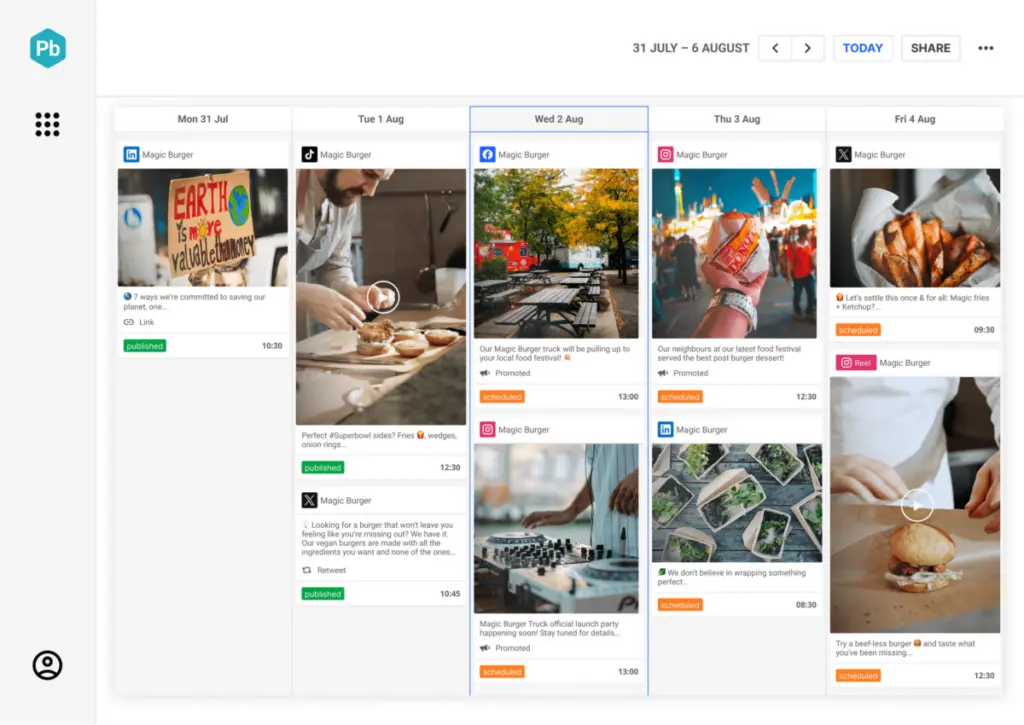
Video handling and multi-platform batching can also require extra steps depending on workflow complexity.
Overall, Brandwatch’s publishing is strongest when tied to listening insights and reporting workflows, rather than as a lightweight bulk scheduler.
Meltwater Publishing and Scheduling
Meltwater integrates publishing inside its broader social and media intelligence suite. The platform provides a unified publishing calendar and allows teams to manage engagement and approvals within the same environment.
Because Meltwater is often used by communications teams, publishing workflows are naturally aligned with PR campaigns, coverage moments, and broader comms calendars. Users often describe the interface as intuitive for campaign-based planning, although occasional formatting or sizing issues are mentioned in feedback.
Meltwater’s publishing strength is less about advanced content planning logic and more about fitting publishing into a larger communications reporting environment.
Brandwatch vs Meltwater Verdict: Publishing
Brandwatch takes the win for insight-driven social teams that want publishing tied closely to analytics and listening. Meltwater is the better fit when publishing must sit inside PR-led campaign workflows.
- Winner: Brandwatch for social-first teams. Meltwater for comms-first teams.
Read also:
Read also:
Check out the Evergreen Content Calendars: 52 Weekly Prompts Library
Check it out
Brandwatch vs Meltwater Collaboration and Governance
For mid-market and enterprise organizations, governance depth matters. Role permissions, approval layers, and structured workflows determine whether a platform scales cleanly across departments.
Brandwatch Collaboration and Governance
Brandwatch is designed for teams that require structured oversight across accounts and regions. Collaboration is anchored in the shared calendar and centralized engagement workflows. Approval links allow clients or stakeholders to review content externally, which agencies often value.
Because Brandwatch sits close to its consumer intelligence foundation, governance often extends beyond publishing into listening queries and reporting dashboards. That creates stronger standardization potential for organizations that operate with defined performance frameworks.
However, complexity can increase onboarding time, particularly if workflows are not clearly defined at the start.
Meltwater Collaboration and Governance
Meltwater’s collaboration model is closely tied to its unified inbox and conversation history tracking. Teams can manage engagement across accounts while maintaining visibility into who responded and how.
For PR and communications teams, this governance model aligns well with stakeholder review cycles and media coordination. Meltwater also structures its packages across Essentials, Suite, and Enterprise tiers, which signals scalability and contract centralization for global teams.
The governance structure is practical and aligned to communications operations, though less centered on advanced listening taxonomy control compared to specialist social intelligence workflows.
Brandwatch vs Meltwater Verdict: Collaboration and Governance
Brandwatch wins for organizations where governance extends deeply into listening configuration and reporting standardization.
Meltwater wins for communications teams that prioritize coordinated engagement and stakeholder visibility across PR and social.
- Overall winner: Brandwatch for governance-heavy social operations.
Brandwatch vs Meltwater Analytics and Reporting
Analytics strength determines whether a platform simply reports metrics or enables executive-ready narratives.
Brandwatch Analytics and Reporting
Brandwatch is positioned around consumer intelligence and customizable dashboards. Its Measure capabilities allow teams to build structured reporting views that benchmark performance and monitor brand conversations.
Users frequently highlight the flexibility of dashboards and the ability to tailor views to leadership reporting needs. This makes Brandwatch particularly strong when teams need to connect listening data with performance results and competitor analysis.
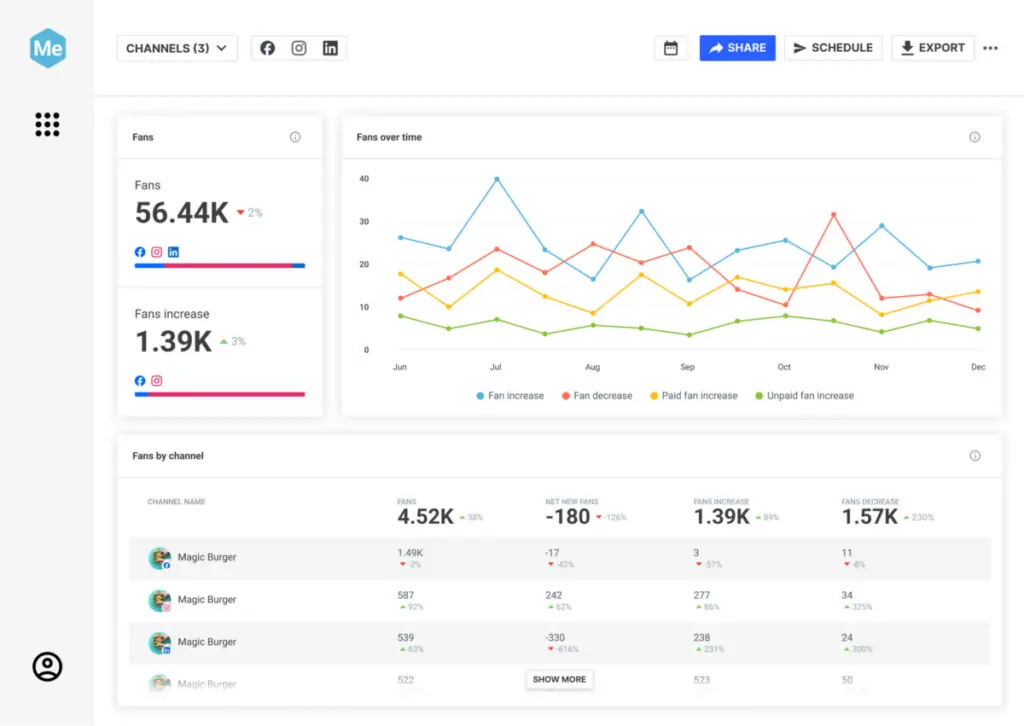
The tradeoff is that deeper customization can require more configuration effort.
Meltwater Analytics and Reporting
Meltwater integrates social analytics with media intelligence reporting. This allows communications teams to combine coverage data, share of voice, and social performance in one reporting environment.
Users often value the clarity of exported reports and executive-ready views. However, some feedback suggests that highly granular social analytics may require manual adjustments or supplementary validation against native platforms.
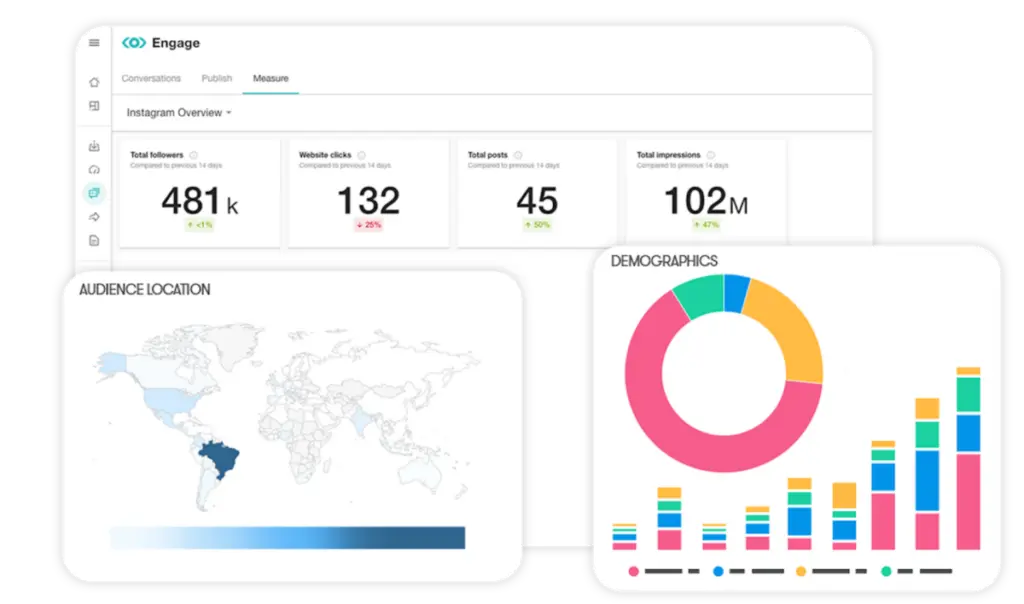
Meltwater’s reporting strength is breadth across channels rather than extreme depth within social alone.
Brandwatch vs Meltwater Verdict: Analytics and Reporting
Brandwatch takes the win for depth of social analytics and configurable dashboards.
Meltwater takes the win for cross-channel PR plus social reporting integration.
- Overall winner: Brandwatch for social analytics depth. Meltwater for communications reporting breadth.
Read also:
Read also:
Check out the Top 7 Social Media Analytics Software
Check it out
Brandwatch vs Meltwater Social Listening
Listening capability is where strategic differentiation becomes clearer.
Brandwatch Social Listening
Brandwatch has long positioned itself as a leader in social listening and consumer intelligence. The platform enables custom queries, monitoring of brand and keyword mentions, and dashboard-driven insight reporting.
Users often praise the ability to export customized graphs and build detailed searches. At the same time, advanced query configuration can feel complex for teams that only need quick searches.
Brandwatch’s listening is designed for teams that treat insight as a strategic input.
Meltwater Social Listening
Meltwater includes Social Listening and Analytics as a core part of its suite. Listening is integrated into its broader media monitoring ecosystem, which is attractive for teams that want one monitoring environment for both news and social.
User feedback indicates that while digital monitoring is strong, coverage and precision can vary depending on channel or query structure. Some teams supplement with native validation for social metrics.
Meltwater’s listening is practical and well-integrated with PR workflows.
Brandwatch vs Meltwater Verdict: Social Listening
Brandwatch clearly takes the win for dedicated social listening depth and intelligence workflows.
Read also:
Read also:
Check it out
Brandwatch vs Meltwater Integrations and Ecosystem
Integration strength determines whether the platform can evolve with your stack.
Brandwatch Integrations and Ecosystem
Brandwatch operates as a modular suite spanning social media management, consumer intelligence, and influence. This allows organizations to expand capabilities under one ecosystem if required.
Its value increases when multiple departments rely on a shared insight infrastructure.
Meltwater Integrations and Ecosystem
Meltwater’s ecosystem spans media intelligence, social listening, influencer marketing, and data integration categories. It offers Essentials, Suite, and Enterprise packaging designed to scale across teams and global structures.
Its strength lies in unifying PR and social functions under one contract.
Brandwatch vs Meltwater Verdict: Integrations
Meltwater wins for broader communications ecosystem integration.
Brandwatch wins for social intelligence ecosystem depth.
- Overall winner: Meltwater for cross-functional communications integration.
Brandwatch vs Meltwater Pros and Cons
Brandwatch
Pros
- Strong social listening foundation with customizable dashboards and reporting workflows
- Unified calendar supports structured planning and approval processes
- External approval links improve agency-client collaboration
- Integrates publishing, listening, and analytics in one social-first suite
- Suitable for governance-heavy, insight-led enterprise teams
Cons
- Rescheduling and drag-and-drop workflow friction reported by users
- Video handling and format limitations mentioned in feedback
- Listening configuration can feel complex for quick search use cases
- Publishing experience sometimes feels secondary to the intelligence suite
- Requires structured onboarding to unlock full value
Meltwater
Pros
- Integrates social media management with media monitoring and PR reporting
- Unified inbox with conversation histories supports coordinated engagement
- Share of Voice and executive-ready reporting valued by comms teams
- Essentials, Suite, and Enterprise packaging supports contract scalability
- Strong fit for PR-driven organizations
Cons
- Social analytics depth may require validation against native platforms
- Monitoring precision can vary depending on channel or query setup
- Reporting customization can require manual refinement
- Some users describe UI and workflow as less intuitive during setup
- Social monitoring not as specialized as dedicated intelligence-first tools
Which Platform Fits Your Team Structure?
The right choice depends less on features and more on how your team is structured. Below, we break down which platform aligns best with specific organizational models.
If You Are a Small Business
Both platforms are enterprise-oriented and priced accordingly. If your needs are limited to scheduling and light analytics, you may not unlock enough value to justify either investment.
Recommendation: Neither is ideal unless you have real listening or PR monitoring requirements.
If You Are a Marketing Agency Managing Multiple Clients
Brandwatch performs strongly when your agency sells reporting depth, competitor benchmarking, and listening-led retainers. Its approval workflows and structured dashboards support repeatable client reporting frameworks.
Meltwater performs strongly when your agency runs both PR monitoring and social deliverables and needs integrated media coverage reporting.
Recommendation:
- Choose Brandwatch if social intelligence is core to your service model.
- Choose Meltwater if PR and earned media reporting are central to your offering.
If You Are an Enterprise Brand With Governance Requirements
Brandwatch is better suited when governance includes standardized listening queries, global dashboards, structured reporting frameworks, and centralized oversight across markets.
Meltwater is strong when governance is defined by communications coordination, media monitoring, and unified reporting for executives.
Recommendation: Brandwatch takes the edge for governance-heavy social operations.
If You Are a PR or Communications-Led Organization
Meltwater’s strength lies in combining social engagement with media monitoring, journalist databases, and coverage reporting. If your KPIs include share of voice across earned media and social combined, Meltwater aligns more naturally.
Brandwatch can support communications teams, but its core differentiation is deeper social intelligence rather than PR alignment.
Recommendation: Meltwater is the clearer choice for PR-first organizations.
If You Prioritize Simplicity Over Depth
Brandwatch rewards teams willing to invest in configuration and dashboard setup. The payoff is analytical depth.
Meltwater often feels more aligned with traditional media monitoring workflows, which can reduce friction for comms teams.
Recommendation:
- Choose Meltwater for faster adoption.
- Choose Brandwatch for long-term insight depth.
Final Verdict: Intelligence-First vs Communications-First
Brandwatch and Meltwater are not interchangeable tools. They reflect two different operating philosophies.
Brandwatch is the stronger choice for organizations that run social as an intelligence function. If your team depends on structured listening queries, customizable dashboards, competitor benchmarking, and governance-heavy reporting frameworks, Brandwatch offers greater analytical depth and control.
Meltwater is the stronger choice for communications-led organizations. If your priorities include media monitoring, share of voice reporting, journalist outreach, and aligning social performance with earned media impact, Meltwater provides a more natural fit.
There is no universal winner. The decision depends on whether your center of gravity is consumer insight or communications coordination. Choose Brandwatch for social-first intelligence depth. Choose Meltwater for PR-integrated execution at scale.
Frequently Asked Questions
What is a social media marketing platform?
A social media marketing platform is software that enables teams to publish, schedule, monitor, and analyze content across multiple networks from one dashboard. Modern social media marketing platforms centralize workflows, reporting, and engagement to improve operational efficiency.
How do platforms manage social media conversations at scale?
Enterprise tools are designed to handle large volumes of mentions, comments, and direct messages. Managing social media conversations at scale requires unified inboxes, tagging systems, routing logic, and response governance to maintain speed and consistency.
When should a company consider outsourcing social media management?
Organizations with limited internal bandwidth or specialized needs often explore outsourcing social media management. In these cases, platform selection should prioritize approval workflows, client visibility, and structured reporting.
How do enterprise platforms differ from lighter scheduling tools?
Compared to tools often listed among Buffer alternatives, enterprise suites typically offer listening capabilities, governance controls, advanced analytics, and multi-department scalability in addition to publishing.
What tools do social media marketing agencies typically rely on?
Many agencies use platforms categorized as social media marketing agencies’ tools, which support multi-account access, structured approvals, centralized dashboards, and repeatable reporting frameworks.
Why is a centralized social media planner important?
A structured social media planner improves campaign visibility, reduces scheduling conflicts, and allows teams to align publishing with reporting and engagement workflows.
Should social media tools integrate with other marketing software
Yes. Integration with CRM, analytics, BI, and media monitoring systems ensures that social insights feed broader marketing workflows and performance measurement, enhancing the value of both social and enterprise reporting.
How do social media marketing agencies decide between platforms
Agencies often evaluate tools based on how well they support multi-client workflows, reporting, automation, collaboration, and analytics. Operational fit—how a platform aligns with agency services and client deliverables—typically drives the decision more than feature lists alone.
About the Author

Writer
Kalin Anastasov plays a pivotal role as an content manager and editor at Influencer Marketing Hub. He expertly applies his SEO and content writing experience to enhance each piece, ensuring it aligns with our guidelines and delivers unmatched quality to our readers.
