

Facebook advertising remains the most cost-effective way to reach a massive global audience in 2026. With 3.07 billion monthly active users and an average CPC of just $0.58 compared to Google Ads’ $2.69–$5.26, the platform delivers unmatched reach at a fraction of the cost.
Here’s the thing: simply running Facebook ad campaigns isn’t enough. With 98.5% of users accessing via mobile devices, your format choice directly impacts whether your ad gets noticed or ignored. Choose the wrong format, and you’re essentially throwing money away. Choose the right one, and you unlock dramatic conversion potential.
Think about it this way: A master craftsman doesn’t use a hammer for every job. They know exactly when to reach for the chisel, the saw, or the drill. Facebook advertising works the same way—each ad type serves a specific purpose, and understanding when to deploy each one is what separates successful campaigns from expensive failures.
I’ve been helping businesses navigate Facebook marketing for years, and the most common mistake I see? Advertisers defaulting to the same ad format regardless of their goal. Let’s fix that.
Key Takeaways
✅ Facebook reaches 3.07 billion monthly active users—and 98.5% access via mobile, making format selection critical for campaign success.
✅ Average Facebook CPC is $0.58–$0.87 compared to Google Ads’ $2.69–$5.26, delivering significant ROI advantages for budget-conscious marketers.
✅ Carousel ads outperform single-image formats by 20–30%, while Reels ads drive 22% higher engagement than standard video posts.
✅ Match your ad type to your campaign objective: Image/Video for awareness, Carousel/Lead Ads for consideration, Collection/Dynamic Ads for conversions.
✅ Refresh creatives every 2–4 weeks and leverage AI tools like Advantage+ and VBO to maximize performance.
The Foundation: Understanding Facebook Ad Objectives
Before diving into specific ad formats, you need crystal clarity on your campaign objective. This isn’t theoretical—it’s the GPS for your entire campaign. Without a clear destination, you’re just burning budget.
What’s Your Goal?
Facebook’s advertising platform organizes around three core campaign objectives:
Awareness: Get your brand in front of as many relevant eyes as possible. This is about brand recognition and reach.
Consideration: Drive traffic, engagement, lead generation, app installs, or messages. You’re moving people from “who are you?” to “I’m interested.”
Conversion: Sales, catalog sales, store visits. The money shot—turning interest into action.
How Objectives Map to Ad Types
Here’s the strategic framework that makes everything click:
| Objective | Recommended Ad Types | Primary Goal |
|---|---|---|
| Awareness | Image, Video, Stories | Brand recognition, reach |
| Consideration | Carousel, Lead Ads, Messenger | Traffic, engagement, lead capture |
| Conversion | Collection, Dynamic Ads, VBO | Sales, catalog sales, store visits |
When you select a campaign objective in Facebook Ads Manager, the platform guides you toward formats optimized for that goal. Fight that guidance at your own peril.
Quick Reference: Facebook Ad Types at a Glance
Before we dissect each format, here’s your rapid-fire overview—a cheat sheet you’ll reference again and again:
| Ad Type | Best For | Effort Level | Key Spec |
|---|---|---|---|
| Image Ads | Brand awareness, quick deployment | Low | 1:1 or 4:5 ratio |
| Video Ads | Engagement, storytelling | High | Under 15 seconds |
| Carousel Ads | Product showcases, tutorials | Medium | 2–10 cards |
| Collection Ads | E-commerce, mobile shopping | Medium | Instant Experiences |
| Instant Experience | Immersive storytelling | Medium | Mobile-only |
| Lead Ads | Lead generation, sign-ups | Medium | Instant Forms |
| Messenger Ads | Direct conversations | Medium | Click-to-message |
| Stories Ads | Mobile-first, time-sensitive | Medium | 9:16 vertical |
| Reels Ads | Gen Z, entertainment | High | Under 30 seconds |
| Playable Ads | App installs, gaming | High | Interactive HTML5 |
| Dynamic Ads | Retargeting, catalogs | Medium | AI-powered |
| AR Ads | Try-on experiences | High | Spark AR required |
| VBO Ads | ROI maximization | Medium | AI optimization |
Now let’s break each one down.
Dissecting the 12 Types of Facebook Ads
1. Image Ads: The Visual First Impression
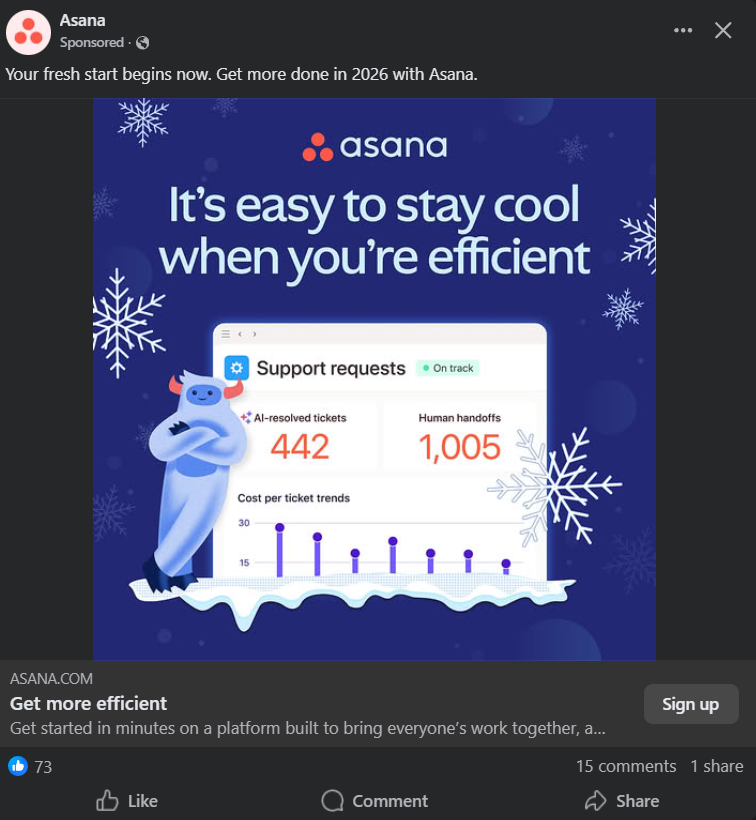
Image ads are single static visuals paired with headline, description, and CTA—the most fundamental yet most versatile Facebook ad format. They’re quick to create, cost-effective to run, and capable of stopping scrolls when executed well.
What it is: A single high-quality image with supporting text and a clear call-to-action button.
Is Your LinkedIn Not Delivering Results?
Just released: my new book to help professionals, entrepreneurs, and business owners maximize LinkedIn for real growth.
With years of LinkedIn expertise, Maximizing LinkedIn for Business Growth offers actionable steps to build your brand, expand your network, and drive results.
Start leveraging LinkedIn like never before—grab your copy now! Click the cover or button below to buy on Amazon.

Best for: Brand awareness, product announcements, promotional offers, driving blog traffic. If you’re just starting with Facebook advertising, this is your testing ground.
Expert tip: Keep text minimal—Facebook’s algorithm historically penalizes text-heavy images. Use visuals at minimum 1080×1080 pixels for crisp display across placements.
Specs:
- Aspect ratio: 1:1 (Feed), 9:16 (Stories)
- Resolution: 1080×1080 px minimum
- File size: 30MB max
- Format: JPG or PNG
Analogy: Image ads are like a bicycle—simple, fast to deploy, and perfect for a quick trip. Don’t overthink it.
2. Video Ads: Dynamic Storytelling in Motion
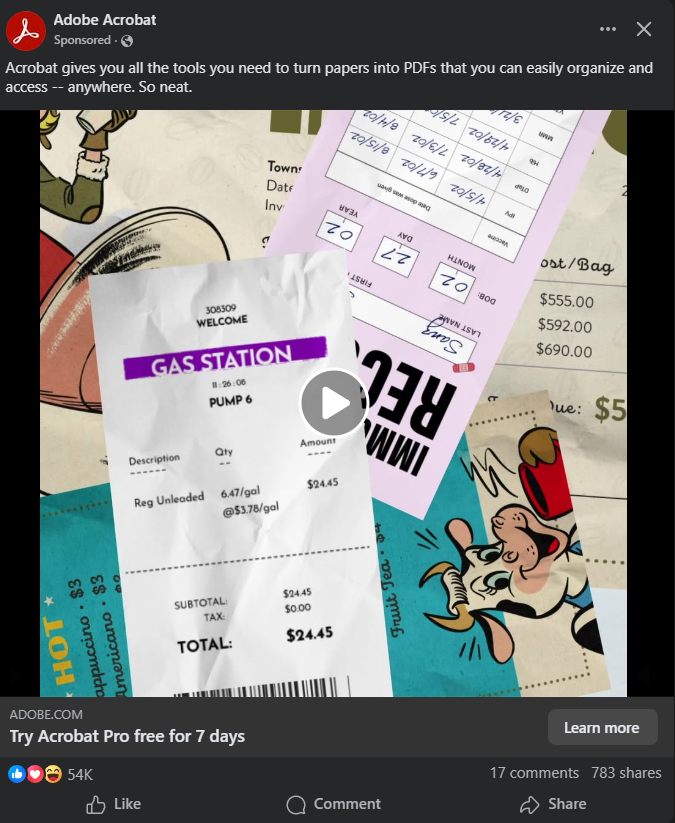
Video ads capture attention through motion and sound, delivering up to 1055% more shares than linked content. They’re Facebook’s engagement powerhouse—but they demand more production effort.
What it is: Motion-based content ranging from 5-second clips to longer narratives, appearing across Feed, Stories, Reels, and Audience Network.
Best for: Product demonstrations, brand storytelling, testimonials, tutorials. Video excels at building emotional connection and explaining complex offerings. I’ve covered Facebook video ads best practices extensively if you want to dive deeper.
Expert tip: 65% of viewers who watch the first 3 seconds will continue for at least 10 seconds. Hook them immediately. Design for sound-off viewing—add captions, since most mobile users scroll with audio muted.
Specs:
- Aspect ratio: 4:5 (Feed), 9:16 (Stories/Reels)
- Resolution: 1080×1080 px minimum
- Duration: Under 15 seconds recommended (up to 240 minutes supported)
- File size: 4GB max
Analogy: Video ads are like a high-performance sports car—they grab attention and deliver results, but they require more fuel (budget and production resources).
3. Carousel Ads: A Showcase of Possibilities
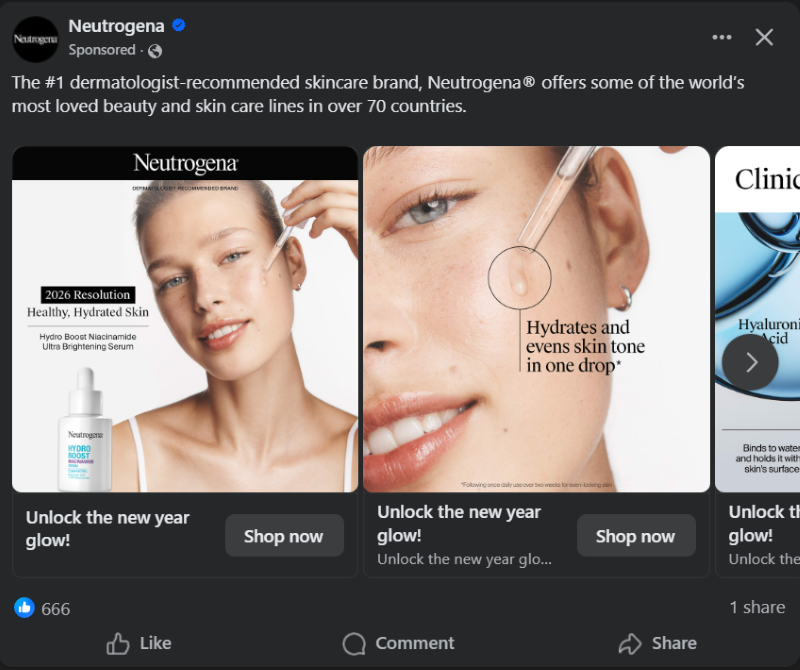
The Carousel format displays 2–10 swipeable images or videos, each with unique links—and Carousel ads outperform single-image ads by 20–30% in conversions. The interactive swipe mechanic drives engagement.
What it is: A multi-card format where each card can have its own headline, description, link, and CTA.
Best for: E-commerce product catalogs, feature showcases, step-by-step tutorials, multi-product promotions. The Carousel format encourages exploration and keeps users engaged longer.
Expert tip: Use the first card as your hook—it determines whether users swipe. Tell a sequential story or arrange products from most to least popular.
Specs:
- Cards: 2–10
- Aspect ratio: 1:1 per card
- Resolution: 1080×1080 px
- Image file size: 30MB per image
- Video file size: 4GB per video
4. Collection Ads: Curated Shopping Experiences
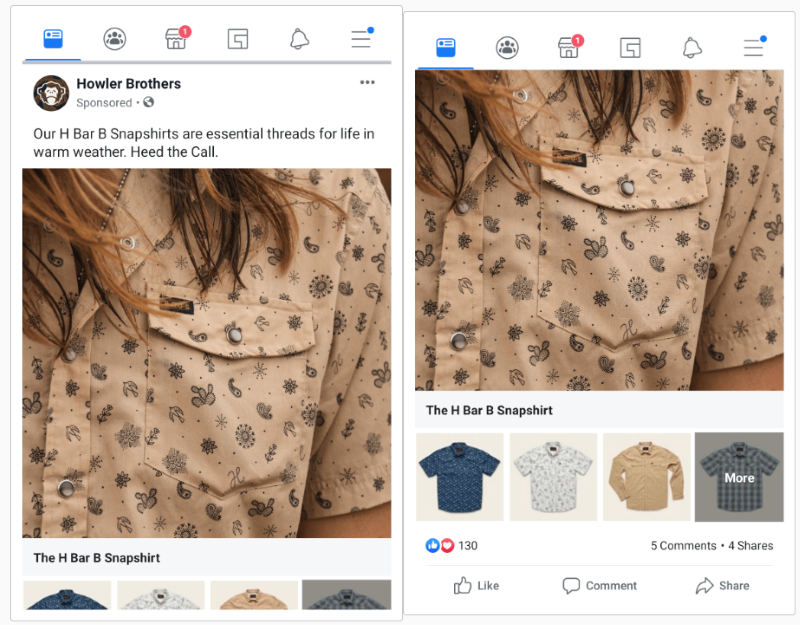
Collection ads create immersive mobile shopping experiences by combining a cover image/video with a product grid—bridging discovery and purchase in one tap. They’re designed specifically for mobile commerce.
What it is: A mobile-first format featuring a primary visual above a grid of product images. Tapping opens a full-screen Instant Experience storefront.
Best for: E-commerce businesses, product launches, seasonal collections. If mobile conversions matter (and they should—remember that 98.5% mobile stat?), Collection Ads are essential.
Expert tip: Pair with Instant Experiences for frictionless browsing. Users can explore multiple products without ever leaving Facebook.
Specs:
- Requires product catalog integration
- Cover: Image or video
- Product grid: Pulled from your catalog
Analogy: Collection Ads are like a retail delivery truck that brings your entire inventory directly to the customer’s phone screen.
5. Instant Experience Ads (Formerly Canvas): Immersive Mobile Storytelling
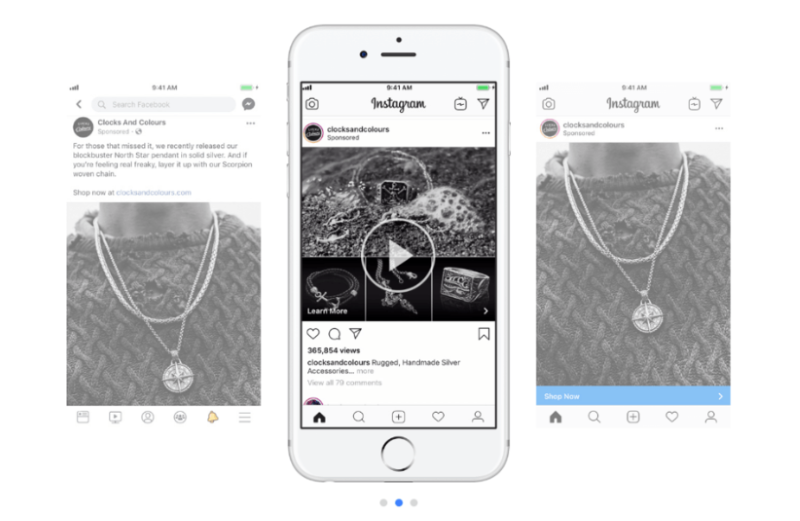
Instant Experience ads are full-screen, lightning-fast landing pages built within Facebook—loading 15x faster than mobile websites and eliminating bounce-causing load times.
What it is: A post-click destination combining videos, images, text, carousels, and product sets into an immersive micro-site experience. Instant Experiences keep users within the Facebook ecosystem while delivering rich, interactive content.
Best for: Brand storytelling, major product launches, portfolio showcases. When you need to convey complex information without sending users to an external site, this format shines.
Expert tip: The average view time for Instant Experiences exceeds 31 seconds—significantly higher than typical ad engagement. Use that time wisely with clear narrative flow.
Specs:
- Mobile-only
- Customizable templates available
- Supports video, images, carousels, buttons, and forms
6. Lead Ads: Capturing Interest Directly
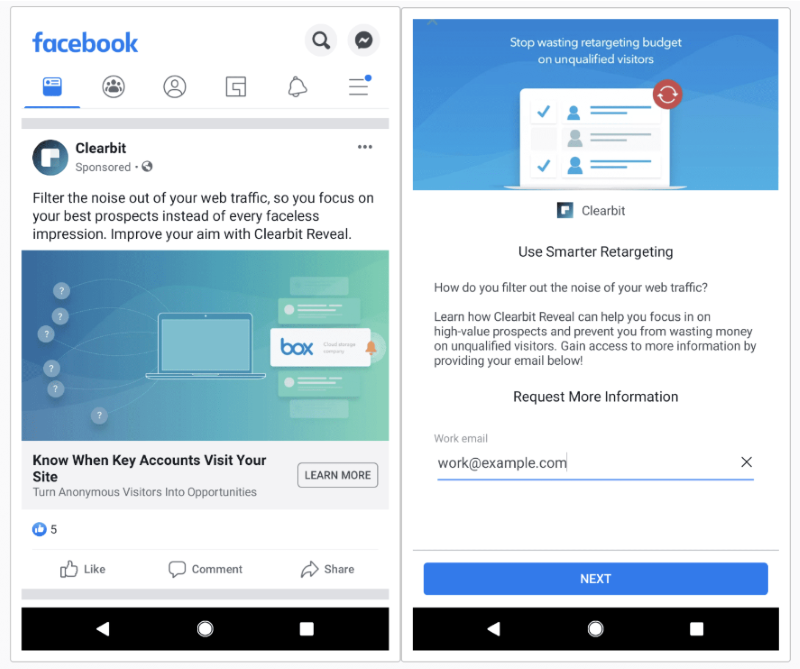
Lead Ads let users submit their information without ever leaving Facebook, with pre-filled Instant Forms that dramatically reduce friction and boost conversion rates. Average conversion rate for leads campaigns: 7.72%.
What it is: In-platform Instant Forms that auto-populate with users’ Facebook profile data—name, email, phone—requiring minimal effort to complete.
Best for: Email list building, webinar registrations, quote requests, appointment scheduling. Essential for any business relying on lead generation.
Expert tip: Keep Instant Forms minimal. Every additional field reduces completion rates. Only ask for what you absolutely need.
Specs:
- Customizable form fields
- Requires Privacy Policy link
- Instant CRM sync available through integrations
7. Messenger Ads: Direct Conversations, Direct Results
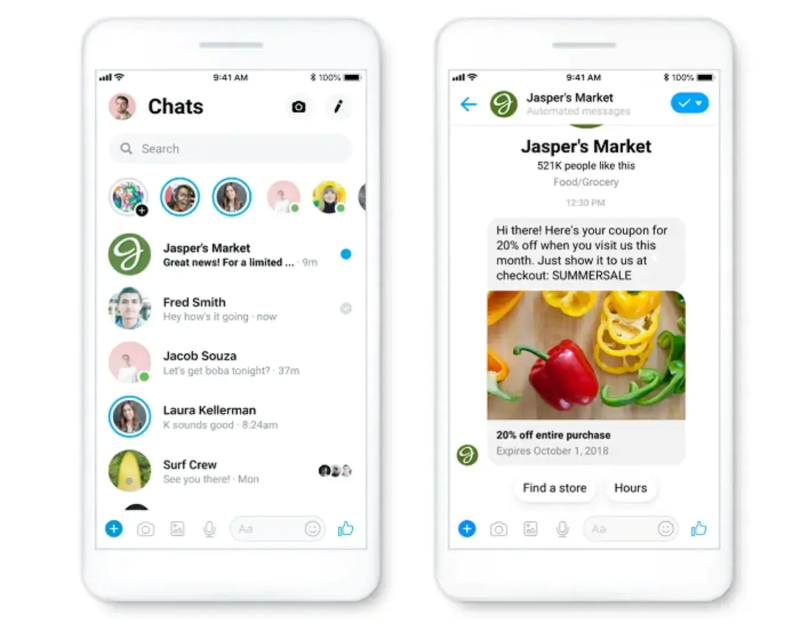
Messenger Ads open direct, personal conversations with prospects through Facebook Messenger—humanizing your brand and enabling real-time engagement for high-touch sales.
What it is: Ads that either appear in the Facebook Messenger inbox (sponsored messages) or drive users to start a conversation via click-to-message CTAs.
Best for: Customer service, sales qualification, appointment booking, high-ticket items requiring personal interaction. B2B companies especially benefit from this direct channel.
Expert tip: Set up automated responses in Facebook Messenger to handle initial inquiries, then escalate to human agents for qualified leads. Don’t let conversations go cold.
Specs:
- Inbox placement or sponsored messages
- Click-to-message CTAs
- Chatbot integration supported
8. Stories Ads: Vertical, Full-Screen Engagement
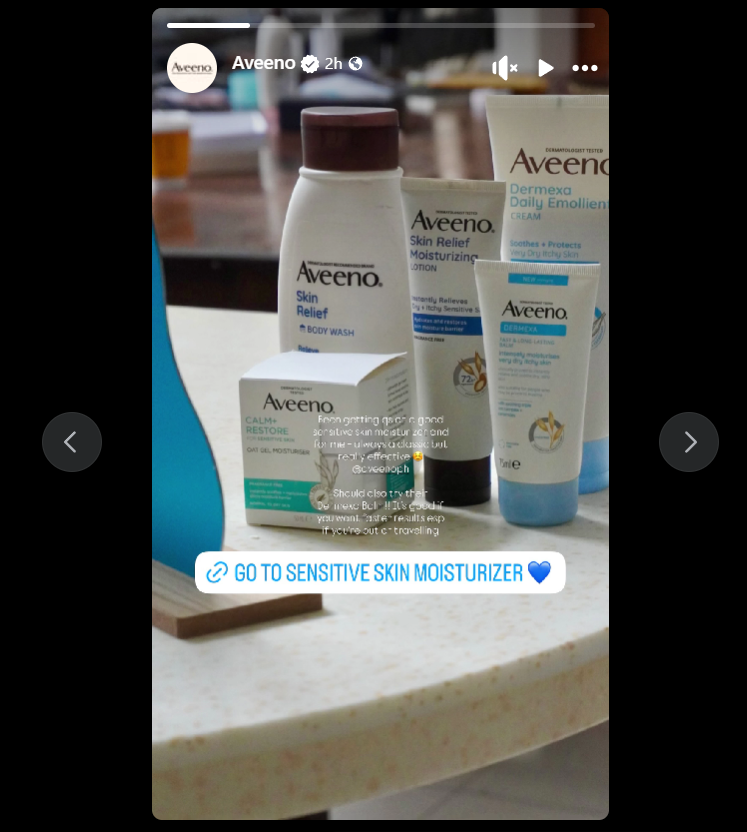
Stories Ads deliver full-screen, immersive vertical content that appears between organic Stories—capturing attention in a format that 500+ million users engage with daily.
What it is: Short vertical ads (images or videos) seamlessly inserted between users’ friends’ Stories on Facebook, Instagram, and Facebook Messenger.
Best for: Time-sensitive promotions, flash sales, event marketing, mobile-first brand storytelling. The ephemeral nature creates urgency.
Expert tip: Use “safe zones”—keep text and logos away from the top 14% and bottom 20% of the screen where UI elements appear.
Specs:
- Aspect ratio: 9:16 (full vertical)
- Resolution: 1080×1920 px
- Duration: Up to 15 seconds
- File size: 30MB (image), 4GB (video)
9. Reels Ads: Short-Form, Engaging Video
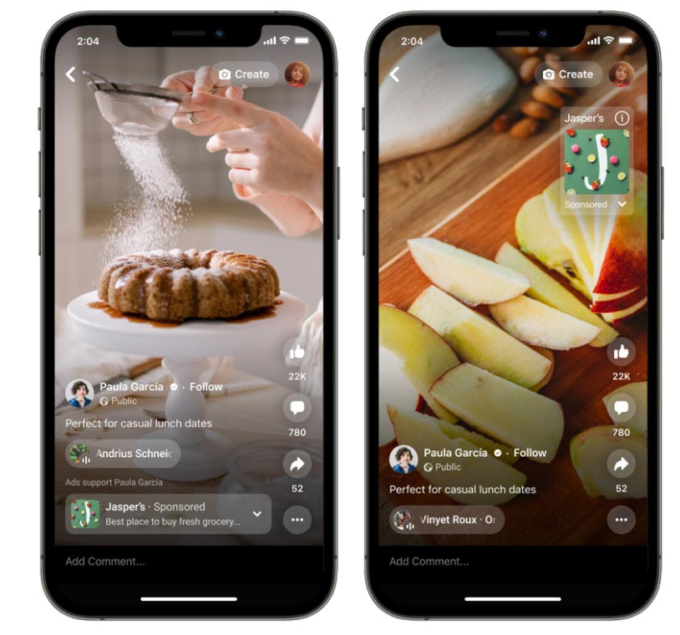
Reels Ads tap into Facebook’s fastest-growing content format, delivering 22% higher engagement rates than standard video posts. With 3.5 billion daily reshares across Meta platforms, Reels represents massive opportunity.
What it is: Short-form vertical video ads appearing between organic Reels content, designed to feel native to the feed.
Best for: Gen Z audiences, entertainment-first content, trend-based marketing, viral campaigns. If your target audience lives on short-form video (spoiler: increasingly everyone does), Reels is mandatory.
Expert tip: Create content that feels native, not polished. Overly produced ads stand out—and not in a good way. Embrace authenticity and trends. I’ve written about Instagram video ad strategies that apply equally here.
Specs:
- Aspect ratio: 9:16
- Duration: Under 30 seconds recommended (up to 90 seconds supported)
- File size: 4GB max
10. Playable Ads: Interactive Previews for Apps
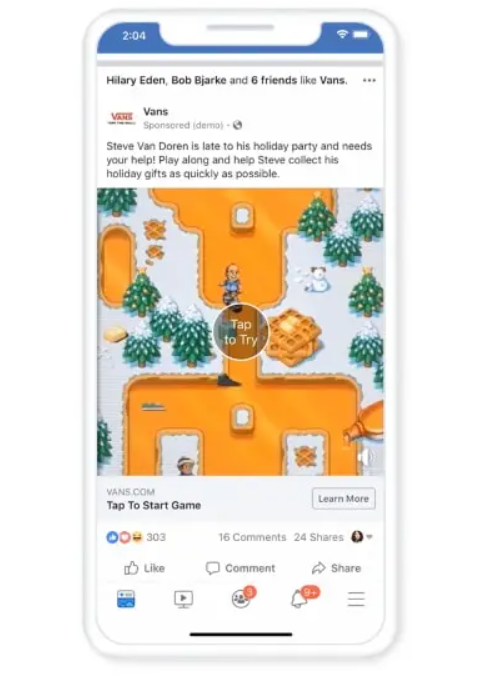
Playable Ads let users experience your app before downloading—reducing uninstalls and improving user quality by letting people “try before they buy.”
What it is: Interactive HTML5 experiences allowing users to demo core app functionality directly within the ad.
Best for: Mobile app promotion, gaming apps, utility apps where hands-on experience demonstrates value.
Expert tip: Showcase your app’s “aha moment”—the core feature that hooks users. If it’s a game, make the playable addictively fun.
Specs:
- HTML5 interactive format
- Mobile-optimized
- Duration: Typically 15–60 seconds of gameplay
11. Dynamic Ads: Personalized Product Promotion
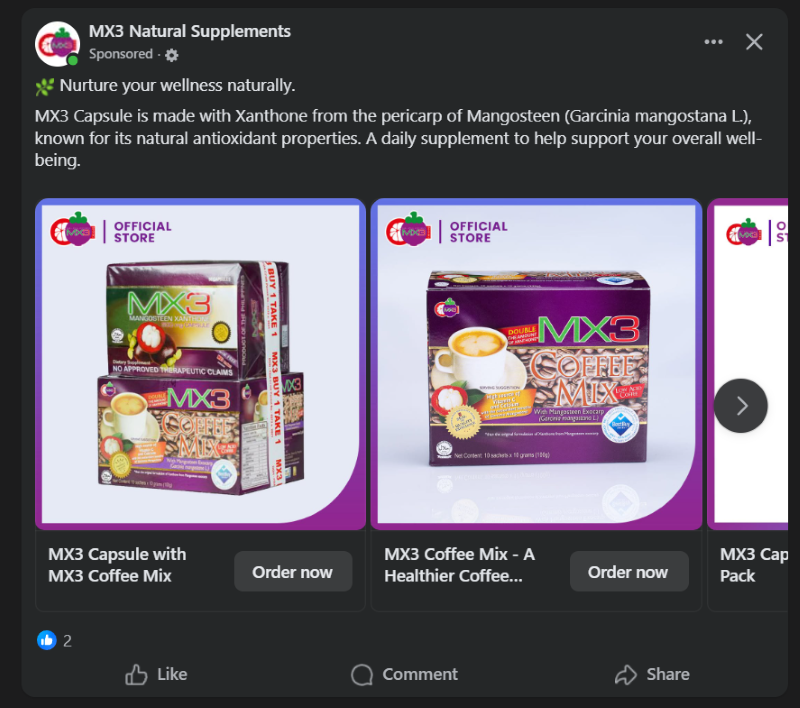
Dynamic Ads automatically serve personalized product recommendations based on user behavior—retargeting campaigns using this format can boost conversions by up to 150%.
What it is: AI-powered ads that pull products from your catalog to show users items they’ve viewed, added to cart, or are likely to want.
Best for: Retargeting, abandoned cart recovery, cross-selling, upselling. If you have an e-commerce catalog, Dynamic Ads are non-negotiable.
Expert tip: The automation consistently outperforms manual product selection. Trust the algorithm—it knows what individual users want better than you do.
Specs:
- Requires product feed/catalog setup
- Works across Image, Carousel format, and Collection formats
- Real-time inventory sync recommended
12. Augmented Reality (AR) Ads: Interactive and Experiential
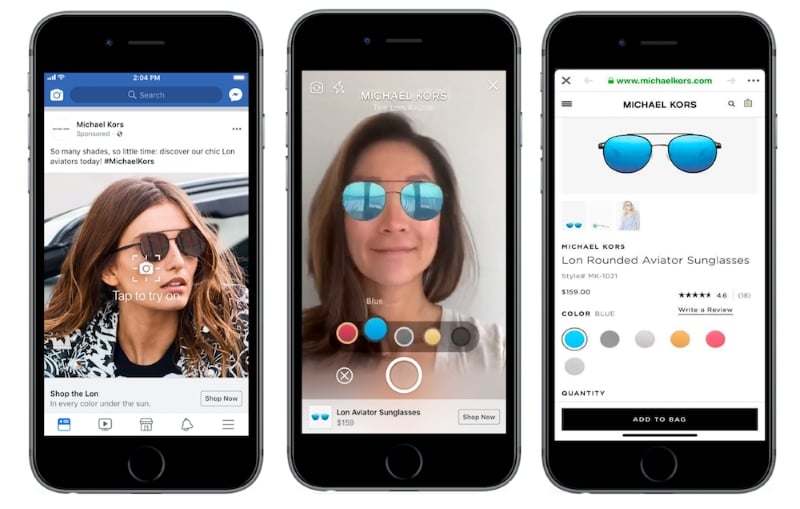
AR Ads let users virtually try on products using their phone’s camera—removing purchase barriers and driving engagement that’s highly shareable.
What it is: Camera-based experiences allowing virtual try-ons, product placement in real environments, or interactive brand filters.
Best for: Beauty/cosmetics, eyewear, furniture, fashion—any product where visualization reduces purchase anxiety. The AR advertising market is projected to reach $5.8 billion.
Expert tip: AR drives exceptional engagement but requires higher production investment. Start with a single hero product rather than your entire catalog.
Specs:
- Requires Spark AR Studio integration
- Camera-based activation
- Mobile-only
Bonus Ad Types Worth Knowing
Beyond the core dozen, a few specialized formats deserve mention:
Slideshow Ads: The Lightweight Video Alternative
Perfect for brands without video production resources or targeting markets with slower internet. Uses 3–10 static images to create video-like motion with text overlays and music. Great for testing concepts before investing in full video production.
Event Ads & Offer Ads
Event Ads: Promote Facebook Events with RSVP functionality built in. Essential for webinars, workshops, in-person gatherings.
Offer Ads: Promote discounts and deals that users can save and redeem. Creates urgency and drives immediate purchase intent.
Poll Ads
Two-option interactive polls that boost engagement by inviting participation. Useful for audience research, sparking curiosity, or subtly A/B testing product concepts.
Facebook Ad Placements: Where Your Ads Appear
Understanding ad types is half the equation—knowing where they appear is the other half.
Feed Placements
- Facebook News Feed: The classic, high-visibility placement
- Instagram Feed: Visually-driven, highly engaged audience
- Marketplace: Reaches users actively shopping
- Groups Feed: Community context
Stories & Reels Placements
- Facebook Stories: Full-screen, immersive
- Instagram Stories: The most popular Stories placement
- Facebook Reels: Fastest-growing format
- Instagram Reels: Massive Gen Z reach
Other Placements
- Right Column (Desktop): Lower cost, lower engagement
- In-Stream Video: Pre-roll and mid-roll placements
- Search Results: Intent-based visibility
- Facebook Messenger: Direct inbox placement
- Audience Network: Third-party sites and apps
Pro tip: Start with Automatic Placements and let Meta’s algorithm optimize. Only restrict placements once you have performance data showing clear winners and losers.
Technical Specs Cheat Sheet
Always verify against Meta’s official documentation—specs change. Here’s your quick reference:
| Format | Aspect Ratio | Resolution | File Size |
|---|---|---|---|
| Image (Feed) | 1:1 or 4:5 | 1080×1080 px min | 30MB max |
| Video (Feed) | 4:5 or 1:1 | 1080×1080 px min | 4GB max |
| Stories/Reels | 9:16 | 1080×1920 px | 4GB max |
| Carousel | 1:1 per card | 1080×1080 px | 30MB/image |
Text guidelines:
- Primary text: 125 characters (optimal display)
- Headline: 40 characters
- Description: 20 characters
Choosing the Right Facebook Ad Type for Your Campaign
This is where strategy meets execution. Your format choice should never be random.
Align with Your Campaign Objective
This is the golden rule:
- Awareness → Image, Video, Stories
- Consideration → Carousel, Lead Ads, Messenger
- Conversion → Collection, Dynamic Ads, VBO
Trying to drive conversions with an awareness-optimized format is like using a screwdriver as a hammer. It might technically work, but you’re fighting the tool.
Consider Your Audience
| Audience Type | Best Formats |
|---|---|
| Mobile-first users | Stories, Reels, Collection |
| Desktop users | Right Column, Feed |
| Slow internet regions | Slideshow Ads |
| Gen Z | Reels, Playable, AR |
Factor in Your Content
| Content Type | Recommended Format |
|---|---|
| Simple message | Image Ads |
| Complex story | Video, Carousel, Instant Experiences |
| Product catalog | Collection, Dynamic Ads |
| Interactive demo | Playable, AR |
Match Budget to Format
| Budget Level | Recommended Formats |
|---|---|
| Low ($500–$2K/month) | Image, Slideshow, Carousel |
| Medium ($2K–$10K/month) | Video, Lead Ads, Collection |
| High ($10K+/month) | Full mix + AR, Playable, VBO |
Start lean, test relentlessly, then scale what works. I’ve covered Facebook ads ROI optimization in detail if you want to dig deeper.
Beyond the Types: Essential Facebook Ad Best Practices for 2026
Knowing ad types is foundational. Mastery requires combining that knowledge with ongoing optimization practices.
A/B Test Everything
Never assume. Test different creatives, headlines, copy variations, CTAs, and audience segments. Facebook Ads Manager’s built-in A/B testing tools make this straightforward. Small tweaks—a different image, a revised headline—can move performance metrics significantly.
Optimize for Mobile
This isn’t optional. With 98.5% mobile access:
- Design for 9:16 vertical first
- Keep text concise and legible at small sizes
- Add captions for sound-off viewing
- Ensure landing pages load fast and display properly
Keep Your Creative Fresh
Ad fatigue is real. Users get tired of seeing the same ad repeatedly, and your costs rise as engagement drops. Refresh creatives every 2–4 weeks, or sooner if you see performance decline. Maintain 3–5 creative variations running simultaneously.
Leverage Retargeting
Most website visitors won’t convert on first visit. Use Facebook Pixel to track:
- Website visitors
- Abandoned carts
- Engaged social followers
- Video viewers
Then serve them targeted follow-up ads. This is typically where you see highest ROI.
Use AI-Powered Tools
Meta’s AI capabilities are becoming increasingly sophisticated. Embrace:
- Advantage+ placements: AI-optimized distribution
- VBO: Value-based bidding for profitable conversions
- Advantage+ Creative: Automatic creative optimization
As I’ve discussed in my digital marketing guide, the marketers who leverage AI tools effectively will outperform those who resist them.
The Future of Facebook Ads: What’s Next?
The landscape continues evolving rapidly. Here’s what’s coming:
AI and Automation Dominance: VBO and Advantage+ are just the beginning. Expect increasingly hands-off campaign management as AI handles targeting, creative optimization, and budget allocation.
AR/VR Expansion: Meta’s investment in immersive experiences will push AR ads mainstream. Virtual try-ons will become expected, not exceptional.
Privacy-First Advertising: With ongoing privacy changes, expect continued evolution toward aggregated data models and AI-based targeting that doesn’t rely on individual-level tracking.
Short-Form Video Growth: Reels will continue dominating attention. Video content strategy is increasingly synonymous with social strategy.
Conversational Commerce: Facebook Messenger-based shopping experiences will expand, blurring lines between advertising, customer service, and transactions.
Frequently Asked Questions
The 12 main Facebook ad types are: Image Ads, Video Ads, Carousel Ads, Collection Ads, Instant Experience Ads, Lead Ads, Messenger Ads, Stories Ads, Reels Ads, Playable Ads, Dynamic Ads, and AR Ads. Each serves different campaign objectives and audiences.
Collection Ads with Instant Experiences are ideal for product showcases and mobile shopping. Dynamic Ads excel at retargeting with personalized product recommendations. The Carousel format works well for displaying multiple products, and VBO optimizes for highest-value customers.
Facebook ads average approximately $0.58–$0.87 CPC, while Google Search Ads average $2.69–$5.26 CPC depending on industry. Facebook excels at demand generation and audience building, while Google captures existing search intent.
Boosting from your Facebook Page is a simplified, quick-promotion method with limited targeting options. Facebook Ads Manager provides granular control over campaign objectives, audiences, placements, bidding strategies, and creative formats—many of which aren’t available through boosting. For serious marketing, Facebook Ads Manager is essential.
Refresh creatives every 2–4 weeks to avoid ad fatigue, or sooner if you notice declining click-through rates or rising costs. High-performing creatives can run longer, but consistent refreshing maintains engagement and prevents performance decay.
VBO is an AI-driven optimization strategy that targets users most likely to generate highest revenue or lifetime value—not just any conversion. It requires passing purchase value data to Meta via Facebook Pixel or Conversions API and is designed to maximize profitability, not just conversion volume.
Conclusion: Your Facebook Ad Strategy Starts Here
Let me be direct: Facebook advertising in 2025 isn’t about mastering one format—it’s about knowing which tool to reach for based on your specific campaign objective, audience, and budget.
Here’s your action plan:
- Match format to objective. Awareness goals need different formats than conversion goals.
- Prioritize mobile-first. Stories, Reels, and Collection Ads should be in your regular rotation.
- Leverage AI tools. VBO and Advantage+ aren’t optional anymore—they’re competitive necessities.
- Test continuously. Refresh creatives every 2–4 weeks and let data guide your decisions.
If you’re just getting started, begin with Image or Carousel Ads to learn what resonates with your audience. Once you understand what messaging and visuals connect, scale to video and advanced formats.
The advertisers who win aren’t those with the biggest budgets—they’re the ones who understand the tools and deploy them strategically. Now you have the blueprint. Go execute.
Ready to level up your Facebook marketing? Check out my comprehensive Facebook Marketing Strategy guide for the complete framework.
Actionable advice for your digital / content / influencer / social media marketing.
Join 13,000+ smart professionals who subscribe to my regular updates.
