

Over the years, especially through the chaos of the pandemic, I watched local entrepreneurs fight to stay visible while competing against bigger brands with deeper pockets. As a Fractional CMO who has worked with businesses of all sizes, and as someone who has written extensively about SEO best practices and digital marketing strategy in my definitive book on modern digital marketing, Digital Threads, I’ve spent considerable time digging into what actually moves the needle for local businesses, both through research and through conversations with clients navigating these exact challenges.
What most of them didn’t realize is that local SEO isn’t about doing everything. It’s about doing the right things consistently. And once you understand how Google thinks about proximity, relevance, and trust, the playing field suddenly feels a whole lot more level.
In this guide, I’ll walk you through the strategies, tactics, and tools that consistently help small businesses show up when local customers need them most.
Key Takeaways
✅ Google Business Profile is the single most important lever for local search visibility, driving 42% of local pack clicks.
✅ 76% of local mobile searchers visit a business within 24 hours, making local SEO a direct revenue driver.
✅ Reviews are your most undervalued asset: 98% of consumers read online reviews before choosing a local business.
✅ Consistent NAP (Name, Address, Phone) information across all platforms is essential for Google to trust and rank your business.
✅ Local link building through community involvement creates both real-world relationships and digital authority.
What Is Local SEO and Why Does It Matter for Small Businesses?
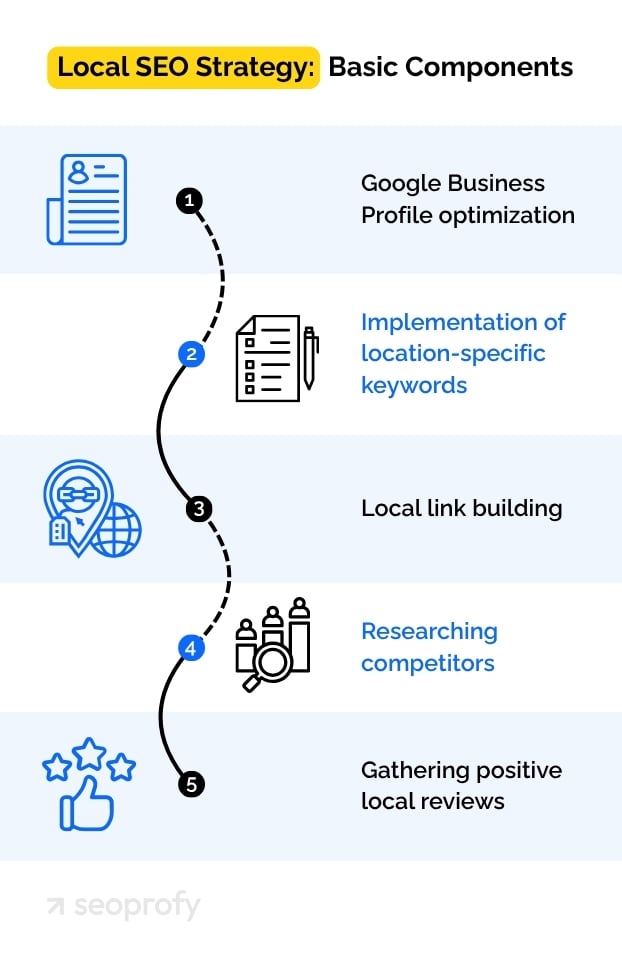
Local SEO is the practice of optimizing your online presence to attract customers from relevant local searches. These searches happen on Google and other search engines when people look for products or services “near me” or in a specific geographic area. For businesses with physical locations or service areas, local SEO determines whether you show up when customers need you most.
Think about it: 76% of people who conduct a local search on their smartphone visit a physical place within 24 hours. And 28% of those searches result in a purchase, according to Google’s own research. That’s not just website traffic. That’s foot traffic and revenue.

Google treats local intent differently than general search. When someone types “coffee shop” into Google at 7 AM, they don’t want a Wikipedia article about coffee shops. They want to know where to get coffee right now, close to where they’re standing.
How Google Determines Local Rankings
According to Google’s official documentation, local results are based primarily on three factors:
| Ranking Factor | What It Means | How to Influence It |
|---|---|---|
| Relevance | How well your business listing matches what someone is searching for | Complete business profile, accurate categories, detailed descriptions |
| Distance | How far your business is from the location term used in a search | Your physical address (can’t change this, but can optimize for service areas) |
| Prominence | How well-known your business is, both online and offline | Reviews, citations, links, brand mentions, total web presence |
The reality? You can’t change your physical location. But you can absolutely influence relevance and prominence. That’s where the opportunity lives for small businesses.
Local search is designed primarily for physical businesses and specific service areas. If you’re an online-only business, showing up in local search results won’t benefit you much. But if you have a storefront, office, or service area where you meet customers, local SEO should be a priority.
How Do I Optimize My Google Business Profile for Local Search?
Your Google Business Profile (GBP) is the single most important lever for local search visibility. According to Moz’s research on local ranking factors, GBP signals are the most influential factor for ranking in Google’s local pack. Think of it as your storefront in Google’s ecosystem. The clearer and more active it is, the easier customers can find and choose you.
I’ve seen businesses double their local visibility just by properly completing and maintaining their GBP. It sounds basic, but you’d be surprised how many profiles are half-finished or outdated.
Core Setup and Verification
Getting verified is step one. You can’t do much without it, and Google gives preference to verified listings. Here’s your checklist:
- Business name: Use your real business name. Don’t stuff keywords into it (Google penalizes this).
- Address and service areas: Be precise. If you’re a service-area business, define your service areas clearly.
- Phone number and website: Use a local phone number when possible.
- Primary category: This is critical. Choose the category that most accurately describes what you do. According to Moz’s research, your primary category directly impacts which searches you appear in.
- Secondary categories: Add all relevant ones, but don’t go overboard.
- Hours and attributes: Include holiday hours. Keep them updated.
Visual Content That Builds Trust
Photos matter more than most businesses realize. Businesses with photos receive 42% more requests for directions on Google Maps and 35% more clicks through to their websites.
Use these types of visual content:
- High-quality photos of your storefront (helps Google confirm your location)
- Interior shots showing your space
- Team photos (people connect with people)
- Photos of your work, products, or services
- Short videos showcasing your process or customer experience
Update your photos regularly. Fresh visuals signal an active, thriving business.
Is Your LinkedIn Not Delivering Results?
Just released: my new book to help professionals, entrepreneurs, and business owners maximize LinkedIn for real growth.
With years of LinkedIn expertise, Maximizing LinkedIn for Business Growth offers actionable steps to build your brand, expand your network, and drive results.
Start leveraging LinkedIn like never before—grab your copy now! Click the cover or button below to buy on Amazon.

Staying Active on Your Profile
Google rewards businesses that actively engage with their GBP. This means:
- Post weekly: Share offers, events, updates, FAQs, and seasonal tips. Google Posts show up directly in your listing.
- Enable and monitor messaging: If someone messages you through Google, respond quickly.
- Answer Q&A: People ask questions on your profile. Answer them promptly and thoroughly.
- Update hours immediately: Nothing frustrates customers more than showing up to a closed business because the hours were wrong online.
An active, optimized profile doesn’t just help you rank. It removes friction and builds trust before a customer ever contacts you.
Why Are Reviews the Most Undervalued Local SEO Asset?
Reviews are one of the few marketing channels where your customers literally sell for you. 98% of consumers read online reviews for local businesses, and 87% used Google specifically to evaluate local businesses in 2024. When managed intentionally, reviews become a compounding trust asset that strengthens both rankings and conversions.
I often tell clients that reviews are the new word-of-mouth. Except instead of telling one friend, happy customers can tell thousands of strangers.
How to Earn More Reviews
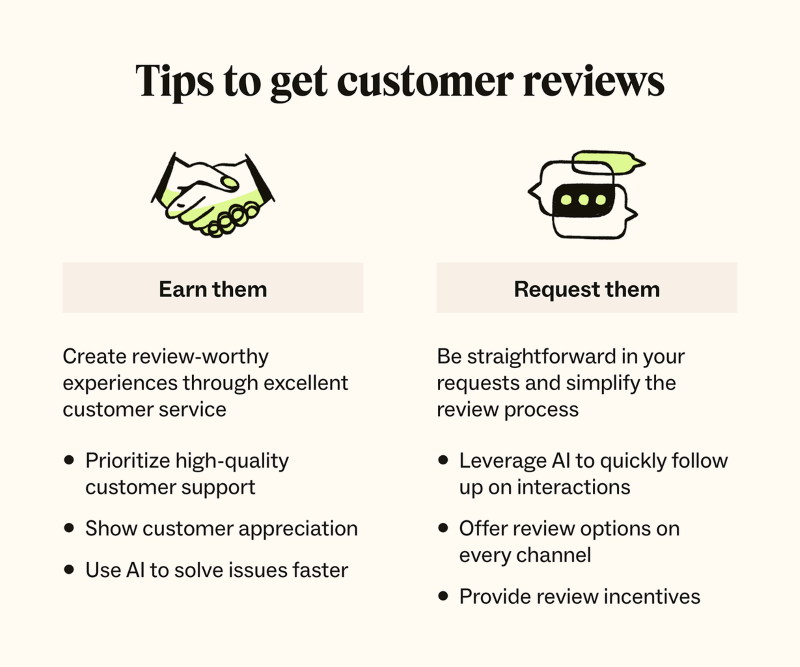
Most customers are willing to leave a review. They just need a simple, well-timed nudge. Here’s what works:
| Strategy | Why It Works | Implementation Tip |
|---|---|---|
| Ask immediately after positive interactions | Emotions are highest right after good experiences | Train staff to recognize these moments |
| Use QR codes | Makes it effortless for customers | Print on receipts, business cards, table tents |
| Send email follow-ups | Catches people when they’re at their computer | Automate 24-48 hours after purchase/service |
| SMS follow-ups | High open rates, easy to tap and review | Keep the message short with direct link |
The key is making it easy. Every extra click you add reduces the likelihood someone actually leaves a review.
How to Respond to Reviews
Every review deserves a response. Not just the negative ones.
For positive reviews: Thank them specifically. Mention something they referenced. This shows you actually read it.
For negative reviews: Stay calm. Acknowledge their experience. Offer to make it right offline. Never argue. A thoughtful response to a negative review often matters more to future customers than the negative review itself.
Here’s something I’ve learned from experience: how you handle negative reviews tells potential customers more about your business than a pile of five-star ratings ever could.
What Is NAP Consistency and Why Does It Matter?
NAP stands for Name, Address, and Phone number. It seems simple, but inconsistent NAP information across the web creates confusion for both Google and customers. When your business name is “Joe’s Plumbing” on Google but “Joe’s Plumbing Services LLC” on Yelp, Google has to guess whether these are the same business.
Google doesn’t like guessing. And when it’s unsure, it hedges by reducing your visibility.
How to Audit Your NAP
Start by searching for your business name and address. Check:
- Google Business Profile
- Yelp
- Bing Places
- Apple Maps
- Industry-specific directories
- Chamber of Commerce listings
- Old business directories you may have forgotten about
Look for inconsistencies: old phone numbers, previous addresses, variations in your business name, duplicate listings. Fix everything you find.
If you’ve moved or rebranded, this audit is especially important. Old listings don’t just disappear. They linger and cause problems.
Where Your NAP Must Appear
Consistency matters everywhere, but focus on these first:
- Google Business Profile (top priority)
- Your website: footer, contact page, location pages
- Major directories: Yelp, Bing Places, Apple Maps
- Social media profiles: Facebook, LinkedIn, Instagram
- Industry-specific platforms: Whatever is relevant to your field
As I’ve written about in my article on off-page SEO, these citations help establish your business’s legitimacy across the web.
How Do I Create Local Landing Pages That Rank?
If your business serves multiple cities or neighborhoods, each deserves its own page on your website. These local landing pages let you rank for location-specific searches and speak directly to each community.
The mistake I see most often? Businesses create duplicate pages with nothing but the city name swapped out. Google sees through this immediately. Each page needs unique, genuinely useful content.
What Every Local Landing Page Needs
| Element | Purpose | Best Practice |
|---|---|---|
| Unique description | Speaks to that specific community | Reference local landmarks, neighborhoods, or context |
| Services offered there | Shows what you do in that location | Be specific about what’s available |
| Local testimonials | Builds trust with social proof from that area | Feature reviews from customers in that location |
| Embedded Google Map | Helps users and confirms location to Google | Center on your service area or address |
| Directions and parking | Reduces friction for visitors | Include practical details locals need |
| Local FAQs | Captures long-tail searches | Answer questions specific to that location |
I covered more technical aspects of this in my SEO checklist, but the bottom line is simple: make each page genuinely useful to someone in that specific location.
What Local Keywords Should I Target?
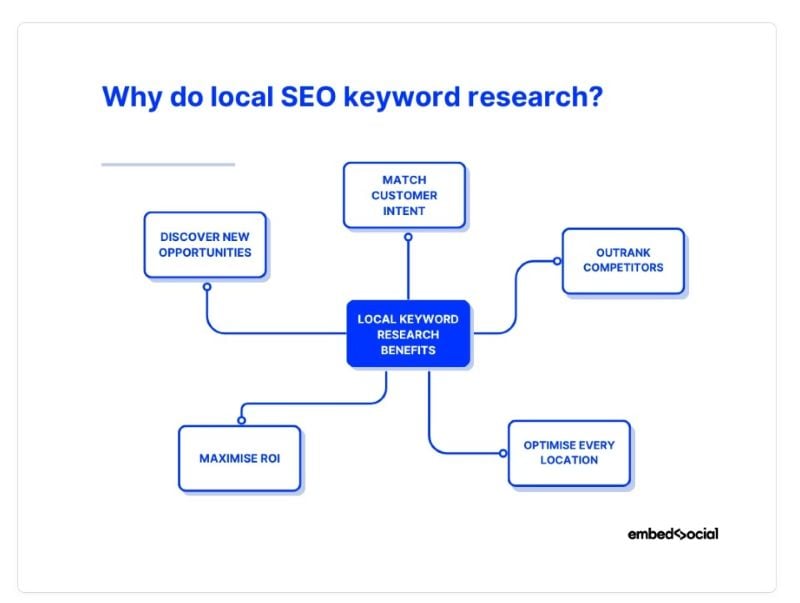
Local keyword research isn’t about chasing volume — it’s about understanding real search behavior in your backyard. These insights guide every page, post, and optimization that follows.
Local keyword research isn’t about chasing high-volume terms. It’s about understanding how people in your area actually search. The specificity is where small businesses can win.
Big national brands can outspend you on “plumber.” They probably can’t compete on “emergency plumber downtown Austin Sunday.”
Types of Local Intent Keywords
Focus on these keyword patterns:
- “[Service] near me”: These searches have exploded. Google reports 900%+ growth in “near me” searches over the past few years.
- “[Service] + [city/neighborhood]”: The classic local search pattern.
- “[Service] + [modifier] + [location]”: More specific, often higher intent. Examples: “24-hour emergency dentist Phoenix” or “affordable wedding photographer Brooklyn.”
- Service-specific queries with location intent: “Who fixes iPhone screens” when searched locally.
Tools for Local Keyword Research
You don’t need expensive tools to find local keywords. Start with:
- Google Autocomplete: Type your service and watch what Google suggests
- People Also Ask: These questions reveal exactly what people want to know
- Google Business Profile insights: Shows what searches are actually driving views to your profile
- Competitor GBP analysis: See what categories and keywords competitors use
For deeper research, tools like Semrush, Ahrefs, or Google’s Keyword Planner can validate your findings and uncover opportunities you might miss.
How Do Citations and Directories Help Local SEO?
Citations are mentions of your business name, address, and phone number on other websites. They help Google confirm you’re a real, established presence in your community. Think of them as digital breadcrumbs that lead Google back to your business.
According to the Whitespark Local Search Ranking Factors report, citations remain a significant factor in local pack rankings, though their relative importance has declined as reviews and GBP signals have grown stronger.
Priority Citation Sources
Not all citations are equal. Start here:
Tier 1 (Essential):
- Google Business Profile
- Bing Places for Business
- Apple Maps Connect
- Yelp
- Facebook Business
Tier 2 (Important):
- Your local Chamber of Commerce
- Better Business Bureau
- Industry-specific directories
- Local business associations
Tier 3 (Helpful):
- City/community websites
- Local news publication directories
- Niche review sites for your industry
Quality beats quantity. Ten accurate listings on authoritative sites help more than 100 listings on obscure directories nobody uses.
What Local Link Building Strategies Actually Work?
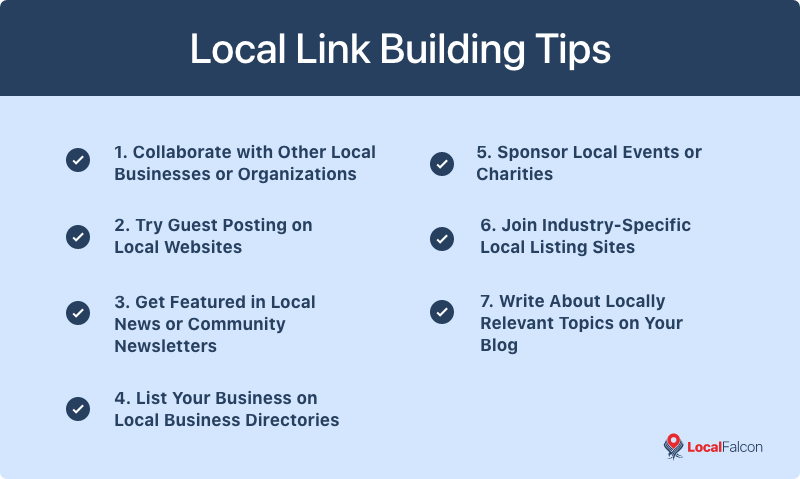
Local link building is less about technical tricks and more about genuine relationships. When you show up for your community, your community starts showing up for you online. I’ve written extensively about backlinks and why they matter, but local link building has its own playbook.
Community Connection Strategies
Some of the best local links come from simply being an active, engaged neighbor:
| Activity | Link Opportunity | Secondary Benefits |
|---|---|---|
| Local sponsorships | Organization websites, event pages | Brand visibility, goodwill |
| Chamber of Commerce membership | Chamber directory, member spotlights | Networking, referrals |
| Hosting local events/workshops | Event listings, local calendars, press | Thought leadership, leads |
| Charity involvement | Nonprofit websites, press coverage | Community reputation |
| Speaking at local organizations | Organization blogs, recap posts | Authority positioning |
| Local partnerships | Partner websites, co-marketing | Shared audiences |
Here’s the thing: I’m not suggesting you do these things just for the links. Do them because they’re good for your business and community. The links follow naturally.
How Do I Optimize My Website for Local Search?
Your website still plays a major role in how Google understands your geography and relevance. A few thoughtful on-page changes can dramatically improve local performance.
On-Page Local SEO Checklist
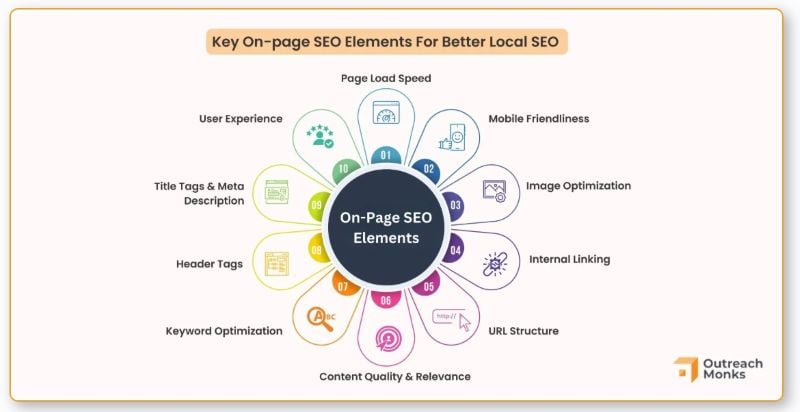
Focus on these elements:
- Title tags: Include your primary service and location. “Plumbing Services in Austin, TX | Joe’s Plumbing”
- Meta descriptions: Mention your location and a compelling reason to choose you
- H1 and H2 headings: Naturally include local keywords
- Body content: Reference your location, service area, and local context throughout
- Schema markup: Add LocalBusiness structured data to help Google understand your business type, location, hours, and more
- Internal linking: Link to your location pages from relevant service pages
For a deeper look at technical optimization, my technical SEO guide covers the fundamentals you need.
How Do I Track Local SEO Performance?
Local SEO isn’t set-and-forget. It’s an ongoing rhythm. Tracking the right metrics shows you what’s working and where to focus next.
Essential Tracking Tools
| Tool | What It Shows | Cost |
|---|---|---|
| Google Business Profile Insights | Search queries, actions taken, photo views | Free |
| Google Search Console | Organic search performance, keyword rankings | Free |
| Google Analytics | Website traffic, behavior, conversions | Free |
| Local rank tracking tools (BrightLocal, Whitespark) | Map pack positions by location | Paid |
| Review monitoring platforms | Review volume, sentiment trends | Free/Paid options |
I recommend my clients check GBP Insights weekly and dive deeper into Search Console monthly. You don’t need to obsess over data, but you do need a pulse on what’s happening.
Metrics That Matter
Track these:
- Local pack visibility: Are you appearing in the 3-pack for your key terms?
- GBP actions: Calls, direction requests, website clicks from your profile
- Organic rankings: Where do your location pages rank for local keywords?
- Review volume and ratings: Are you growing? Is sentiment positive?
- Conversion actions: What are local visitors doing on your website?
As I discuss in my article on SEO statistics, 53% of all website traffic comes from organic search. For local businesses, that organic traffic often represents your most valuable customers.
What Local SEO Mistakes Should I Avoid?
Most mistakes in local SEO come from trying to game the system rather than earning trust. Avoid these pitfalls:
- Keyword stuffing your business name: “Joe’s Best Cheap Plumbing Austin TX” will get you penalized, not ranked.
- Inconsistent NAP: Even small variations confuse Google.
- Duplicate location pages: Copy-paste content with swapped city names doesn’t work.
- Ignoring reviews: Both positive and negative reviews deserve responses.
- Low-quality photos: Blurry, dark, or outdated images hurt your profile.
- Outdated hours: Especially holiday hours. Nothing kills trust faster than wrong hours.
- Over-relying on blogging: Content is great, but local trust signals matter more for local pack rankings.
- Buying fake reviews: Google is increasingly sophisticated at detecting these, and the penalties are severe.
The businesses that win locally aren’t gaming algorithms. They’re building genuine authority and trust in their communities.
Frequently Asked Questions About Local SEO
Most businesses see initial improvements in 3-6 months with consistent effort. Google Business Profile changes can impact visibility within weeks, but building review volume, citations, and local authority takes longer. The businesses that commit to consistent action for 12+ months see the strongest, most sustainable results.
No. Service-area businesses (plumbers, electricians, consultants who travel to clients) can absolutely benefit from local SEO. You’ll set up your Google Business Profile as a service-area business rather than displaying an address. The optimization strategies are similar, but you’ll focus on your service areas rather than a physical location.
There’s no magic number, but businesses in the local pack average 47 reviews. More important than raw quantity is recency and consistency. Ten reviews from the last month signal more to Google than 100 reviews from three years ago. Focus on building a steady stream rather than hitting a specific number.
Absolutely. Local SEO offers some of the best ROI in digital marketing because you’re reaching people actively searching for what you offer, right when they need it. The foundational elements (GBP optimization, NAP consistency, review management) are free to implement. They just require time and attention.
Start by doing it yourself. The fundamentals aren’t complicated, and no one knows your business better than you. If you’re seeing results and want to accelerate, or if you simply don’t have time to maintain consistency, that’s when bringing in help makes sense. Just make sure anyone you hire can explain exactly what they’re doing and why.
Your Next Move
Local SEO doesn’t require a massive budget or a technical degree. It requires consistency and a willingness to show up for your community, both online and off.
Start with your Google Business Profile. Get it verified, complete every field, add quality photos, and post regularly. Clean up your NAP across the web. Build a simple system for earning and responding to reviews.
These three moves alone will put you ahead of most local competitors.
Layer in citations, local content, and community connections over time. Track what’s working. Double down on it. Give it time to compound.
The businesses that win locally aren’t the ones doing everything. They’re the ones doing the right things, week after week, until visibility becomes inevitable.
If you’re serious about building your digital marketing presence, local SEO is where small businesses can genuinely compete with bigger players. The playing field is more level than you think.
If you’re ready to take your digital marketing seriously, I’ve got two ways to help. For hands-on strategic guidance, learn more about my Fractional CMO services. Or grab a copy of Digital Threads, my definitive playbook for small businesses navigating the digital marketing landscape.
Actionable advice for your digital / content / influencer / social media marketing.
Join 13,000+ smart professionals who subscribe to my regular updates.
