


The landscape of e-commerce is perpetually shifting, driven by evolving consumer expectations and technological advancements. In 2026, one technology stands paramount, reshaping how businesses interact with customers, manage operations, and drive growth: Artificial Intelligence (AI). If you’re running an e-commerce business and not actively exploring or implementing AI, you’re not just falling behind; you’re missing out on a fundamental shift that promises unprecedented efficiency and profitability.
As someone who has written Digital Threads, a modern digital marketing playbook, and works as a Fractional CMO with businesses navigating these changes, I’ve watched AI transform from experimental tech to essential infrastructure. I also discuss these developments on my podcast, Your Digital Marketing Coach.
The question is no longer if AI will impact e-commerce, but how profoundly. We are past the nascent stages; AI is now a mature, powerful tool ready for sophisticated application across every facet of your online business.
Why is this so crucial right now?
Because consumer demands for instant gratification, hyper-personalization, and frictionless experiences have never been higher.
AI is the engine that can meet these demands at scale, offering a competitive edge that is increasingly non-negotiable.
Key Takeaways
✅ The AI in e-commerce market reached $7.25 billion in 2024 and is projected to grow to $64 billion by 2034 at a 24.34% CAGR
✅ AI-powered chatbots increase conversion rates significantly compared to unassisted shopping, while recovering abandoned carts at rates up to 35%
✅ Personalization through AI drives substantial e-commerce revenue, with most companies reporting positive ROI
✅ According to McKinsey’s 2025 survey, 88% of organizations now use AI in at least one business function

✅ Agentic commerce is emerging rapidly, with AI agents influencing 20% of Cyber Week orders totaling $67 billion according to Salesforce
✅ Implementation costs range from hundreds per month for SaaS tools to significant investment for custom enterprise solutions
What Exactly Is AI in E-commerce?
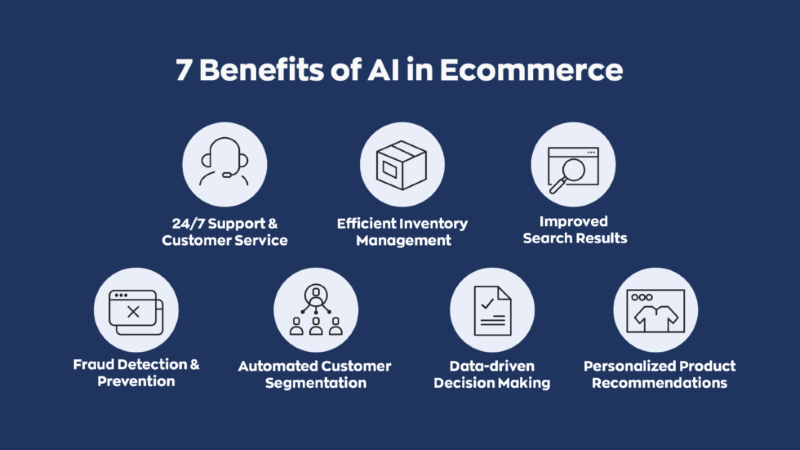
AI in e-commerce refers to the application of machine learning, natural language processing, computer vision, and predictive analytics to automate tasks, analyze customer data, personalize experiences, and optimize operations within online retail businesses. AI is changing the way people shop online by making it smarter, faster, and more personalized. From chatbots that handle customer inquiries to AI-driven product recommendations, businesses use this technology to boost efficiency and increase sales.
This isn’t about futuristic robots. It’s about sophisticated algorithms that process vast amounts of data, identify patterns, make predictions, and automate complex tasks. Artificial intelligence is no longer an experimental technology for e-commerce, it’s become operational infrastructure.
In essence, AI empowers your e-commerce platform to learn, adapt, and perform functions that traditionally required human intelligence, but at a speed and scale impossible for humans alone. It brings intelligent automation to every touchpoint of the customer journey and internal operation.
How Big Is the AI in E-commerce Market?
The global AI in e-commerce market reached $7.25 billion in 2024 and is projected to hit $64.03 billion by 2034, growing at a CAGR of 24.34% according to Precedence Research. AI adoption is rapidly increasing, driven by businesses aiming to enhance customer experiences, optimize inventory, and personalize marketing.
| Year | Market Size | Key Milestone |
|---|---|---|
| 2024 | $7.25 billion | Rapid enterprise adoption begins |
| 2025 | ~$9 billion | Most retailers using or testing AI |
| 2028 | $17+ billion | Widespread personalization integration |
| 2030 | $26+ billion | Agentic commerce mainstream adoption |
| 2034 | $64.03 billion | AI becomes default retail infrastructure |
McKinsey’s State of AI report found that 88% of organizations now use AI in at least one business function, up from 78% in 2024 and 55% the year before. Within retail specifically, adoption rates are even higher as companies race to implement AI-powered customer experiences.
Why Can’t You Afford to Ignore AI in 2026?
Ignoring AI in 2026 is like ignoring the internet in 1999. The benefits are too compelling, too transformative, to overlook. Here’s what’s at stake:
Unmatched Personalization: Most e-commerce businesses are either integrating AI or planning to, with key use cases including personalized recommendations, marketing automation, and virtual agents. If you’re exploring content creation, AI marketing tools can help you get started.
Operational Efficiency: Retailers who have adopted AI report improved annual revenue and decreased operational costs through efficient inventory management, automated customer service, and data-driven decision-making.
Is Your LinkedIn Not Delivering Results?
Just released: my new book to help professionals, entrepreneurs, and business owners maximize LinkedIn for real growth.
With years of LinkedIn expertise, Maximizing LinkedIn for Business Growth offers actionable steps to build your brand, expand your network, and drive results.
Start leveraging LinkedIn like never before—grab your copy now! Click the cover or button below to buy on Amazon.

Predictive Power: AI-enabled supply chain planning can increase revenue, reduce inventory waste, and lower supply chain costs significantly.
Enhanced Customer Satisfaction: According to Zendesk’s AI customer service statistics, 51% of consumers say they prefer interacting with bots over humans when they want immediate service.
Competitive Advantage: Nearly all retailers recognize AI’s strategic importance. Adobe’s Holiday Shopping Report showed AI traffic to retail sites rose 693.4% from the 2024 holidays, demonstrating how quickly consumer behavior is shifting.
What Are the Top AI Use Cases in E-commerce?
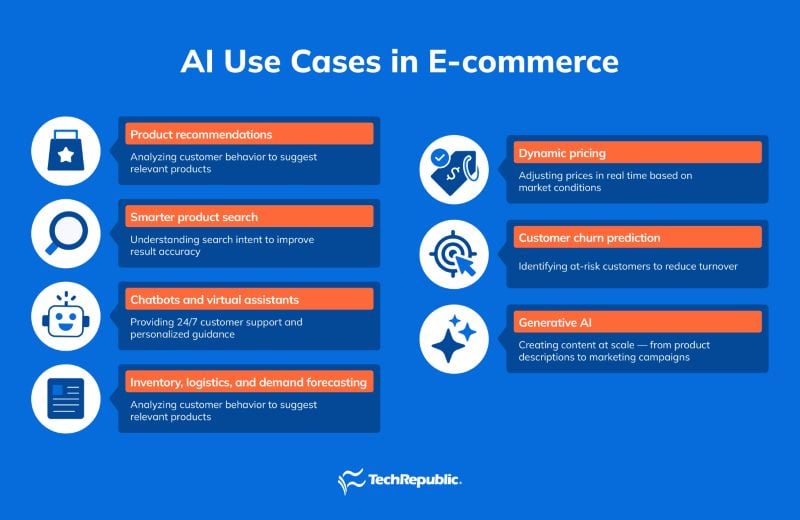
Let me break down the specific areas where AI is already delivering measurable results for e-commerce businesses.
How Does AI Personalize the Customer Experience?
AI-powered personalization transforms generic shopping into individualized journeys. Companies implementing sophisticated recommendation engines see significant conversion rate increases and growth in average order values.
Dynamic Product Recommendations: Beyond basic “customers also bought” suggestions, AI analyzes browsing history, purchase patterns, demographic data, and real-time behavior to suggest products with remarkable accuracy. If you want to improve your product content, check out AI writers and AI text generators.
Personalized Landing Pages: AI can dynamically alter website layouts, highlight specific promotions, or change product imagery based on individual user profiles. A first-time visitor from social media might see different content than a loyal repeat customer arriving via email. You can build these experiences faster with AI website builders that offer personalization features.
Tailored Email Marketing: Personalized emails deliver substantially higher transaction rates through relevance, timing, and contextual messaging. Stop sending generic newsletters and start using AI-powered email marketing for better results.
Sizing and Fit Recommendations: For apparel and footwear, AI-powered tools use customer measurements, historical purchase data, and computer vision to recommend the perfect size, helping reduce returns.
How Do AI Chatbots Transform Customer Service?
Customer service is often a bottleneck. AI transforms it into a proactive, efficient, and always-available asset.
According to Gartner research cited by HelloRep.ai, 54% of organizations are now using some form of chatbot, virtual customer assistant, or conversational AI for customer-facing roles.
| Metric | AI Chatbot Performance |
|---|---|
| Cart abandonment recovery rate | Up to 35% |
| Cost per chatbot interaction | ~$0.50 average |
| Cost per human interaction | ~$6.00 average |
| Consumer preference for bots (immediate service) | 51% |
24/7 Availability: Chatbots can help e-commerce businesses cut down on their customer service costs significantly. Modern AI chatbots can handle order tracking, returns, and product questions around the clock.
Advanced NLP Capabilities: Modern AI chatbots fueled by advanced natural language processing can handle everything from tracking orders to answering complex product questions.
AI-Assisted Human Agents: When human intervention is necessary, AI acts as a powerful co-pilot, pulling up customer histories and suggesting relevant responses.
“This 2025 holiday season, consumers embraced generative AI more than ever as a shopping assistant in their purchasing decisions.” — Vivek Pandya, Lead Analyst, Adobe Digital Insights
How Does AI Optimize Operations and Supply Chain?
The backbone of any successful e-commerce operation is its logistics. AI brings intelligence to these complex processes.
Predictive Demand Forecasting: AI analyzes market trends, seasonal changes, competitor activities, social media buzz, and weather patterns to predict demand with remarkable accuracy. This minimizes overstocking and understocking. Proper e-commerce analytics tracking is essential for these AI systems.
Intelligent Inventory Management: AI optimizes inventory levels across multiple warehouses, recommending ideal reorder points and quantities. AI-powered forecasting can significantly reduce supply chain errors and lower warehousing costs.
Fraud Detection: AI algorithms continuously monitor transactions and user behavior to identify fraudulent activities in real-time. This protects your business and maintains customer trust.
How Can AI Improve Pricing and Promotions?
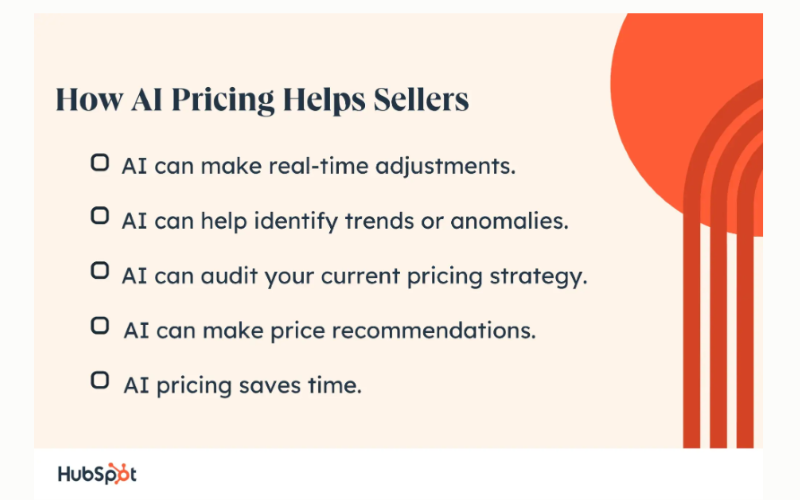
Pricing is a delicate balance. AI removes the guesswork with dynamic, data-driven strategies.
Dynamic Pricing: AI continuously adjusts product prices in real-time based on demand elasticity, competitor pricing, inventory levels, time of day, and customer behavior.
Personalized Promotions: Instead of blanket discounts that erode margins, AI identifies which customers are most likely to convert with a particular offer. Tracking e-commerce KPIs helps measure the effectiveness of these AI-driven campaigns.
Markdown Optimization: For seasonal or perishable goods, AI determines the optimal timing and depth of discounts to clear inventory efficiently, minimizing losses.
How Does AI Enhance Product Content and Merchandising?
AI doesn’t just sell products; it helps create better content and present products more effectively.
AI-Powered Content Creation: Tools like AI writers and AI text generators help create product descriptions at scale.
Visual Content Enhancement: AI image generators and AI photo editing software help create compelling product imagery. You can also use AI image enhancers to improve existing photos.
Virtual Try-On and AR: For certain product categories like fashion, beauty, and furniture, AI-driven AR experiences allow customers to virtually “try on” items or visualize products in their space before purchasing.
SEO Optimization: AI tools enhance SEO for e-commerce by analyzing search patterns and optimizing content. Check out how AI for SEO is changing digital marketing.
What Is Agentic Commerce and Why Does It Matter?
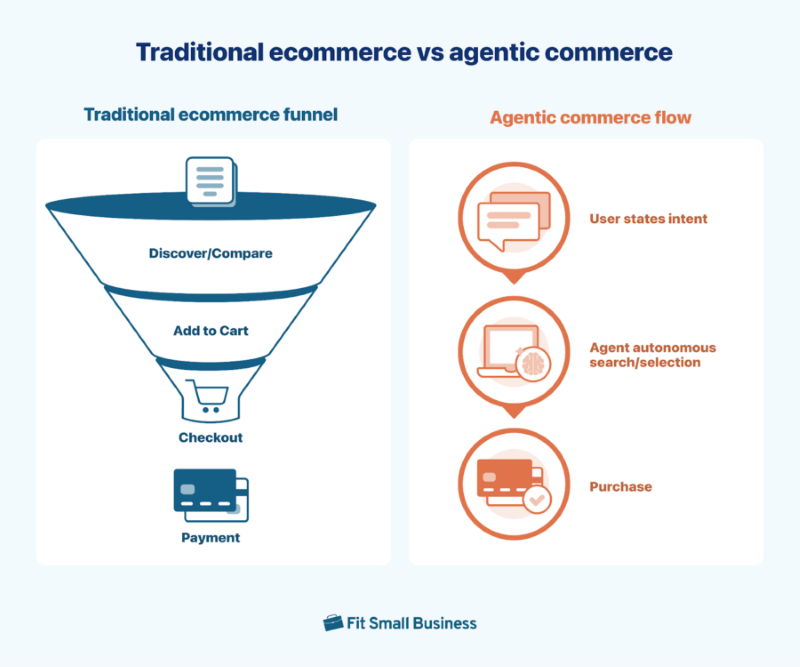
This is where AI truly steps into a more proactive role, operating on behalf of the customer. Agentic commerce refers to AI systems that research, compare, and even buy on your behalf. Tech giants, startups, and retailers are all racing to build it.
According to Future Market Insights, the global conversational commerce market is valued at approximately $8.8 billion in 2025 and is projected to grow at a 14.8% CAGR, reaching over $32 billion by 2035.
How Agentic Commerce Works:
- Imagine telling your AI assistant that you need a new winter jacket. It already knows your style preferences and budget from previous purchases. The AI searches across dozens of retailers, analyzes reviews, checks for sales, and comes back with a list of ranked options.
- The AI can wait for price drops, complete purchases, apply loyalty points, and select shipping options
Major Players Making Moves:
According to McKinsey’s agentic commerce research, OpenAI’s Operator (launched in January 2025 and now integrated into ChatGPT) uses agents to help users automate tasks. OpenAI also announced an Agentic Commerce Protocol, codeveloped with Stripe, which allows users to complete purchases within ChatGPT.
CNBC reported that on Walmart’s earnings call in November, CEO Doug McMillon said agentic AI will be one of the growth drivers for the retailer’s e-commerce business. He said the technology will “help people save time and have more fun shopping.”
The Impact Is Already Measurable:
Salesforce’s holiday data revealed that AI and agents powered 20% of all retail sales, fueling $262 billion in revenue through personalized recommendations and deeper customer engagement. During Cyber Week alone, AI agents drove $67 billion in sales.
| Agentic Commerce Development | Status (2025-2026) |
|---|---|
| ChatGPT shopping integration | Live with Walmart, Target, Instacart |
| Perplexity shopping agent | Active since Nov 2024 |
| Amazon “Buy for Me” feature | Testing phase |
| Visa/Mastercard agent payments | Pilots in early 2026 |
| Google agentic checkout | Launched late 2025 |
What ROI Can You Expect from AI in E-commerce?
Investing in AI is a strategic decision. Here’s what the data shows about returns:
| ROI Metric | Expected Improvement |
|---|---|
| Customer service cost reduction | Significant with AI automation |
| Conversion rate increase | Notable with AI recommendations |
| Revenue per visitor increase | Measurable improvement |
| Cart abandonment recovery | Up to 35% with proactive AI chat |
Increased Conversion Rates: AI product recommendations can meaningfully increase average order values and conversion rates.
Reduced Operational Costs: AI implementation delivers substantial reduction in customer service costs. The chatbot interaction cost is a fraction of human interaction costs.
Faster Payback: Based on industry data, businesses implementing AI personalization typically see positive returns, with most companies reporting positive ROI within the first year.
How Do You Implement AI in Your E-commerce Strategy?
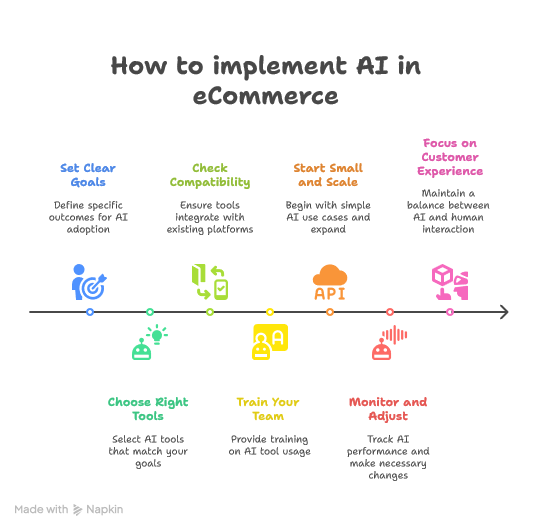
The idea of implementing AI might seem daunting. Here’s a structured approach to integrate it successfully.
Step 1: Define Your Business Objectives
Before thinking about technology, clarify why you need AI. Are you looking to reduce customer service costs? Increase conversion rates? Improve inventory accuracy?
- Identify pain points where you have the biggest inefficiencies
- Set measurable goals: “Increase conversion rates by 10% in 6 months” is better than “improve sales”
- Prioritize the areas where AI can deliver the most impact first
Step 2: Assess Your Data Infrastructure
AI thrives on data. Its effectiveness is directly tied to the quality and accessibility of your data.
- Data availability: Do you have enough historical data on purchases, browsing behavior, and product information?
- Data quality: Is your data clean, consistent, and accurate?
- Data integration: Are your systems connected, or is data siloed across CRM, ERP, and e-commerce platforms?
- Data governance: Do you have policies complying with GDPR and CCPA?
Step 3: Start Small, Then Scale
Don’t attempt a full-scale AI overhaul from day one.
- Choose a pilot project: Start with a specific, high-impact area like AI chatbots for FAQs or personalizing recommendations for one category
- Set realistic expectations: AI takes time to learn and optimize
- Measure results meticulously: Track the KPIs you defined
- Learn and iterate: Use insights to refine before scaling
Step 4: Choose the Right AI Tools
This decision depends on your capabilities and budget.
“Buy” (SaaS Solutions): Many excellent AI-powered e-commerce tools exist for specific functions. This is often faster to implement and requires less internal expertise. Browse free AI tools to start testing.
“Build” (Custom Development): If you have unique requirements or complex data structures, custom development might be necessary. This requires significant investment in data scientists and engineers.
Hybrid Approach: Use off-the-shelf solutions for common tasks and build custom AI for proprietary processes.
Step 5: Integrate and Iterate
AI isn’t “set it and forget it” technology.
- Ensure AI solutions integrate with your e-commerce CMS and marketing tools
- Monitor performance regularly against your KPIs
- Provide feedback loops so AI models can improve
- Adapt to changing market conditions and customer behavior
Step 6: Train Your Team
AI augments human capabilities; it doesn’t replace them.
- Upskill employees on how to interact with AI systems
- Foster data literacy across your organization
- Define new roles focused on AI supervision and strategic application
- Emphasize human oversight for critical decisions
What Challenges Should You Prepare For?
While the benefits are immense, approach AI with clear understanding of potential hurdles.
Data Privacy and Security: You’re dealing with sensitive customer data. Compliance with GDPR, CCPA, and other regulations is non-negotiable. Prioritize encryption, anonymization, and access controls.
Ethical AI and Bias Mitigation: AI models learn from historical data. If that data contains biases, your AI will perpetuate them. Active work to identify and mitigate bias is essential.
Integration Complexities: Integrating new AI solutions with legacy systems can be challenging. Plan for compatibility issues and allocate sufficient resources.
Cost Considerations: Beyond initial costs, consider ongoing expenses for data storage, computational power, model training, and specialized talent.
Managing AI Hallucinations: Generative AI can sometimes produce plausible but incorrect information. For product descriptions or customer responses, you need validation processes and human oversight. Tools like AI detection and AI plagiarism checkers help maintain content quality. Consider using tools to humanize AI text for better customer connection.
What Does the Future of AI in E-commerce Look Like?
The evolution of AI in e-commerce is relentless. Here’s what’s coming:
Hyper-Personalization at Scale: We’ll move toward almost intuitive understanding of individual customer needs, predicting desires before they’re articulated.
Generative Engine Optimization (GEO): Brands are being forced to rethink their entire media, content and e-commerce strategies. SEO still matters, but optimizing for AI assistants like ChatGPT and Perplexity is becoming essential.
Autonomous E-commerce Operations: AI will manage entire operational workflows with minimal human intervention, from inventory management to supplier ordering to logistics.
AI Shopping Agents as Primary Interface: According to CNBC, payment executives say the technology will become a reality in 2026 and could be more transformative than the rise of e-commerce platforms.
“A big shift in commerce happened when payments moved from a mostly brick-and-mortar world to an e-commerce world. Now, we are seeing the next shift, which is moving from the e-commerce world to an agentic commerce world. We have gone from cash to digital, now we’re going from digital to intelligent.” — Sandeep Malhotra, EVP for Core Payments in Asia Pacific, Mastercard (via CNBC)
Frequently Asked Questions About AI in E-commerce
For mid-sized companies, expect a few thousand dollars monthly for comprehensive AI customer service platforms, plus setup time. Enterprise solutions cost more. SaaS solutions for specific functions like chatbots or recommendations can start at a few hundred dollars monthly.
Based on industry data, most companies report positive ROI from AI personalization. The average payback period is typically under a year for AI-enabled solutions. Companies see returns from both cost savings (reduced customer service expenses) and revenue increases (higher conversion rates).
Agentic commerce refers to AI systems that research, compare, and even buy on your behalf. Yes, you should care. According to Salesforce, AI and agents influenced 20% of all retail sales during the 2025 holidays, driving $262 billion in revenue.
Implement strict guardrails with clear rules for content generation, use human editors to review AI-generated content before publication, and continuously train models based on feedback. Check content with AI plagiarism checkers and consider tools to rewrite AI content for accuracy.
Yes. McKinsey’s 2025 State of AI report shows 88% of organizations now use AI in at least one business function. Many affordable tools exist, and waiting puts you at competitive disadvantage as larger competitors adopt AI-powered experiences.
Ready to Transform Your E-commerce Business with AI?
The momentum behind AI in e-commerce is undeniable. It’s not a passing trend but foundational technology that will redefine competitive advantage. By strategically embracing AI, focusing on clear objectives, managing your data meticulously, and fostering continuous learning, you can achieve unprecedented growth, efficiency, and customer satisfaction.
The future of e-commerce is intelligent, personalized, and proactive. Whether you’re just starting to explore AI marketing tools or ready to implement sophisticated personalization, the time to act is now.
If you need strategic guidance on integrating AI into your e-commerce and marketing strategy, consider my Fractional CMO services. For hands-on support and community learning, join my Digital First Group Coaching Community where we discuss practical AI implementation. And for a deeper understanding of the modern marketing landscape including AI, download my free preview of Digital Threads.
Don’t just adapt. Lead.
Actionable advice for your digital / content / influencer / social media marketing.
Join 13,000+ smart professionals who subscribe to my regular updates.
