

Facebook remains one of the most powerful tools in the real estate marketing playbook. With billions of users and unmatched ad targeting capabilities, it gives agents, brokerages, and property managers the ability to connect with motivated buyers, sellers, and renters at scale. But in 2025, running successful Facebook ads for real estate isn’t as simple as boosting a listing and hoping for leads.
Between new compliance rules, rising ad costs, and evolving consumer behaviors, real estate pros need a smarter, more strategic approach to make real estate ads work. In this guide, I’ll handhold you through everything you need to know—from compliance and ad formats to advanced strategies and real-world examples—so you can generate more qualified leads, build trust with your audience, and grow your real estate business using Facebook ads.
Why Facebook Ads Work for Real Estate
For real estate professionals, Meta remains one of the most effective marketing platforms in 2025. Unlike traditional advertising, where you pay high costs for limited reach, Facebook advertising gives agents and brokerages the ability to connect with a large target audience while keeping budgets flexible and measurable. Here’s why it continues to be a cornerstone of modern real estate marketing:
Visual-first platform for showcasing properties
Real estate is inherently visual. Buyers and sellers want to see what makes a property unique — from light-filled kitchens to spacious backyards. Facebook’s feed is designed for professional photography, video walkthroughs, and carousel galleries, making it a natural match for property marketing. With more users scrolling on mobile, you can capture attention instantly with the right creative.
Reach + precision targeting (even under restrictions)
Yes, the Special Ad Category rules limit demographic targeting, but that doesn’t make Facebook ineffective. Instead of guessing based on age or income, you can now focus on behavioral and engagement signals. For example, retargeting someone who just visited your listing site or engaged with a property video is far more powerful than cold outreach. Even with restrictions, you can still reach highly motivated buyers and sellers at the exact moment they’re in-market.
Cost-effectiveness vs traditional advertising
Print ads, billboards, and even some portal listings can cost thousands of dollars without giving you measurable results. With Facebook, you’re in control — setting daily or lifetime budgets, testing ad creatives, and tracking ROI in real time. That means every dollar spent can be optimized toward generating actual leads instead of just vague “exposure.” For most real estate pros, this translates into lower cost per lead and higher efficiency compared to offline methods.
Retargeting & nurturing for long-term engagement
Real estate decisions aren’t made overnight. Buyers and sellers often take weeks or months to move from initial interest to action. Facebook’s retargeting capabilities allow you to stay in front of these prospects throughout that journey. Whether it’s showing them the same property they viewed last week, inviting them to an open house, or offering a free home valuation, you can nurture relationships at scale until they’re ready to take the next step.
Compliance and Targeting Rules You Must Know in 2025
Running Facebook ads for real estate isn’t just about great visuals — it also means staying compliant with Meta’s Special Ad Category: Housing rules. These advertising policies regarding housing ads are designed to prevent discrimination and apply in the U.S., Canada, and parts of Europe. If you don’t declare your campaign as housing-related, your real estate ads may be rejected or your Facebook ad account restricted.
What You Can’t Target Anymore
- Age or gender
- Zip codes (must use a 15-mile minimum radius)
- Income, education, household composition
- Behaviors like “likely to move” or “new mortgage borrowers”
What You Still Can Use
- Location: Target a city or neighborhood with a 15-mile radius.
- Interests: Broad lifestyle and housing-related engagement (e.g., Zillow, Realtor.com, Trulia).
- Custom audiences: Website visitors, CRM/email lists, or people who engage with your content.
- Lookalikes: Expand reach by mirroring your best existing audiences.
Why This Matters in 2025
The old days of hyper-granular demographic targeting options are gone, but that doesn’t mean Facebook real estate ads are less effective. Success now comes from behavioral and engagement-based targeting — retargeting people who watched a property video, visited your site, or clicked a past ad. These signals are often stronger than demographics ever were.
Bottom line: embrace the rules, focus on creative digital marketing strategy, and you’ll still have access to Meta’s massive reach, dynamic formats, and retargeting power — without compliance risks.
Choosing the Right Campaign Objective
Before you launch a campaign, Facebook asks you to choose an objective — and this choice determines how ads are delivered and measured.
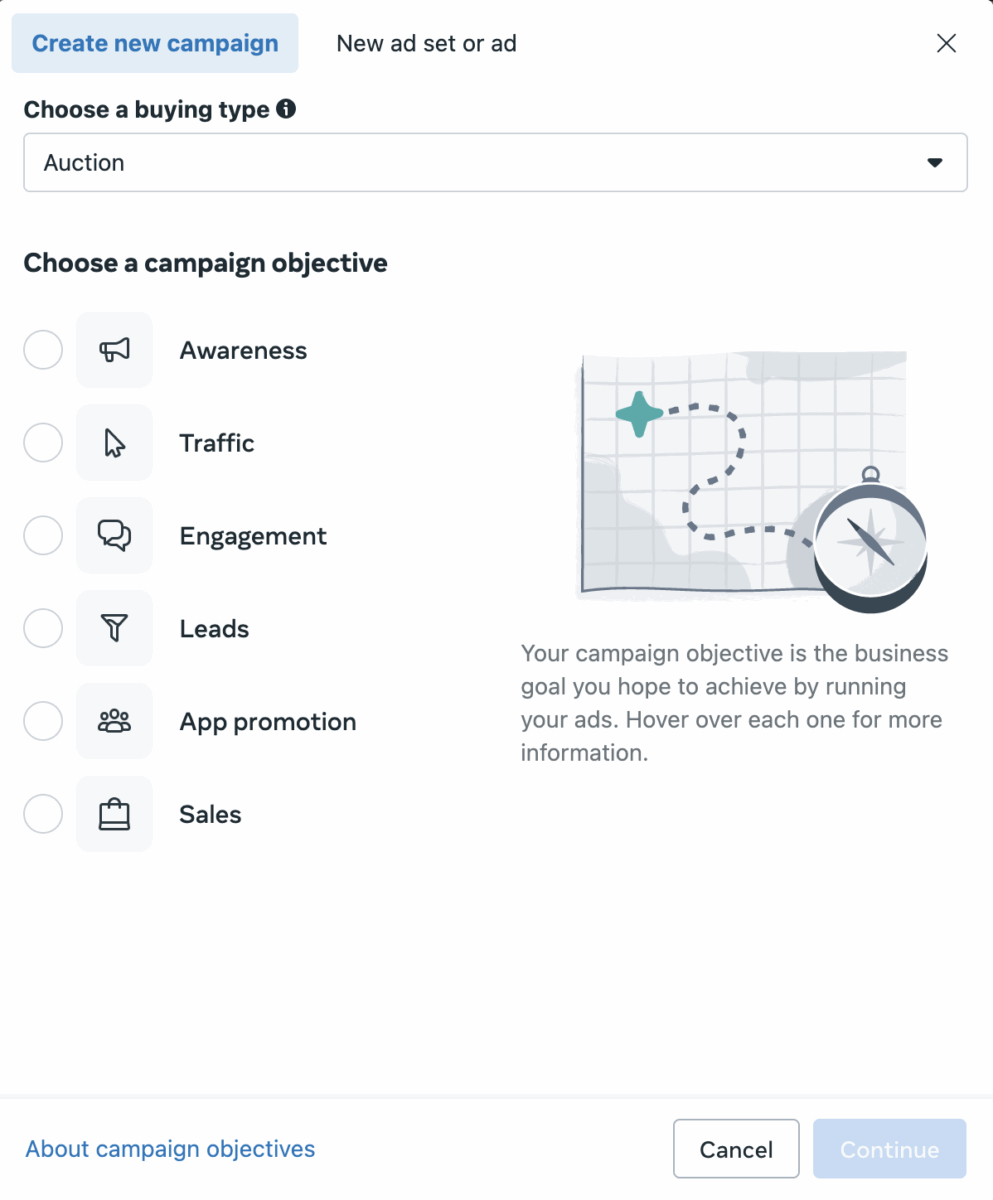
For real estate, two objectives dominate:
Traffic Campaigns: Driving Visitors
Best for sending people to property listings, landing pages, or your website. Use Traffic when you want to:
- Build awareness of new listings or open houses
- Grow retargeting audiences with the Meta Pixel (formerly Facebook Pixel)
- Warm up prospects before asking for their details
Lead Generation Campaigns: Capturing Inquiries
Lead Ads let users submit contact info without leaving Facebook, making conversions fast and low-friction. Choose this when you want to:
- Collect serious buyer or motivated seller inquiries
- Grow your CRM with qualified leads
- Offer valuations, guides, or exclusive listings as a lead magnet to encourage users to share their contact info
Pro Tip: The strongest results often come from layering both campaign objectives. Start with Traffic to build awareness and retargeting pools, then run Lead campaigns to capture details from engaged prospects. This keeps your funnel full at every stage — awareness, interest, and action.
Best Ad Formats for Real Estate
One of Meta’s biggest advantages is its flexibility. The right ad format can highlight a single listing, showcase multiple homes, or capture leads instantly. Here are the formats every real estate professional should know in 2025:
Image Ads — Simple & Effective
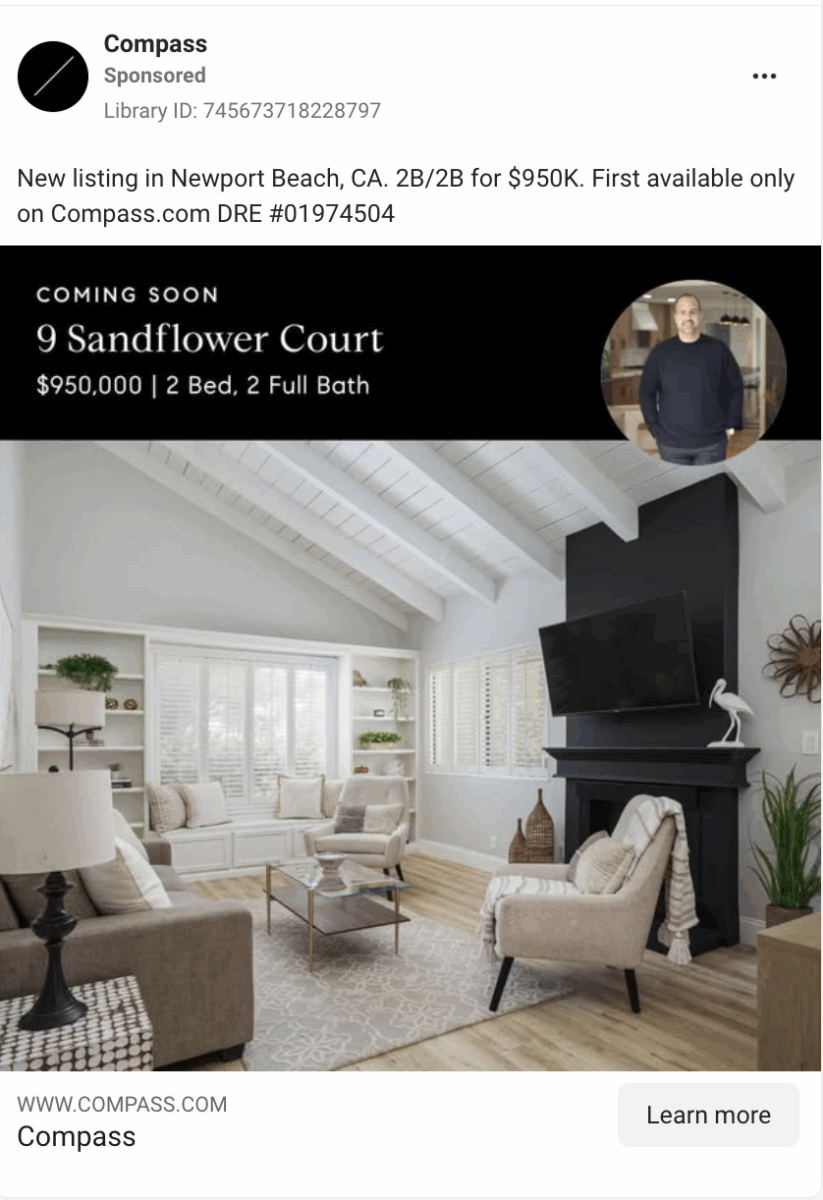
Perfect for single listings or brand awareness. With professional, well-lit photography, a single scroll-stopping image can generate clicks and inquiries.
Carousel Ads — Multiple Views, More Engagement
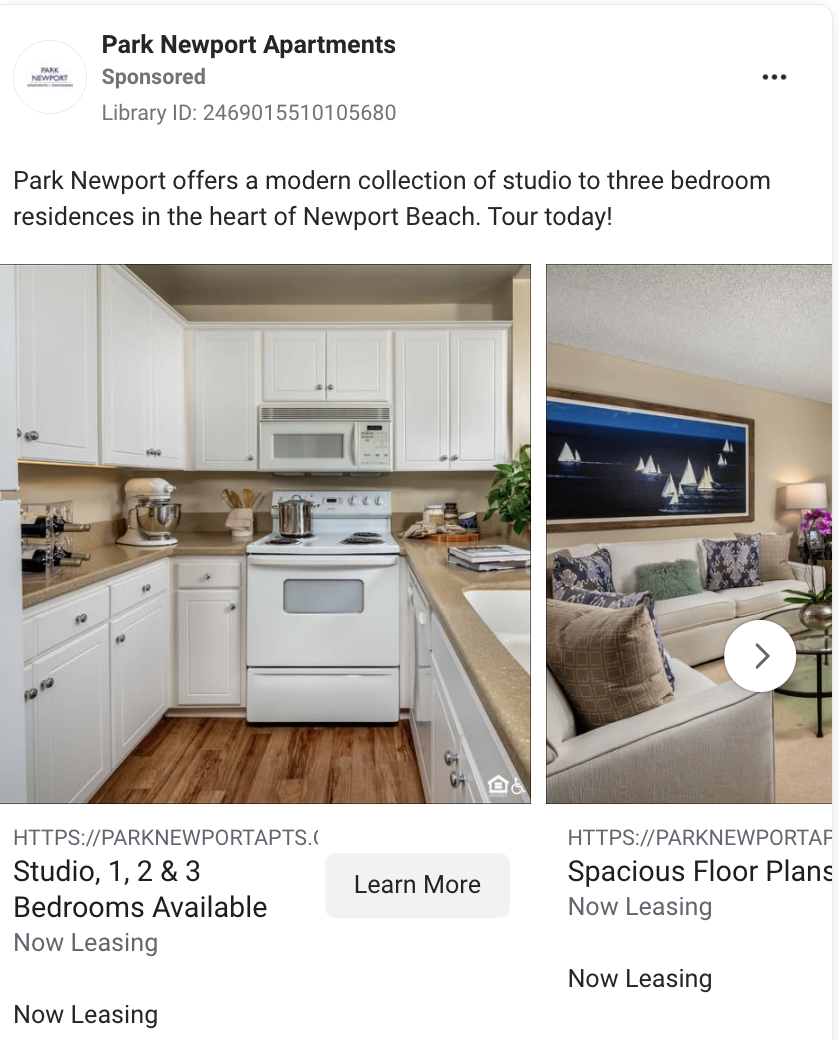
Showcase several properties at once, or highlight different angles and outdoor features of the same listing. Carousels are highly interactive and great for promoting neighborhoods or investment opportunities.
Video Ads — Bring Properties to Life
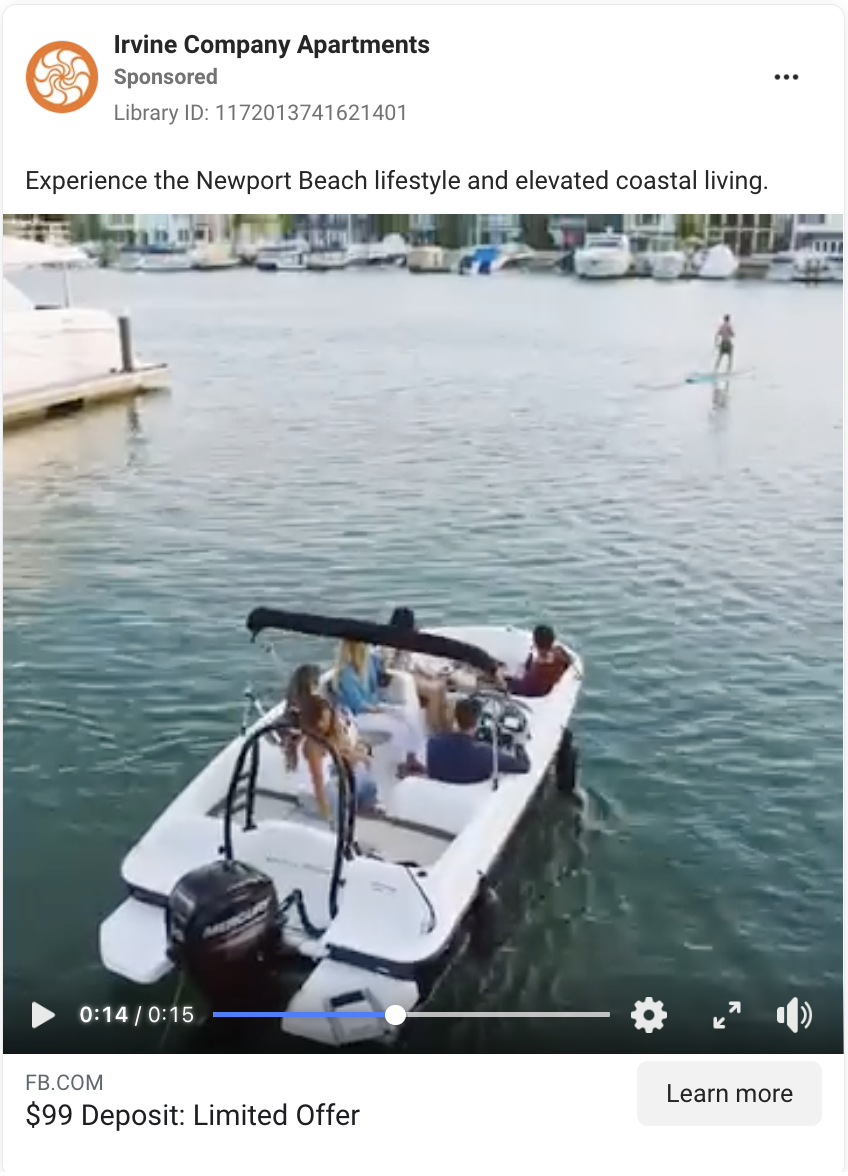
From quick walkthroughs to virtual video tours using drone video footage to location-based lifestyle scenes, video builds trust and adds dimension that photos can’t. Homes with video ads consistently generate more inquiries than those without.
Lead Ads — Instant Conversions
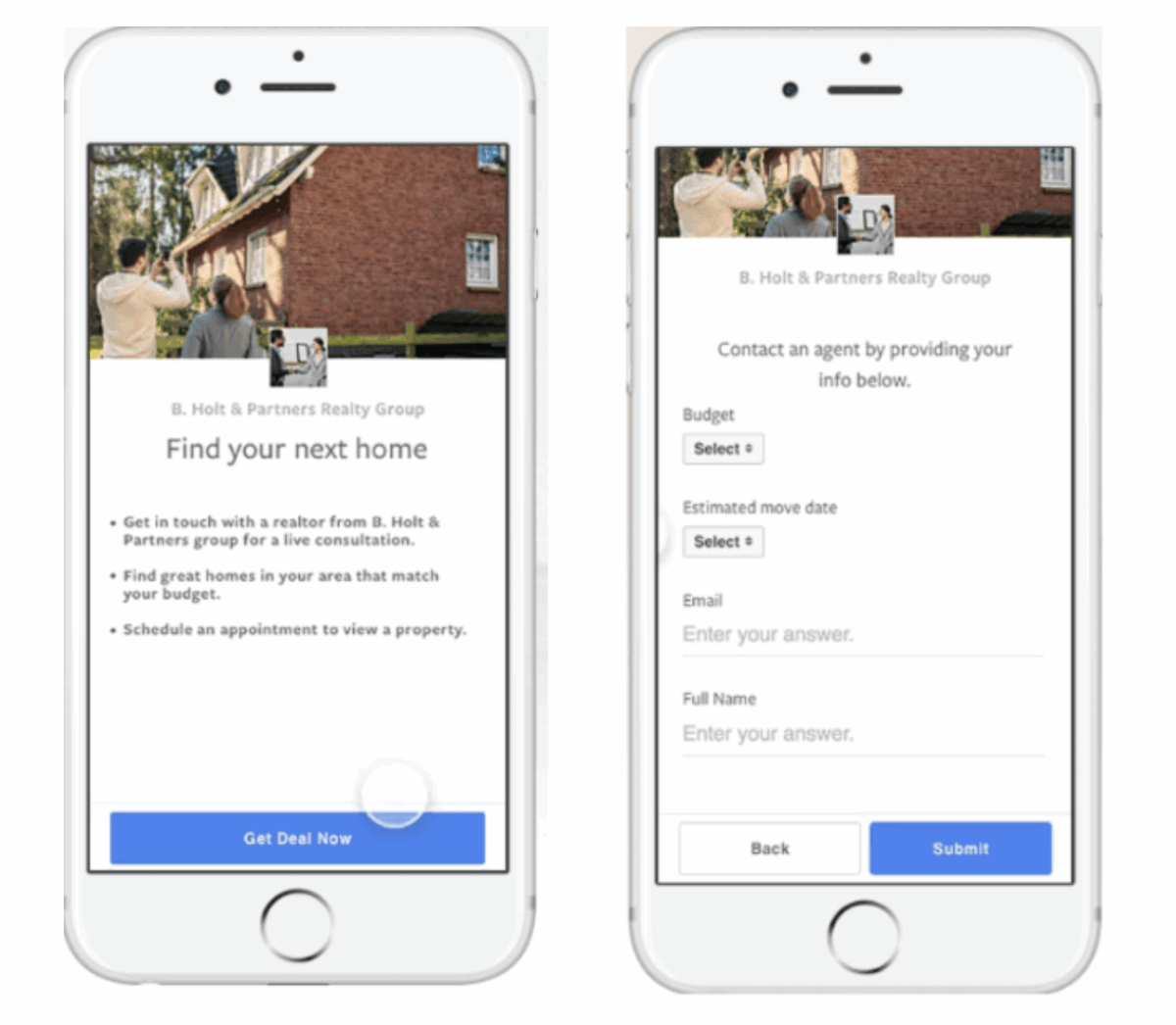
Built-in forms let users request showings or valuations without leaving Facebook. These real estate ads reduce friction and work best when synced with your CRM for fast follow-up.
Overwhelmed by Digital Marketing?
Just released: my new book to help small businesses, entrepreneurs, and marketers master digital marketing in today’s digital-first world.
Drawing on my Fractional CMO experience, Digital Threads simplifies complex strategies into clear, actionable steps for success.
Transform your business today—grab your copy! Click the cover or button below to buy on Amazon.

Dynamic Catalog Ads (Advantage+ for Real Estate) — Automated at Scale
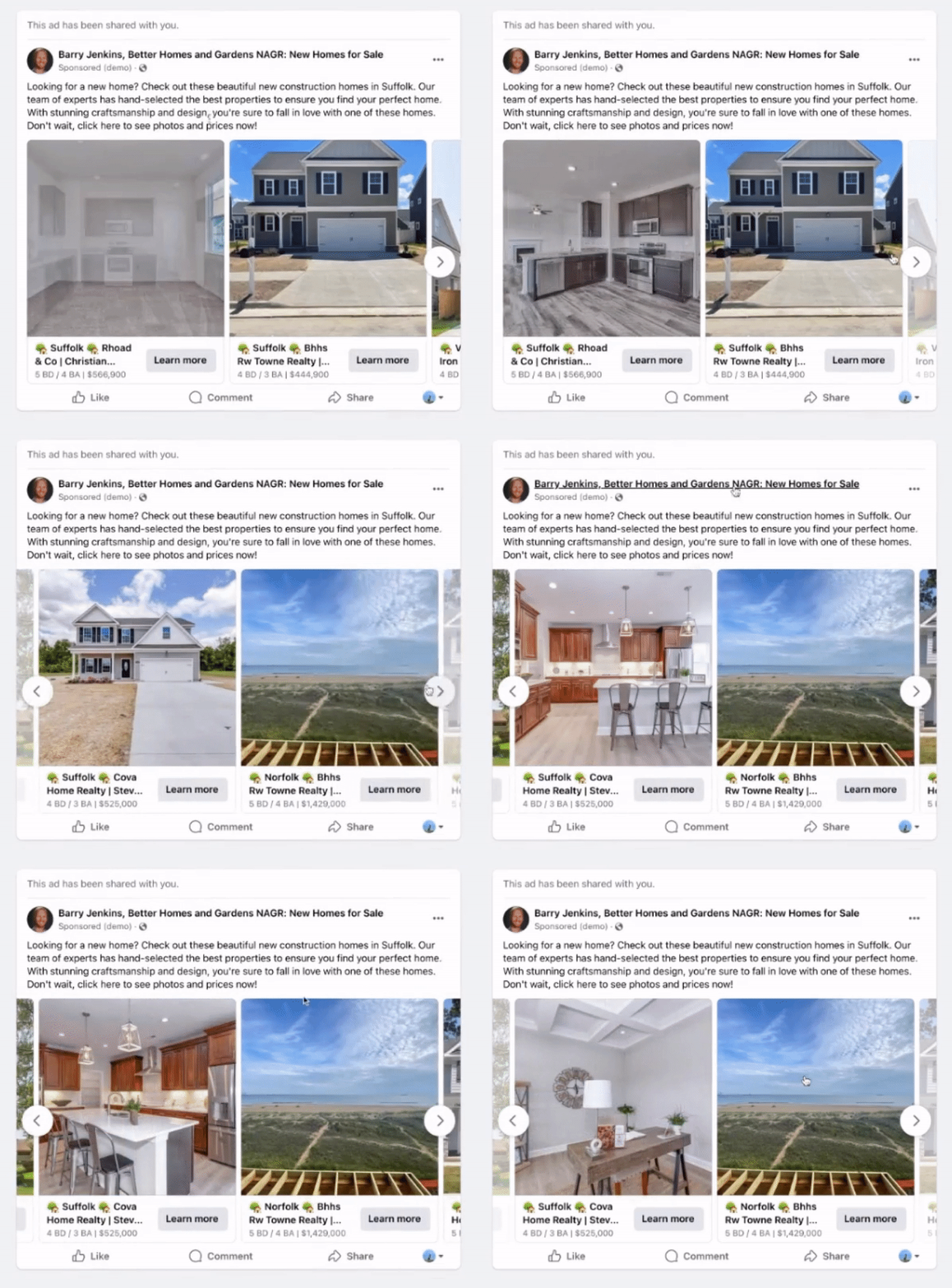
For brokerages or agents managing multiple listings, Advantage+ catalog ads automatically create personalized ads based on user behavior. Think of it as retargeting on autopilot.
Proven Facebook Ad Strategies for Realtors
Running Facebook ads for real estate isn’t just about posting listings — it’s about building trust, engaging the right target audience, and guiding prospects through the funnel. Here are the strategies that consistently generate qualified leads:
1. Target Smartly (Within the Rules)
Even with Special Ad Category restrictions, you can still reach high-intent buyers and sellers:
- Location → Target within a 15-mile radius of a city or listing.
- Engagement → Retarget site visitors, social media engagers, and CRM contacts.
- Lookalikes → Expand reach by mirroring your best audiences.
2. Use Custom & Lookalike Audiences
Your warmest leads come from people who already know you. Retarget past clients, email subscribers, or video viewers — then build lookalikes to scale. For example, a realtor with a past customer list can upload it into Facebook Ads Manager, then reach thousands of similar homeowners who may be ready to move.
3. Test and Optimize
The difference between a good campaign and a great one often comes down to testing. Compare images vs. video, lifestyle vs. feature-driven ad copy, or carousel vs. single image ads. A/B test one variable at a time lets you see what really resonates. For example, one agent discovered drone footage doubled their click-through rate compared to static images — insight that permanently shaped their creative strategy.
Since the Facebook algorithm rewards ad creatives that generate strong engagement, the more you test and refine, the more Meta will prioritize your ads and deliver them to the right people at a lower cost.
4. Build Trust With Social Proof
Real estate is built on reputation. Client testimonials, “just sold” ads, and case studies show proof of results. These real estate ads not only contribute to lead generation, but also reassure cold prospects that you’re credible. Think of it as digital word-of-mouth — buyers and sellers feel safer working with an agent who can demonstrate a track record of success.
Pro Tip: Rotate testimonial ads or “just sold” posts seasonally. This keeps your content fresh while reinforcing credibility year-round.
Crafting High-Converting Ad Creative
Targeting gets you in front of the right people — but it’s the creative that stops the scroll.
Use Strong Visuals
- Photography → Bright, well-shot images that highlight selling points.
- Video → Quick walk-throughs or drone shots. Homes with video see up to 400% more inquiries.
- Carousel → Multiple views of a home or several listings in one ad.
Write Copy That Converts
- Hook with a clear headline (“Spacious 3-Bedroom with Ocean Views”).
- Tease just enough details to spark curiosity.
- Add urgency: “Schedule your tour — homes in this area sell fast.”
Include a Clear Call to Action
- Direct CTAs: “Book a showing,” “Request a valuation.”
- Value-driven CTAs: “Unlock exclusive listings before they hit the market.”
Design for Mobile First
Most users browse Facebook on their phones, so your ads must be designed with mobile user experience in mind. That means using vertical or square formats that fill the screen, readable text overlays that don’t get cut off, and layouts that are easy to scan on smaller displays.
Advanced Tactics for 2025
Once you’ve mastered the basics, these next-level tactics can help you stand out in a crowded market:
- Personalized Dynamic Ads – Leverage Advantage+ catalog ads strategically — not just as a format, but as a personalization engine. These ads automatically match users with properties based on past browsing behavior, making them feel more like tailored recommendations than generic promotions.
- Cinemagraphs & Interactive Visuals – A cinemagraph is a still photo with one subtle moving element — like a flickering fireplace or flowing pool water. These eye-catching formats stop the scroll and are more affordable to produce than full video.
- Ephemeral Stories (24-Hour Highlights) – Both organic Stories and paid Stories ad placements are perfect for promoting time-sensitive content like upcoming open houses or new listings. Because they disappear after 24 hours, they create urgency and FOMO..
- Hyper-Local Neighborhood Guides – Ads that showcase more than a property — like local schools, dining spots, or parks — position you as a community expert. These campaigns attract buyers relocating from outside the area who want to get a feel for the neighborhood vibe.
- Polls & Market Insight Ads – Engagement ads that ask questions (“Would you rather buy new construction or a historic home?”) not only boost interaction, but also provide insights into buyer preferences. The bonus? You can retarget people who engage with your poll, since they’ve already signaled interest in real estate.
Why it matters: In 2025, standing out means going beyond static listing ads. These advanced tactics blend creativity with data, giving your campaigns the polish and personalization today’s buyers and sellers expect.
Cost of Facebook Ads for Real Estate
One of the first questions real estate professionals ask is: “How much do Facebook ads cost?” The answer: it depends — but the good news is you’re always in control of spend and scale.
Average Costs (Broad Ranges)
While costs vary by market, here are typical benchmarks for real estate ads in 2025:
- CPC (Cost per Click): About $0.50–$3.00, with WordStream’s data showing an industry average around $1.80 for real estate ads (WordStream).
- CPM (Cost per 1,000 Impressions): Typically $7–$15 in the U.S., with Varos reporting a median CPM of $7.69 for real estate services (Varos).
- CPL (Cost per Lead): Most campaigns fall between $5–$30 per lead, though Focus Digital’s July 2025 benchmark shows some markets averaging closer to $50+, especially for higher-value or luxury listings (Focus Digital).
These are just broad ranges. The true measure of success isn’t cheap clicks — it’s whether the leads generated actually convert into clients. That’s where tracking ROAS (Return on Ad Spend) becomes critical.
What Impacts Cost
Several factors influence how much you’ll pay for Facebook ads:
- Market & Competition: Ads in competitive metro areas (New York, LA, Miami) cost more than ads in smaller suburban or rural markets.
- Ad Format & Placement: Video and carousel ads often reduce CPC because they drive stronger engagement, while static image ads can cost more per click. Your ad placement also matters — Feed ads usually cost more but generate higher-quality leads, while Stories and Reels can deliver cheaper reach. For real estate professionals, Facebook Marketplace can also be a cost-effective placement to boost visibility for listings, especially apartments and condos, since many users already browse Marketplace for housing.
- Seasonality: Costs rise during the busy spring and summer months when demand peaks.
- Relevance & Quality: Facebook rewards ads that get engagement. High-quality visuals, clear copy, and strong CTAs reduce costs, while weak creative drives them up.
Budgeting Tips for Realtors
- Start small (e.g., $10–$20/day) and test audiences, ad formats, and messaging before scaling.
- Reinvest in winners — double down on ads, audiences, or formats that prove profitable.
- Don’t spread your budget too thin; a focused campaign performs better than trying to run five different ad sets on $5/day.
The ROI & ROAS Mindset: Think Like a Business Owner
Instead of obsessing over the cheapest clicks or leads, measure campaigns by ROI (Return on Investment) and ROAS (Return on Ad Spend). In real estate, one closed transaction can pay for months of ads.
Here’s a simple step-by-step formula to calculate your Facebook Ads ROI:
- Total Ad Spend ÷ Leads Generated = Cost per Lead (CPL)
Example: $1,000 ÷ 50 leads = $20 CPL - Leads Generated ÷ Closing Rate = Number of Deals Closed
If you close 1 in 20 leads, 50 leads = 2.5 clients (round to 2). - Number of Deals Closed × Average Commission = Revenue
If your average commission is $7,500 and you close 2 deals = $15,000. - Revenue – Ad Spend = ROI
$15,000 – $1,000 = $14,000 return.
That’s a 14x ROI — which also translates into a highly positive ROAS. Even if your CPL feels “expensive” at $20, the profit margin justifies the cost.
Bottom Line
Facebook ads don’t have to be cheap to be profitable. The key is running campaigns with high-quality creative, targeting engaged audiences, and following up quickly. For real estate, the math usually works in your favor — because just one client can cover the cost of months of consistent advertising.
How to Integrate Facebook Ads Into Your Sales Funnel
Facebook ads don’t exist in a vacuum — they work best as part of a larger sales funnel that nurtures leads from first click to closed deal. The goal isn’t just to generate inquiries; it’s to move prospects through each stage of the buying or selling journey.
1. Ads → Landing Page → CRM
Think of Facebook as the top of your funnel. An ad sparks interest, but the real conversion happens off-platform. Send traffic to a dedicated landing page — whether it’s a property listing, a “free home valuation” form, or a neighborhood guide. From there, connect the form or inquiry directly into your CRM. This ensures every lead is captured, tracked, and ready for follow-up.
2. Nurture with Automation
Not every lead is ready to buy or sell today. That’s where automation comes in. Set up drip email campaigns, market updates, or property alerts so you stay top of mind while prospects research. A lead who first engaged with your ad in February may not make a move until May — but if you’ve been consistently adding value, you’ll be the agent they call.
3. Retargeting at Each Stage
Facebook retargeting lets you show the right message at the right time:
- Awareness stage: Highlight lifestyle-driven content or community guides.
- Consideration stage: Retarget site visitors with similar properties, testimonials, or market insights.
- Decision stage: Push strong CTAs like “Schedule a showing” or “Get your free valuation.”
This keeps your ads relevant and prevents wasted spend on people who aren’t ready.
4. Align Online With Offline
Real estate is still a relationship business. Use Facebook ads to fuel offline actions:
- Drive attendance to open houses.
- Prompt phone calls or text inquiries.
- Follow up quickly via SMS (while staying TCPA compliant).
The more seamlessly you connect digital ads to real-world touchpoints, the more effective your campaigns become.
The Big Picture
When you integrate Facebook ads into a structured sales funnel, you’re no longer just chasing clicks — you’re building a predictable system for attracting, nurturing, and converting leads into long-term clients. Done well, your ads don’t just generate inquiries; they power your entire pipeline.
Key Metrics to Track
Facebook’s Ads Manager can feel like a data firehose, but focusing on a few key KPIs will tell you if your campaigns are really working.
Click-Through Rate (CTR)
How many people click your ad after seeing it. A healthy CTR for real estate is 1–3%. If you’re below that, test new visuals or headlines.
Cost Per Lead (CPL)
How much you spend for each inquiry or form submission. Track this closely against your average commission — if you can acquire a client for $200 and earn $7,000, that’s a scalable model.
Conversion Rate
Of the people who click your ad, how many actually become leads? Benchmark this by format: Lead Ads often convert higher than Traffic campaigns, but both play a role in the funnel.
Ad Frequency
How many times the same person sees your ad. If frequency climbs above 3–4x without conversions, fatigue sets in. Rotate your creative to keep things fresh.
Engagement Metrics
Likes, comments, shares, and video views aren’t just vanity numbers. They help lower your costs by signaling relevance — and they build social proof that your ads are worth engaging with.
Pro Tip: Track these numbers weekly, not daily. Real estate ads need a little time to optimize before you make big adjustments.
Facebook ads for real estate are no longer optional—they’re essential for reaching today’s digital-first buyers and sellers. But running ads that actually produce results takes more than just boosting a post. It requires knowing the compliance rules, choosing the right objectives, and leveraging ad formats that align with your campaign goals.
By combining proven strategies like lifestyle-focused video, retargeting, and free valuation offers with advanced tactics like dynamic ads and hyper-local audience targeting, you can build campaigns that stand out, generate consistent leads, and strengthen your brand in a competitive market.
The key is to treat Facebook ads as part of a larger marketing funnel—connecting ads with landing pages, CRMs, and follow-up systems—so every lead is nurtured from click to closing.
If you’re ready to unlock growth, start testing, refining, and scaling your Facebook ad campaigns today. Done right, they’ll not only bring in more leads but also position you as the go-to real estate expert in your market.
Actionable advice for your digital / content / influencer / social media marketing.
Join 13,000+ smart professionals who subscribe to my regular updates.
