

Most business owners know they should be tracking their social media performance, but too often analytics is reduced to vanity metrics—think likes, followers, and impressions that look nice on a dashboard but fail to connect back to business goals.
True social media analytics is more than reporting; it’s the process of turning raw data into actionable insights that inform your strategy, improve your campaigns, and demonstrate ROI.
In this guide, I’ll break down what social media analytics really means, why social media data really matters, the tools and metrics you need to focus on, and how to use analytics to make smarter decisions that grow your business.
Social media analytics means more than counting likes or followers. Tracking performance through analytics is the practice of turning data into insights that inform strategy and drive results. Understanding the difference between basic metrics, listening, and true analytics is the first step toward making your social media platform work for your business.
In simple reporting, you are given a series of numbers. Social media metrics may tell you how many likes or comments a post has gotten. A social media analytics tool, however, digs deep into those metrics and identifies which aspects of your social media channels are working and producing results, and which consistently result in lower engagement and desired metrics.
Social listening is another important tool, though it does differ from analytics. While analytics evaluate your metrics and deliver insights into your social media data, social listening tunes into how people view your brand or products, and how that view impacts your success.
As you gather your social media data from your given social media platform, you’ll notice different types of data: structured and unstructured. Structured data is gathered and carefully quantified. It is the type of data you can gather and analyze, whether it is the number of comments you are getting on a given social network or the number of followers you gain each month. Unstructured data includes (but is not limited to) your content–think images, videos, and text–and is used to contextualize the structured data sourced from your social media posts and platforms.
Analytics are an important source of oxygen for the lungs of small businesses and entrepreneurs because they provide so many important insights into social media metrics. While larger enterprise brands may have an entire team to sift through and analyze their social networks, smaller entities more frequently rely on social media analytics tools to successfully manage their social networks.
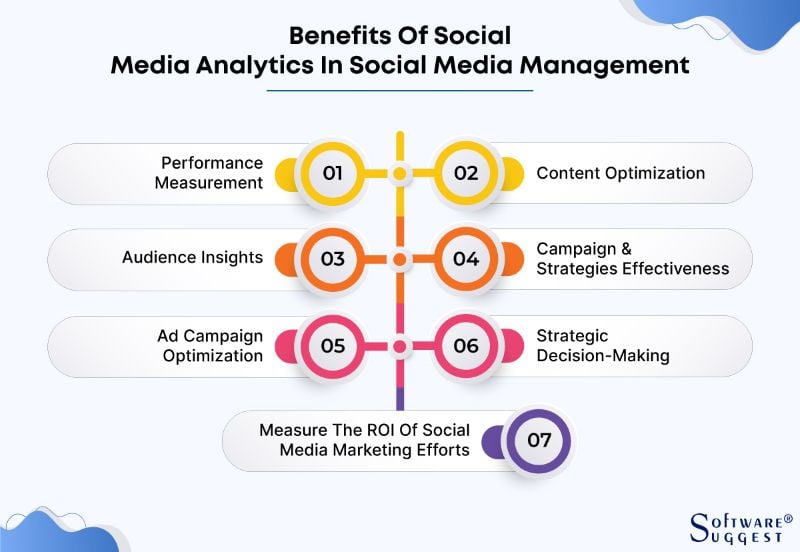
Without analytics, social media can feel like guesswork. By measuring performance, tracking sentiment, and benchmarking against competitors, businesses can connect their online activity to real outcomes that impact growth.
While likes and followers are important forms of social media data, it is the analytics that help guide the direction of your social media platform. While a simple like or comment can bolster your success, it is the day-by-day, consistent behavior of your audience that will truly inform how you should proceed. A social media analytics tool worth its salt will help with sentiment analysis and insights to shape the future of your social platforms.

Some of the most valuable ways analytics can help improve your social media accounts’ success include:
- Brand awareness tracking. Tuning in to your audience perception can make a huge difference in maintaining, alienating, or growing your audience. When you use analytics to evaluate your social media campaigns and content, you can keep a close eye on how your brand is being perceived.
- Customer experience. Word of mouth is vital, especially for small businesses and entrepreneurs. A foolproof social media strategy can easily crumble in the face of poor customer experience. By tracking customer journeys, you can make sure your brand is building trust and fostering loyalty.
- Campaign ROI. Your return on investment will help determine how you carry out future campaigns and develop social media content. The business case for social media ROI is stronger than ever. According to Statista research, social networks generated 17.11% of total online sales in 2025, with the global social commerce sector projected to surpass $1 trillion by 2028. When consumers are ready to make a purchase on social media, SproutSocial found that 39% turn to Facebook first, followed by TikTok at 36% and Instagram at 29%—meaning your platform choice directly impacts revenue potential.
- Competitor benchmarking. A social media analytics tool can help evaluate your content or social media networks against your competitors. If you continually turn up lower in SEO and engagement in a competitor analysis, an analytics tool can help identify how to better meet your competition and forge ahead.
- Crisis management and PR risk reduction. Crisis management and PR risk reduction are both increasingly important factors to take into account as a business owner. By keeping a finger on the pulse of social analytics and social listening, a social media analytics tool can help stay ahead of controversy and declining public opinion.
Ultimately, social analytics help tremendously when your resources are limited. Large-scale companies and enterprise clients have entire teams to manage social media, while smaller companies and entrepreneurs are typically left juggling several different roles within a single department. Social analytics can help guide content strategies and keep your social platforms running smoothly without taking a huge bite out of available resources.
The value of analytics depends on focusing on the right numbers. From engagement to conversions, these key metrics reveal whether your social media strategy is actually moving the needle. Take a close look at…
Engagement Metrics
Your likes, comments, shares, saves, clicks, and engagement rates will all be significant sources of insight into your strategy and success. Your engagement rates tell a far deeper story than impressions alone, because engagement suggests that your audience is actively invested in your business or brand, rather than stopping by once and moving along.
According to Hootsuite’s 2025 benchmark data analyzing 12 industries, Instagram continues to be the best social network for engagement, consistently recording the highest average engagement rates across all industries. Surprisingly, despite its popularity, TikTok had the lowest overall average engagement rate at 1.5%, with some sectors like Marketing Agencies and Technology recording rates below 1%. Consumer goods & retail brands achieve particularly strong engagement rates on LinkedIn at 3.9%.
Further Reading: How to Calculate Engagement Rate in Social Media: The Definitive Guide
Reach and Impressions
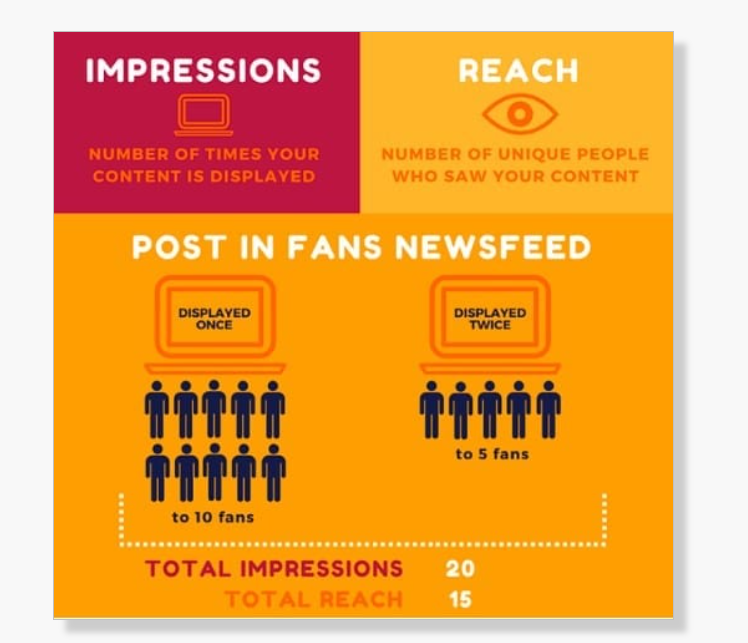
Your reach is best described as the total volume of people who have come across your social posts and content. Impressions are best described as the total number of times a social post has been displayed. One measures people and views, while the other measures appearance, regardless of interactions or actual views.
Reach is an important metric because it can inform your social strategy’s growth efforts. If you are looking to grow your audience and foster loyalty, reach is a great area on which to focus. If you are trying to measure how well your content is being displayed and determine how effectively you are catering to the algorithm of a given social platform, impressions are a great area on which to focus.
Conversion Metrics
Conversion rates encompass a variety of metrics, including click-through rate (CTR), leads, sign-ups, and purchases. Conversion metrics are typically seen as the “end stage” of your marketing efforts, though they can certainly also function as a beginning or midway point, as you work to encourage brand loyalty and audience maintenance.
According to Ruler Analytics’ 2025 analysis of conversion rates across fourteen industries, the average conversion rate from social media is 1.5%. While this may seem low compared to other channels like organic search (which averages around 4%), it’s important to understand the context: since the rollout of iOS 14.5, advertisers have struggled to prove social media’s impact on conversion and revenue, with 40% of CMOs reporting difficulty measuring social media’s impact on their business. Despite these tracking challenges, social media remains a critical touchpoint in the customer journey.
Overwhelmed by Digital Marketing?
Just released: my new book to help small businesses, entrepreneurs, and marketers master digital marketing in today’s digital-first world.
Drawing on my Fractional CMO experience, Digital Threads simplifies complex strategies into clear, actionable steps for success.
Transform your business today—grab your copy! Click the cover or button below to buy on Amazon.

Social campaigns are intrinsically connected to your sales and revenue, as they are the face of your brand, and can make or break a customer’s interest in making a purchase. Treat your socials as a platform from which to get to know your audience, and an ongoing marketing machine that never stops working to promote your products, build trust, and foster loyalty.
Audience Analytics
Audience demographics can also play an important role in how you create your social posts. Age, gender, location, and interests are the most common audience demographics and can be used to guide your social strategy.
A broad leaning toward one gender, for instance, can inform the way you speak and create your content. A consistent location among your audience can highlight the importance of leaning into that location–or suggest the need for a broader range of targeted content to widen your reach.
In addition to tracking audience demographics in your social media reports, take a look at behavioral insights. When and how your audience interacts with your content can help you determine when to upload your social posts for maximum reach and engagement, and how to deliver content to best suit your target audience.
Further Reading: Social Media Demographics: What Marketers Need to Know in 2025
Sentiment and Social Listening
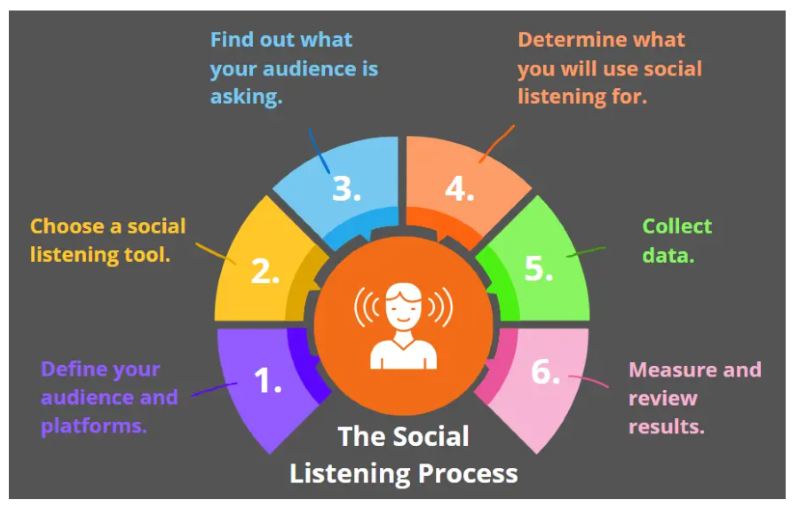
Sentiment analysis reveals brand perception. Like social listening tools, social analytics tools can home in on how your brand is being perceived by visitors and followers alike, to identify any necessary changes in social approach or tone.
The value of this particular analytics tool lies in its ability to identify positive vs negative trends before they escalate into a true issue for your brand. By getting ahead of any negative trends, you can make sure your brand perception remains sparkling and your reputation remains intact.
Competitor Analytics
Performance metrics are heavily informed by competitor benchmarking. After all, if you are performing well, but your competitors are consistently performing better (or worse), you need to understand why to either make changes or successfully maintain your standing.
By tracking competitors’ content and engagement, you can create a benchmark for your own success, determine what does and does not work within your niche, and understand where you fit in among your competitors. Competitive benchmarking is not an analytics metric to ignore.
Paid Social and ROI
Marketing efforts do not stop at in-house marketing materials. Paid social and return on investment (ROI) is another important performance metric to measure. The metrics specific to ad performance include:
- Cost Per Click (CPC)
- Cost Per Mille (CPM)
- Click Through Rate (CTR)
- Cost Per Acquisition (CPA)
Each of these metrics can be used alongside social media monitoring to evaluate how effectively your paid social is promoting your content or products.
Understanding CTR benchmarks helps you evaluate whether your paid campaigns are performing competitively. According to Brafton’s social advertising analysis, the average Facebook CTR across all industries is 0.90%, though this varies significantly by sector: legal and retail achieve the highest rates around 1.6%, while employment sectors see just 0.47%. LinkedIn ads average 0.52% CTR, with retail leading at 0.80%. If your paid campaigns fall below these benchmarks, it’s time to refine your creative, targeting, or platform mix.
To fully understand how effective your marketing efforts are, however, look closely at both organic and paid analytics. This will help you understand the efficacy of your approach and show any areas in need of attention.
Further Reading: Social Media ROI: The EASIEST Way to Calculate the Impact of Social Media on Your Business
Influencer Analytics
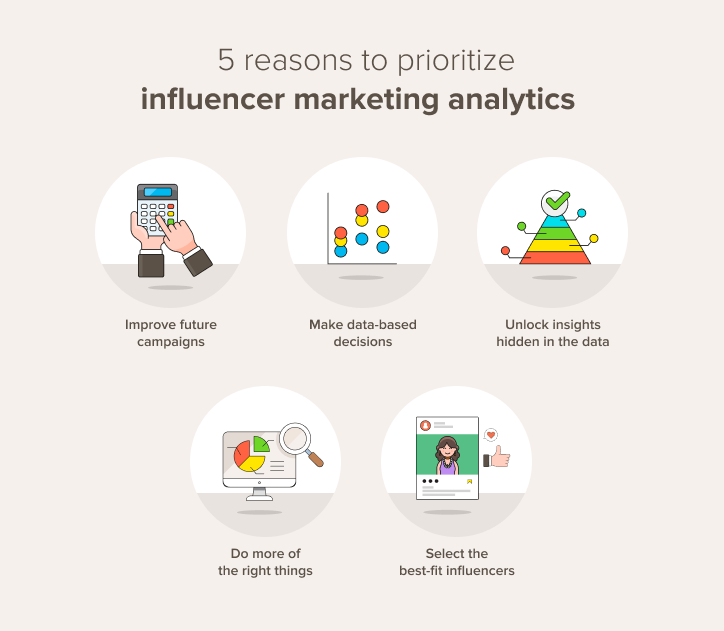
Influencer marketing is a huge part of the marketing landscape today, making metrics to evaluate influencer partnerships another important tool to employ. Although most social media managers are familiar with the principles of influencer marketing, it is not always easy to determine how to tie influencer content back to results.
Recent data proves influencer marketing’s value proposition. According to the Influencer Marketing Hub’s 2025 Benchmark Report, influencers collectively created 1.4 billion posts in 2024, generating $236 billion in Earned Media Value (EMV)—representing a remarkable 8.4x return on investment. Additionally, according to stats curated by SproutSocial, while only 16% of consumers say influencer marketing has the most impact on their buying decisions, the reality is that influencer content drives 49% of consumers’ daily, weekly, or monthly purchases, and 86% of all consumers make at least one influencer-driven purchase annually.
When evaluating influencer analytics, pay close attention to timing, CTRs of influencer content, and any bumps in conversions, followers, or engagement metrics within the timeline of the influencer campaign.
Analytics only matter if they drive action. By setting clear goals, building useful reports, and applying insights, you can make smarter, data-informed decisions. To truly make your social media data work for you, make sure you are…
Setting Goals Before Tracking
Align your social key performance indicators (KPIs) with your business objectives. Take sales, leads, awareness, and brand loyalty into account, and determine how you want each to look as your social media efforts proceed.
Building Reports That Stakeholders Actually Care About
Stakeholders like numbers, and will more effectively analyze your success when you can deliver weekly, monthly, and quarterly reporting cadences. That being said, avoid data overwhelm by using social analytics to clearly tell a story and demonstrate the value of your performance.
Turning Insights into Action
While insights are wonderful, even advanced analytics are useless if they do not produce action. Take your insights and turn them into action by identifying what is working in your socials and scaling it.
Insights can also identify weaknesses. When you spot a weakness, whether it is as significant as a tonal error or insignificant as a less-than-ideal posting time, use insights to pivot your campaigns.
Finally, use A/B testing–informed by analytics–to evaluate what does and does not work for your audience. By keeping track of your successes and failures as you use different approaches, you can continually refine your approach and produce the best marketing content and social posts possible.
With so many analytics tools available, the key is finding the one that matches your business needs. From free native dashboards to robust enterprise platforms, the right tool can transform how you measure success. The tools I most recommend according to their type are…
- Native Tools: Facebook Insights, Instagram Insights, TikTok Analytics, LinkedIn Analytics. All of these tools can help identify the efficacy of your socials and marketing campaigns.
- All-in-One Platforms: Hootsuite, Sprout Social, Buffer, Rival IQ, Emplifi, Qualtrics. Although each of these platforms has its own unique approach and offerings, they all share one thing: efficacy. These tools allow you to gather data and glean insights from a single dashboard.
- Specialized Reporting Tools: Whatagraph, Sotrender. When all-in-one tools do not quite meet all of your needs, consider Whatagraph and Sotrender for clarifying insights, pulling reports from numerous sources, and focusing on socials specifically, rather than pulling insights from all of your platforms and sites.
- Standard Tools: Google Analytics is a great option to track web conversions from social and is readily available. Many marketers are already familiar with Google products, making this one an easy tool to integrate into your overall marketing stack.
Choosing a tool can feel overwhelming, due to the sheer volume of available platforms and suites. To make sure you are selecting the right tool for your business size and needs, first identify the metrics you are most concerned about, determine what size your business falls into, and how much aid you need from an analytics tool. From there, you can compare prices and features and select your ideal tool.
Further Reading: 20 Best Social Media Analytics Tools to Empower Your Marketing in 2025
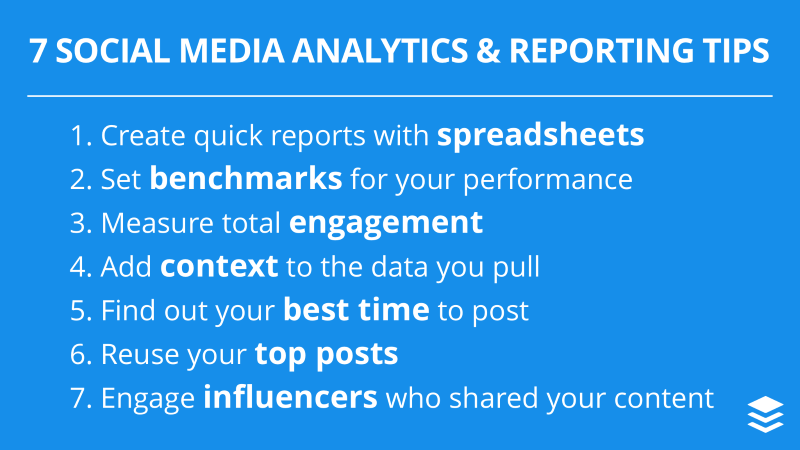
Even the best data won’t help if you approach it incorrectly. Following best practices ensures you stay focused on insights that matter and avoid common reporting pitfalls. Make sure that you…
- Avoid vanity metrics traps.
- Benchmark against industry standards, not assumptions.
- Segment data by demographics, geography, and campaign type.
- Visualize data for clarity in reporting.
- Combine operational data (think sales and website traffic) with social data for true ROI measurement.
The future of analytics goes beyond tracking what happened—instead, analytics are about predicting what will happen next. AI, real-time reporting, and customer experience integration are reshaping how businesses use social data.
The way I see social media analytics trending includes…
- AI-driven insights and predictive analytics
- Real-time reporting and alerts
- Deeper integration with customer experience management
- Increased focus on data privacy and compliance
Ultimately, the goal of social media analytics is to help your business grow and succeed. Lean into the tools at your fingertips to watch your business soar!
Further Reading: How to Evolve Your Marketing with AI in Social Media
Social media analytics is not about chasing numbers; it’s about connecting your online presence to tangible outcomes. By tracking the right metrics, benchmarking performance, and acting on insights, you can make smarter decisions, allocate your marketing budget more effectively, and prove ROI to stakeholders.
For entrepreneurs and small businesses, the ability to tie social media activity directly to business results—whether that’s leads, sales, or stronger customer relationships—is what turns social media from a “nice-to-have” into a measurable growth engine.
Actionable advice for your digital / content / influencer / social media marketing.
Join 13,000+ smart professionals who subscribe to my regular updates.
