

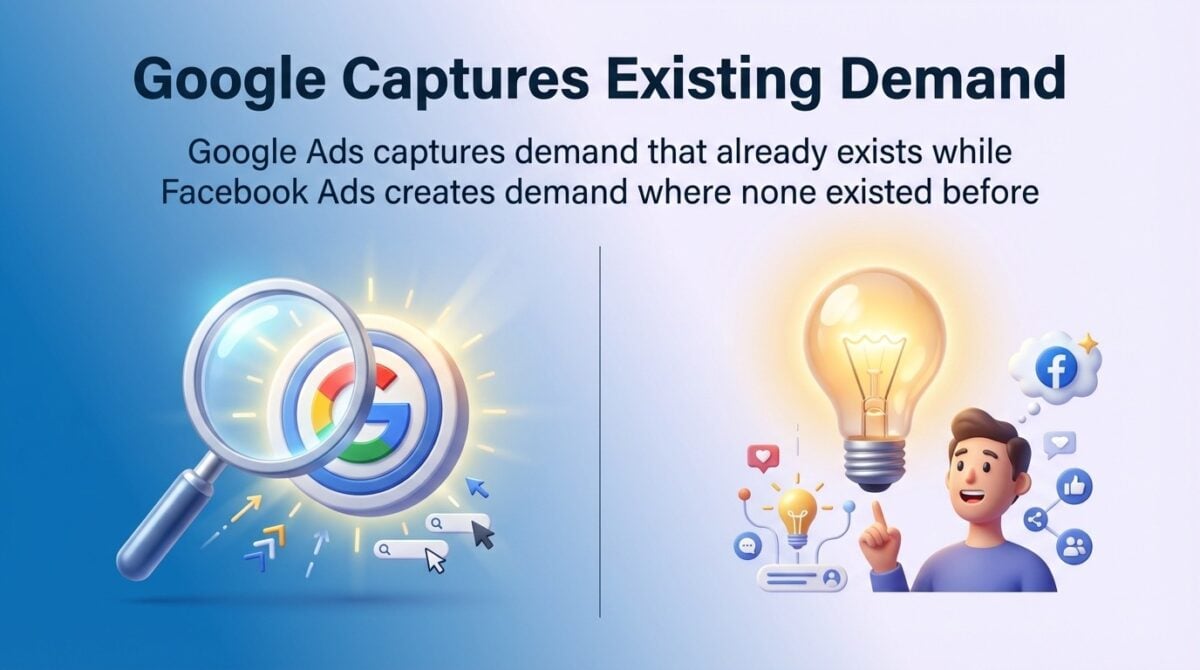
Neither Facebook Ads nor Google Ads is universally better than the other. Google Ads excels at capturing high-intent users actively searching for products, delivering faster conversions. Facebook Ads builds brand awareness among targeted demographics at lower cost. The optimal strategy combines both platforms to cover the entire purchase funnel.
The fundamental difference: Google Ads captures demand that already exists, while Facebook Ads creates demand where none existed before. Think about how you use each platform personally. When you Google “best running shoes,” you’re ready to buy. When you scroll Facebook and see an ad for running shoes, you might not have been thinking about shoes at all. That distinction shapes which platform works best for your business goals.
This guide breaks down exactly when to use each platform, what to expect from your ad spend, and how to combine them for maximum return on investment. You’ll understand the targeting capabilities, cost structures, and conversion patterns that separate successful campaigns from expensive failures.
What Is Google Ads?
Google Ads is a pay-per-click advertising platform that displays your ads to people actively searching for what you offer. Google processes over 16.4 billion daily searches, making it the largest search advertising platform in the world.
The platform operates on an intent-based model. Users type specific queries into Google, revealing exactly what they want right now. Your ads appear in search results when someone searches for keywords you’ve bid on.
Search Ads: The Core Product
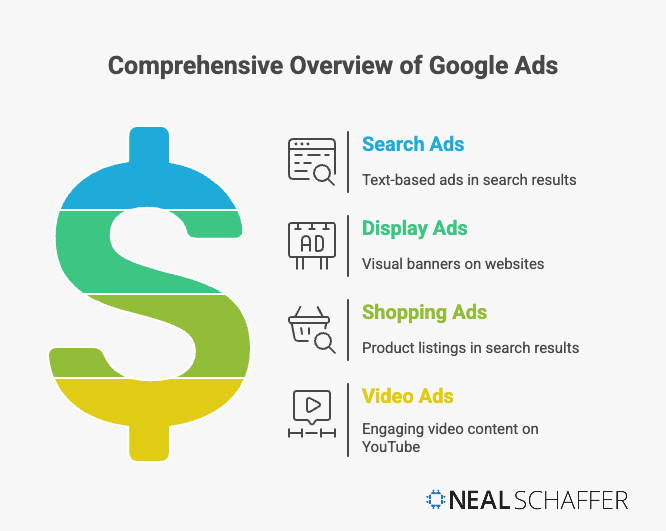
Search ads appear at the top and bottom of Google search results pages. They look similar to organic results but include an “Ad” label. These text-based ads consist of headlines, descriptions, and display URLs that you create to match user search intent.
When someone searches “plumber near me,” Google’s algorithm matches that query against advertiser keywords. The platform then runs an auction determining which ads appear and in what order. Your ad rank depends on your bid amount and quality score, a metric measuring ad relevance and landing page experience.
The beauty of search ads is precision. You’re paying to reach people who already want what you sell. They’ve raised their hand by typing a specific query. Your job is simply to present the right offer at the right moment.
Beyond Search: Display and Shopping
Google Ads extends beyond search results. Display ads appear on millions of websites across the Google Display Network, showing visual banners to users as they browse content related to your targeting parameters.
Shopping ads showcase product images, prices, and merchant names directly in search results. These visual listings work particularly well for ecommerce businesses, allowing users to compare products before clicking through to your site.
Video ads run on YouTube, letting you reach audiences through engaging video content. Each format serves different purposes in the customer journey, from initial awareness through final purchase.
How Google Ads Works
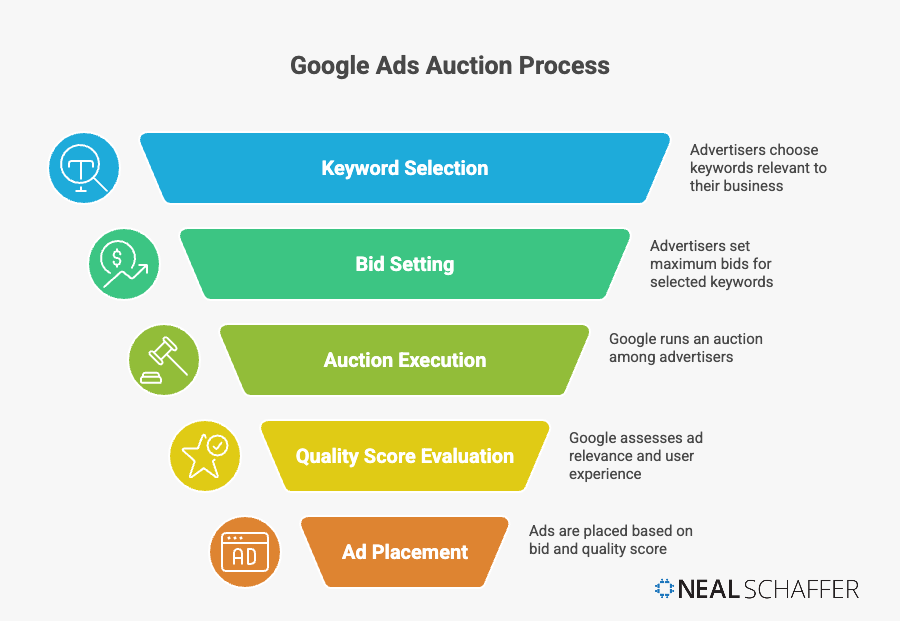
Google Ads operates on a real-time auction system. Every time someone searches, Google runs an instant auction among advertisers bidding on relevant keywords. This happens billions of times daily across the platform.
You start by selecting keywords that match what potential customers might search. For each keyword, you set a maximum cost-per-click bid, the highest amount you’ll pay for a click on that specific term.
But highest bid doesn’t always win. Google considers your quality score equally important. This metric evaluates your ad’s relevance to the search query, expected click-through rate, and landing page experience. A highly relevant ad with a lower bid can outrank a less relevant ad with a higher bid.
Keyword Match Types Control Reach
Match types determine how closely a search query must match your keyword before triggering your ad. Broad match shows your ad for related searches, including synonyms and variations. Phrase match requires the keyword phrase to appear in the search query. Exact match only triggers for searches matching your keyword precisely.
Broad match reaches more people but may show ads to less qualified searchers. Exact match reaches fewer people but ensures high relevance to your offering.
Most successful campaigns use a combination. Start with exact and phrase match to ensure relevance, then expand to broad match as you identify which variations convert.
Quality Score Impacts Everything
Quality score affects both your ad position and cost per click. Higher quality scores lead to better ad placements at lower costs. Google rewards advertisers who create relevant, useful experiences for searchers.
Three factors determine quality score: expected click-through rate, ad relevance to the keyword, and landing page experience. Improving any of these elements can significantly reduce your advertising costs while improving results.
Check your quality scores regularly in the Google Ads interface. Keywords with scores below 5 need immediate attention through better ad copy or more relevant landing pages.
Overwhelmed by Digital Marketing?
Just released: my new book to help small businesses, entrepreneurs, and marketers master digital marketing in today’s digital-first world.
Drawing on my Fractional CMO experience, Digital Threads simplifies complex strategies into clear, actionable steps for success.
Transform your business today—grab your copy! Click the cover or button below to buy on Amazon.

Advantages of Google Ads
Google Ads captures buyers at the moment of highest purchase intent. When someone searches “buy standing desk,” they’re ready to make a purchase decision. You’re not interrupting their day. You’re answering their specific question at exactly the right moment.
High conversion value and intent-driven targeting are strengths of Google Ads, making it particularly effective for bottom-funnel conversions. Users who click search ads convert faster than users discovered through other channels.
The platform delivers measurable, trackable results. You see exactly which keywords drive conversions, what you’re paying per acquisition, and where your budget generates the best return on investment. Google’s tracking is less dependent on third-party cookies, maintaining accuracy as privacy regulations tighten.
Search Intent Signals Purchase Readiness
Search queries reveal where prospects are in their buying journey. Someone searching “what is CRM software” is researching options. Someone searching “Salesforce pricing” is closer to a purchase decision. You can bid more aggressively on high-intent keywords knowing they’ll convert at higher rates.
This intent-based targeting eliminates wasted spend on unqualified traffic. You’re not paying to reach people who might someday need your product. You’re reaching people actively searching for solutions right now.
The specificity of search queries also enables precise messaging. When someone searches a specific product name or feature, you can create ads speaking directly to that exact need. This relevance drives higher click-through rates and conversion rates compared to broader targeting approaches.
Scalability With Budget Control
Google Ads scales as your business grows. Start with a small daily budget testing which keywords convert. As you identify winners, increase budget allocation to those specific terms. The platform accommodates businesses spending $5 daily and enterprises spending millions monthly.
You maintain complete budget control. Set daily spending limits, pause campaigns instantly, or adjust bids in real-time based on performance. This flexibility lets you respond quickly to market changes or seasonal demand fluctuations.
Performance data accumulates over time, improving campaign efficiency. Google’s machine learning algorithms optimize delivery based on which searches and times of day generate the best results for your specific goals.
Disadvantages of Google Ads
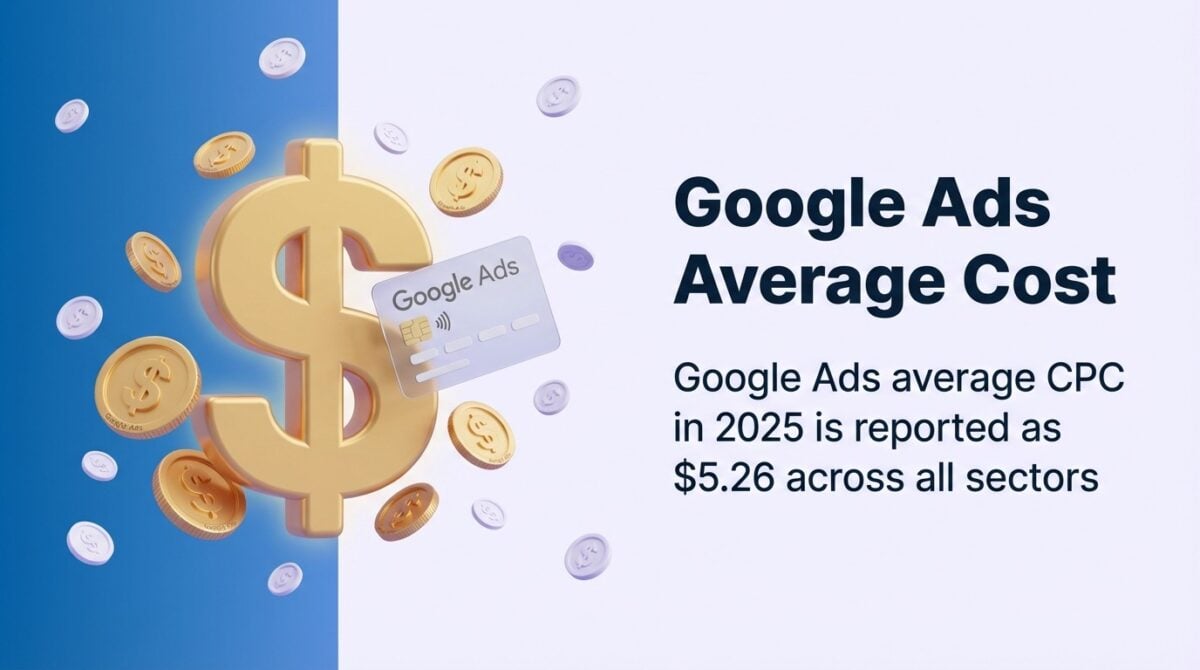
Google Ads average CPC in 2025 is reported as $5.26 across all sectors, making it significantly more expensive than other advertising platforms. Competitive industries like legal services, insurance, and finance often see cost-per-click rates exceeding $50 for top keywords.
These high costs mean smaller budgets struggle to generate meaningful results. If your budget is $10 daily and your average CPC is $5, you’re getting just two clicks per day. That’s not enough data to optimize campaigns or achieve consistent conversions.
The platform also requires ongoing management expertise. Successful Google Ads campaigns need constant keyword research, bid adjustments, ad copy testing, and negative keyword refinement. Many small businesses lack the time or knowledge to manage campaigns effectively, leading to wasted spend and poor results.
Limited Reach Beyond Active Searchers
Google Ads only reaches people actively searching. This works brilliantly for high-intent keywords but does nothing to build awareness among people not yet searching for your solution. If you’re launching a new product category or building brand recognition, search ads won’t help much initially.
The platform also struggles with impulse purchases and visual products. When someone needs to see your product to understand its appeal, text-based search ads fall short. You can’t convey the aesthetic appeal of furniture or the lifestyle benefits of a luxury watch through search ad copy alone.
Competition drives up costs in popular niches. Everyone wants to rank for the same high-intent keywords, creating bidding wars that price out smaller advertisers. You might have the best product but lack the budget to compete against established competitors willing to pay premium CPCs.
Long Learning Curve for Optimization
Google Ads appears simple but grows complex quickly. You need to understand keyword match types, quality score factors, bid strategies, ad extensions, audience targeting, remarketing lists, conversion tracking, attribution models, and more. Most businesses require months to become proficient.
The platform changes frequently. Google updates features, deprecates tools, and introduces new ad formats regularly. What worked last quarter might not work today. Staying current requires continuous learning and adaptation.
Initial campaigns almost always lose money. You need time to gather performance data, identify which keywords convert, weed out poor performers, and refine targeting. Budget at least three months of testing before expecting positive ROI from new Google Ads campaigns.
What Is Facebook Ads?
Facebook Ads is a paid social advertising platform that displays visual ads to users based on demographic and interest-based targeting. The platform includes Instagram, Messenger, and Audience Network placements, reaching billions of daily active users across the Meta ecosystem.
Unlike search advertising, Facebook uses an interruption-based model. Users aren’t searching for products. They’re scrolling through friends’ posts, watching videos, or catching up on news. Your ads appear in their feed alongside organic content.
This creates both challenge and opportunity. You must capture attention from users not actively looking to buy. But you can reach massive audiences at lower costs than search advertising, making Facebook ideal for building awareness and nurturing consideration.
Visual Storytelling at Scale
Facebook Ads prioritizes visual content. You create image ads, video ads, carousel ads showcasing multiple products, or collection ads that open into immersive shopping experiences. Visually appealing products thrive on Facebook and Instagram, where you can show products in context and demonstrate value through compelling creative.

The platform rewards engaging content. Ads that generate likes, comments, and shares get better distribution at lower costs. You’re not just buying ad space. You’re creating content that entertains or informs while subtly promoting your offering.
This emphasis on creativity levels the playing field. A small business with compelling visuals and messaging can outperform larger competitors with bigger budgets but boring ads. Your creative quality matters more than your budget size.
Interest and Behavior-Based Targeting
Facebook targeting relies on user profile data, behaviors, and interests rather than search queries. You define audiences by age, location, gender, interests, job titles, life events, purchasing behaviors, and hundreds of other demographic and psychographic factors.
The platform also enables custom audiences and lookalike audiences. Upload your customer email list, then target those existing customers with retention campaigns or find new prospects who share characteristics with your best customers.
This targeting approach works brilliantly for products people don’t know they need yet. You can reach people based on their interests and behaviors, introducing them to solutions before they start searching for alternatives.
How Facebook Ads Works
Facebook Ads operates through a campaign structure with three levels: campaigns define your objective, ad sets control targeting and budget, and ads contain the creative assets users see. This hierarchy lets you test different audiences and creative variations systematically.
You start by selecting a campaign objective aligned with your goal: awareness, traffic, engagement, leads, app installs, or sales. Facebook optimizes delivery based on your chosen objective, showing ads to users most likely to take that specific action.
At the ad set level, you define your target audience using Facebook’s detailed targeting options. You also set your budget and schedule, choosing between daily budgets and lifetime budgets spread across specified date ranges.
Auction Dynamics and Ad Delivery
Facebook runs continuous auctions determining which ads to show users. Your ad competes against thousands of other advertisers trying to reach the same audience. Three factors determine auction winners: your bid, your ad’s estimated action rate, and ad quality.
Estimated action rate predicts how likely a user is to take your desired action. Facebook uses historical performance data from similar ads and users to make these predictions. Higher estimated action rates lead to better placement at lower costs.
Ad quality factors include feedback from users who hide or report ads, content quality signals, and engagement patterns. Low-quality ads that frustrate users cost more and get limited distribution. Focus on creating ads users actually want to see.
Learning Phase and Optimization
New Facebook campaigns enter a learning phase where the algorithm tests different delivery approaches to understand which users respond best. During this phase, performance fluctuates as Facebook gathers data. You need roughly 50 conversions per ad set per week to exit the learning phase.
Avoid making significant changes during learning. Each substantial edit resets the learning phase, delaying optimization. Let campaigns run for at least a week before making major adjustments to targeting or creative.
Once optimized, Facebook increasingly shows ads to users most likely to convert. Your cost per result typically improves over time as the algorithm learns. This makes Facebook Ads a platform that rewards patience and consistent testing.
Advantages of Facebook Ads
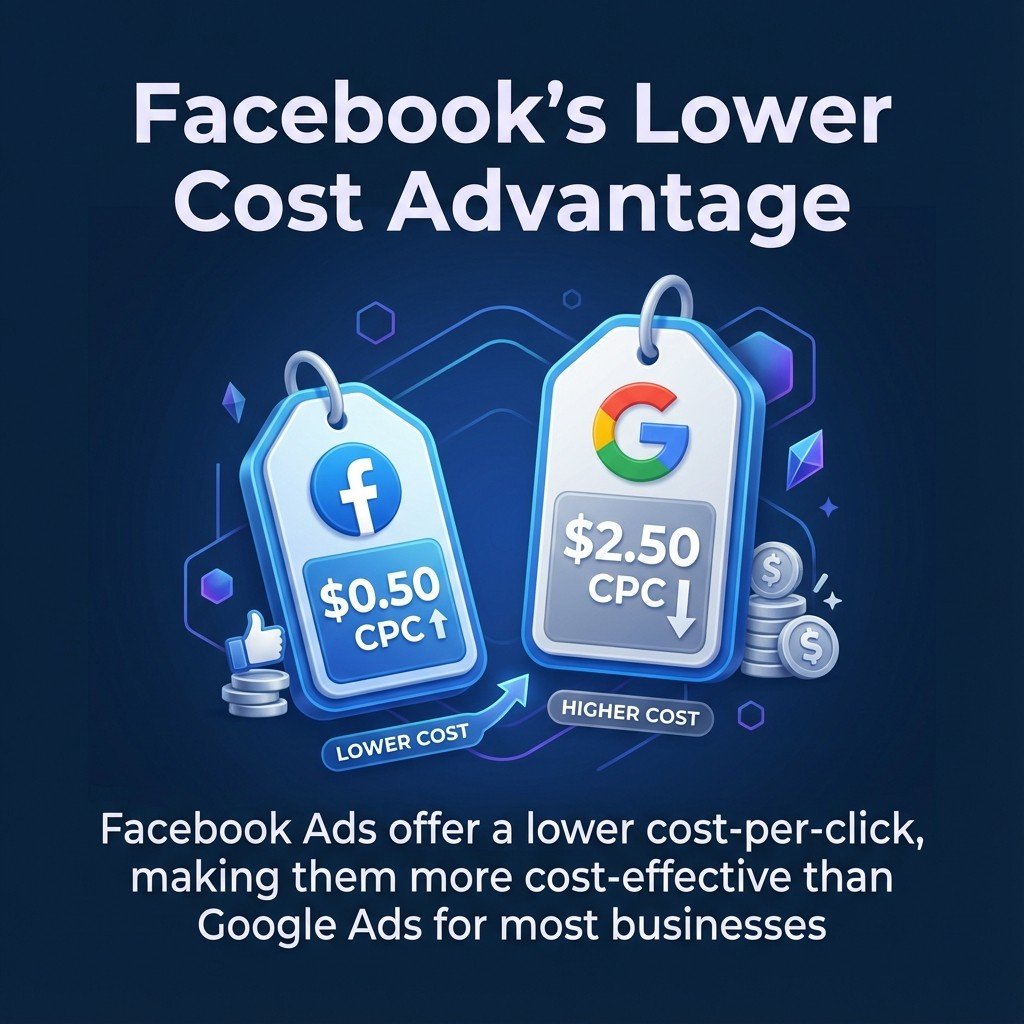
Facebook Ads offer a lower cost-per-click, making them more cost-effective than Google Ads for most businesses. You can reach substantially more people with the same budget, making Facebook ideal when you need volume over precision.
The platform excels at building brand awareness and nurturing consideration. You can target people based on interests and demographics before they start actively searching for solutions. This positions your brand early in the buying process when you face less direct competition.
Facebook’s visual format showcases products beautifully. For ecommerce businesses selling lifestyle products, home goods, fashion, or anything where visual appeal drives purchase decisions, Facebook ads outperform text-based search ads significantly.
Precise Demographic and Interest Targeting
Facebook’s targeting capabilities exceed any other platform for demographic precision. You can target new parents, people who recently got engaged, small business owners in specific industries, frequent travelers, fitness enthusiasts, or thousands of other detailed segments.
This targeting enables highly relevant messaging. An ad for baby products shown specifically to new parents performs vastly better than the same ad shown to the general population. You can speak directly to specific life situations and interests.
Lookalike audiences amplify your best customers. Upload a list of your highest-value customers, and Facebook finds similar users likely to become good customers too. This data-driven approach to prospecting scales customer acquisition efficiently. To better understand how much you’ll invest in this targeting precision, check out my detailed guide on Facebook ads cost.
Retargeting and Nurture Campaigns
Facebook excels at retargeting website visitors who didn’t convert initially. Install the Facebook Pixel on your site, then show ads to people who viewed specific pages, added items to cart, or spent significant time browsing. Learn more about maximizing this strategy in my comprehensive Facebook ads retargeting guide.
This remarketing capability typically delivers your highest ROI campaigns. You’re reaching people who already know your brand and showed interest. They just needed an additional nudge or reminder to complete their purchase.
The platform also supports sophisticated nurture sequences. Show different ads based on previous interactions, guiding prospects through a multi-step journey from awareness to consideration to purchase. For more insights on targeting the right audience at each stage, explore our guide on Facebook ads targeting.
Disadvantages of Facebook Ads
Facebook users aren’t actively searching for products. They’re socializing, consuming content, and staying connected with friends. Your ads interrupt this experience, requiring exceptional creative and messaging to capture attention from users with zero purchase intent in that moment.
This intent gap means longer sales cycles and lower immediate conversion rates compared to search advertising. Users who click Facebook ads are earlier in the buying journey. They’re browsing, not buying. You’ll need multiple touchpoints before most users convert.
Privacy changes significantly weakened Facebook’s tracking capabilities. Apple’s iOS updates limit Facebook’s ability to track user behavior across apps and websites. This reduces attribution accuracy and makes campaign optimization harder than previous years.
Creative Requirements and Ad Fatigue
Facebook demands constant creative refreshes. Users see your ads repeatedly in their feeds, creating ad fatigue where performance degrades over time. You need a steady stream of new images, videos, and copy variations to maintain campaign performance.
This creative requirement raises the barrier to entry. You need design skills, video production capabilities, or budget to hire creative professionals. Businesses without strong visual content struggle to compete on Facebook’s visually-driven platform.
Testing creative variations also consumes significant time. You need to test different images, videos, headlines, body copy, and calls-to-action to identify winning combinations. This testing requirement makes Facebook campaigns more labor-intensive than search campaigns.
Attribution Challenges and Delayed Conversions
Facebook operates primarily as a top and middle-funnel channel. Users discovered through Facebook ads often convert later through other channels like direct traffic or search. This makes attribution complicated and can make Facebook campaigns appear less effective than they actually are.
The platform’s reporting sometimes overstates performance through generous attribution windows and last-touch attribution models. You might see Facebook claiming credit for conversions that other channels influenced more significantly.
Longer sales cycles mean slower feedback loops. With Google search ads, you often see whether a keyword converts within days. Facebook campaigns might need weeks or months to demonstrate true effectiveness, making optimization slower and requiring more patience.
Google Ads vs Facebook Ads: Cost Comparison
Cost differences between platforms significantly impact campaign strategy and budget allocation. Understanding these cost structures helps you set realistic expectations and allocate budgets appropriately.
Google Ads commands premium pricing because of high purchase intent making them significantly more expensive, although costs vary dramatically by industry and keyword competitiveness.
Facebook Ads offer a lower cost-per-click, typically ranging from $0.50 to $2.00 for most industries. This lower cost provides more impressions and clicks per dollar but with generally lower immediate conversion rates.
| Factor | Google Ads | Facebook Ads |
|---|---|---|
| Average CPC | $5.26 | Lower than Google |
| User Intent | High purchase intent | Discovery and browsing |
| Best For | Bottom-funnel conversions | Top-funnel awareness |
| Conversion Speed | Faster, same-session | Slower, multi-touch |
| Budget Efficiency | Higher cost per click | More volume per dollar |
Industry-Specific Cost Variations
Legal services, insurance, and financial services see the highest Google Ads costs, often exceeding $50 per click for competitive keywords. These industries justify high CPCs through high customer lifetime values. A single personal injury client might generate $50,000 in revenue, making a $100 CPC profitable.
Ecommerce and retail typically experience moderate costs on both platforms. Google shopping ads for physical products usually cost $0.50 to $2.00 per click. Facebook ads for similar products might cost $0.30 to $1.50 per click.
B2B services fall somewhere in the middle. Software, consulting, and professional services might pay $3 to $15 per click on Google and $1 to $5 on Facebook. The key is calculating acceptable customer acquisition costs based on your specific lifetime value.
Budget Recommendations for Each Platform
Google Ads needs sufficient budget to generate meaningful click volume. With a $5 average CPC, you need at least $150-300 monthly minimum to gather enough data for optimization. Competitive industries require $1,000+ monthly to see results.
Facebook Ads accommodates smaller budgets more easily. Many small businesses start successfully with $5-10 daily budgets. The lower CPC means you generate more data points for the algorithm to optimize even with modest spending.
Most businesses should allocate 60-70% of search-focused budget to Google Ads and 60-70% of awareness-focused budget to Facebook Ads. The exact split depends on your sales cycle length and average customer value. For more detailed insights on planning your investment, see my guide on are Facebook ads worth it.
Targeting Capabilities: Search Intent vs Interest-Based
Targeting philosophies differ fundamentally between platforms. Google targets based on what people search. Facebook targets based on who people are and what they do. This distinction shapes which platform works better for different business models.
Google Ads captures explicit intent through keyword targeting. When someone searches “wedding photographer Chicago,” you know exactly what they want. Your targeting job is simply bidding on the right keywords and excluding irrelevant searches through negative keywords.
Facebook Ads requires you to predict who might want your product based on demographics, interests, and behaviors. You’re targeting implicit intent, building audiences you believe will respond to your offering based on their characteristics rather than their active searches.
Google’s Keyword-Based Precision
Keyword targeting provides surgical precision for bottom-funnel conversions. You reach people at the exact moment they express interest in what you sell. This makes Google Ads incredibly efficient for businesses with clear, searchable offerings.
You can also layer audience targeting onto keyword campaigns. Target previous website visitors searching related keywords, or exclude existing customers from prospecting campaigns. These audience layers refine keyword targeting further.
The challenge is volume. If few people search for your keywords, you’ll struggle to scale campaigns regardless of how well they perform. Niche products with limited search volume hit Google Ads ceiling quickly.
Facebook’s Demographic and Psychographic Depth
Facebook excels at reaching specific demographic and psychographic segments. You can target working mothers aged 30-45 who like organic food and live within 20 miles of your store. This specificity enables highly relevant messaging that resonates with narrow audiences.
Behavioral targeting adds another dimension. Target people who recently moved, got engaged, started a business, or travel frequently internationally. These life event triggers correlate strongly with specific purchase needs.
Custom audiences let you target your existing customers for retention campaigns or create lookalike audiences finding similar prospects. This data-driven targeting often outperforms manual demographic selection significantly.
When to Choose Google Ads
Choose Google Ads when your product or service has clear search demand. If people actively search for what you offer, Google Ads provides the most direct path from search query to conversion. The platform works particularly well for local businesses, professional services, and products solving urgent problems.
Google Ads delivers best results for bottom-funnel conversions. Users clicking search ads typically convert faster with fewer touchpoints than users discovered through other channels. If you need quick sales and can track clear ROI, start with Google Ads.
The platform also works well when you have limited creative resources. Search ads require compelling copy but don’t need sophisticated visual assets. If you lack design capabilities or video production resources, Google’s text-based format removes that barrier.
Ideal Use Cases for Search Advertising
Emergency services benefit enormously from Google Ads. When someone’s pipe bursts at 2 AM, they search “emergency plumber near me.” They need help immediately and will call the first relevant result. Search ads capture this urgent demand perfectly.
Local businesses with specific service areas thrive on Google Ads. Geo-targeting ensures you only pay for clicks from people in your service area. A dentist in Austin doesn’t want clicks from people in Boston regardless of how relevant the keywords.
High-consideration B2B services with long sales cycles still benefit from Google Ads despite delayed conversions. Enterprise software buyers start their research with searches like “best CRM for manufacturing.” Being present at this initial research phase influences eventual vendor selection even if conversion takes months.
Industries With Proven Google Ads Success
Legal services consistently achieve strong ROI from Google Ads despite high costs. When someone needs a lawyer, they search for one. The urgency and high transaction values justify premium CPCs.
Home services including plumbing, HVAC, roofing, and electrical work dominate local search results. These services are frequently needed urgently, and consumers actively compare options through search before choosing providers.
Professional services like accounting, consulting, and financial planning capture qualified leads through search ads. These businesses benefit from buyers actively researching solutions rather than being interrupted mid-scroll on social media. To complement search efforts with broader digital strategies, explore my guide on digital marketing for small business.
When to Choose Facebook Ads
Choose Facebook Ads when you’re building awareness for products people don’t actively search for yet. If you’re creating new product categories or your offering is impulse-driven, Facebook’s interruption model works better than waiting for search demand to materialize.
Facebook excels for visual products where seeing is believing. Fashion, home decor, food products, and lifestyle goods perform exceptionally well through image and video ads showcasing products in context.
The platform also works brilliantly for businesses with long sales cycles requiring multiple touchpoints. If your average customer needs to see your brand 5-7 times before converting, Facebook’s lower costs make those impressions affordable.
Products That Thrive on Visual Platforms
Ecommerce stores selling physical products generate significant revenue through Facebook and Instagram ads. Visually appealing products thrive on Facebook and Instagram, where you can showcase multiple product angles, lifestyle imagery, and user-generated content proving social proof.
Fashion and apparel brands build entire businesses on Facebook and Instagram advertising. The visual nature of clothing and accessories requires images and videos that search ads can’t provide. Dynamic product ads automatically promote items users viewed on your website.
Food and beverage companies leverage video content showing products being prepared, consumed, and enjoyed. Recipe content, cooking demonstrations, and product showcases perform well because they entertain while selling.
Building Audiences and Brand Awareness
New businesses without established brand recognition need awareness before demand generation. Facebook lets you introduce your brand to relevant audiences at scale before they start searching for alternatives. This positions you in consideration sets early.
Content marketing and educational businesses use Facebook to distribute valuable content while building audiences. Lead magnets, free resources, and educational content perform well on Facebook where users engage with informational content regularly.
Subscription businesses and products with predictable repeat purchase cycles benefit from Facebook’s retargeting and nurture capabilities. You can build sophisticated campaign sequences guiding users from initial awareness through trial to subscription.
Using Both Platforms Together for Maximum ROI
The most successful advertising strategies combine Google Ads and Facebook Ads strategically. Each platform serves different funnel stages and customer journey phases. Using both together creates comprehensive coverage from initial awareness through final conversion.
Allocate Facebook budget to top and middle-funnel awareness and consideration campaigns. Use engaging creative to introduce your brand to relevant audiences. Then retarget engaged users with both Facebook and Google Ads as they move down the funnel.
Google Ads captures bottom-funnel conversions from users ready to buy. This includes people who discovered you through Facebook but later searched your brand name or product category when ready to purchase. The platforms work together even when attribution suggests they’re separate.
Full-Funnel Campaign Architecture
Structure campaigns to mirror the customer journey. Facebook ads introduce your brand and product to cold audiences matching your ideal customer profile. These awareness campaigns prioritize reach and engagement over immediate conversions.
Middle-funnel Facebook campaigns retarget users who engaged with awareness content. Show deeper product information, customer testimonials, and specific use cases to build consideration. These campaigns aim for landing page visits and content consumption.
Bottom-funnel Google search campaigns capture users actively searching for your product category, brand name, or competitor names. These high-intent campaigns prioritize conversion over reach, targeting people ready to buy immediately.
Cross-Platform Attribution and Measurement
Use Google Analytics to understand the true customer journey across both platforms. Enable auto-tagging in Google Ads and use UTM parameters for Facebook ads. This tracking reveals how platforms influence each other.
Most buyers interact with multiple touchpoints before converting. Someone might discover you through Facebook, research competitors on Google, return to your site directly, then finally convert through a Google search ad. Each touchpoint contributed to the conversion even though only one platform gets last-click credit.
Implement view-through conversion tracking and cross-device tracking when possible. This reveals Facebook’s influence on users who see ads but convert later through other channels. View-through conversions often represent 30-50% of Facebook’s true impact.

Quick Answers to Common Questions
Which is cheaper Google Ads or Facebook ads?
Facebook Ads typically costs $0.50-$2.00 per click compared to Google’s $5.26 average. However, Google’s higher cost often delivers better ROI for direct sales due to conversion-ready audiences searching with purchase intent.
Is $10 a day enough for Facebook ads?
$10 daily works as a starting budget for Facebook Ads, particularly for small businesses testing campaigns or building brand awareness. Effectiveness depends on your industry, target audience size, and campaign goals. Competitive niches may require higher spend for meaningful results, but $10 daily generates enough data for initial optimization.
How much do 1,000 clicks cost on Facebook?
At typical Facebook CPCs, 1,000 clicks cost approximately $500-1,700 depending on targeting specificity and ad quality. Actual costs vary significantly by industry, audience competition, and creative performance. Better ad creative and more targeted audiences reduce costs, while competitive industries increase them.
Which platform is better for beginners: Facebook Ads or Google Ads?
Facebook Ads is typically easier for beginners due to lower costs and simpler initial setup. You can start with $5-10 daily budgets and see results without extensive keyword research. Google Ads requires understanding match types, quality scores, and negative keywords, making the learning curve steeper. However, Google often delivers faster conversions once optimized.
Making Your Decision
Neither platform wins universally. Your business model, target audience, and marketing objectives determine which platform delivers better results. Most successful businesses eventually use both, but starting with the right platform accelerates initial results.
Start with Google Ads if you have clear search demand and need bottom-funnel conversions quickly. The higher costs are justified by faster sales cycles and clearer attribution. You’ll know within weeks whether campaigns are profitable.
Start with Facebook Ads if you’re building awareness, have strong visual products, or lack sufficient search volume in your niche. The lower costs let you test creative and audiences without massive budgets. Plan for longer optimization periods before expecting consistent profitability.
Timeline expectations matter too. Google Ads typically shows results within 2-4 weeks once optimized. Facebook Ads often needs 4-8 weeks to exit the learning phase and demonstrate consistent performance. Plan your budget and patience accordingly.
Test both platforms with small budgets before committing significant resources. Allocate $500-1,000 to each platform initially, then double down on whichever delivers better results for your specific business. Track customer acquisition costs and lifetime value religiously. These metrics determine which platform truly drives business growth regardless of what industry benchmarks suggest.
The truth is, most businesses waste money by following generic advice instead of testing what works for their specific situation. Your industry benchmarks matter less than your actual performance data. Run the test, measure the results, then scale what works.
Actionable advice for your digital / content / influencer / social media marketing.
Join 13,000+ smart professionals who subscribe to my regular updates.
