

Amazon runs one of the biggest affiliate programs on the internet, and the Amazon Influencer Program is the version built for social media creators. If you have an engaged following, it gives you your own storefront on Amazon and a vanity URL to share. You earn a commission when your audience buys what you recommend. If you sell products on Amazon, it gives you a roster of creators who can move your inventory.
How serious is Amazon about this? In May 2022, the company flew more than a dozen Instagram, TikTok, and YouTube stars to a resort on Mexico’s Pacific coast, as CNBC reported. It rebranded the property “Amazon Resort” and ran a workshop on setting up storefronts. Companies do not throw beach parties for programs they plan to shut down.
I’m Neal Schaffer. I teach personal branding and influencer marketing at UCLA Extension, host the Your Digital Marketing Coach podcast, and wrote The Age of Influence on how creators reshape what people buy. This post answers the questions I get asked most about the program, from both creators trying to get in and brands trying to work with the creators already inside.
Key Takeaways
✅ The Amazon Influencer Program launched in 2017 as a creator-focused branch of Amazon Associates, first reported by TechCrunch, and Amazon keeps investing in it.
✅ Approved influencers get a storefront at amazon.com/shop/yourname, shoppable videos placed on product pages, and livestreaming tools, all earning the same commissions Amazon Associates earn.
✅ Amazon does not publish a hard follower minimum. It reviews your audience size and engagement, and rejections usually come down to follower count, geography, or content quality.
✅ Most influencer income now comes from onsite shoppable videos on Amazon product pages, not from social media traffic. You earn when a shopper watches and buys, not when someone clicks.
✅ Brands can find Amazon influencers through #FoundItOnAmazon, influencer marketplaces, and their own customer base, then invite them to feature products.
What Is the Amazon Influencer Program?
The Amazon Influencer Program is a creator-focused branch of Amazon Associates that lets approved social media influencers build a personal storefront on Amazon and earn commissions on the products they recommend. It launched in 2017 and gives creators a vanity URL, shoppable photos and videos, and livestreaming tools instead of plain affiliate links.
Most people know Amazon Associates, the original affiliate program where bloggers and website owners post tagged links and earn a cut when readers buy. The influencer version works on the same commission engine, but it is aimed at the social media crowd rather than people publishing on their own websites. Amazon has steadily deepened this push into influencer marketing since the program left beta.
The difference that matters: instead of scattering links across blog posts, an influencer gets a curated destination. Your followers land on one branded page full of products you actually use. That fits how this whole market has grown. The creator economy could roughly double to $480 billion by 2027 from $250 billion, according to Goldman Sachs Research. Amazon wants creators selling on its turf, not someone else’s.
How Is the Amazon Influencer Program Different From Amazon Associates?
Both programs pay the same commissions, so the real difference is the experience. Amazon Associates gives website owners trackable links to drop into content. The Amazon Influencer Program gives social creators a branded storefront, a memorable URL, shoppable videos, and livestreaming, all designed to be shared on social platforms rather than buried in a blog post.
If you have ever wondered whether this is closer to affiliate marketing or to traditional sponsorships, it sits squarely on the affiliate side. I cover where that line falls in my post on influencer marketing versus affiliate marketing, and the Amazon program is a clean example of the two worlds blending.
| Amazon Associates | Amazon Influencer Program | |
|---|---|---|
| Built for | Bloggers, publishers, website owners | Social media creators |
| What you get | Trackable product links | Storefront, vanity URL, shoppable videos, livestreaming |
| Where you promote | Your website or blog | Social profiles, bio links, your Amazon storefront |
| Commission rates | Vary by product category | Same rates, vary by product category |
| How you join | Open sign-up | Application reviewed on audience and engagement |
Who Qualifies for the Amazon Influencer Program?
Amazon accepts all types of influencers across YouTube, Instagram, Facebook, and TikTok, but it weighs your follower count and engagement before approving you. There is no published follower minimum. When you apply, you authorize Amazon to read your account metrics, so a thin or disengaged following gets spotted fast. Amazon wants creators who already drive buying decisions.
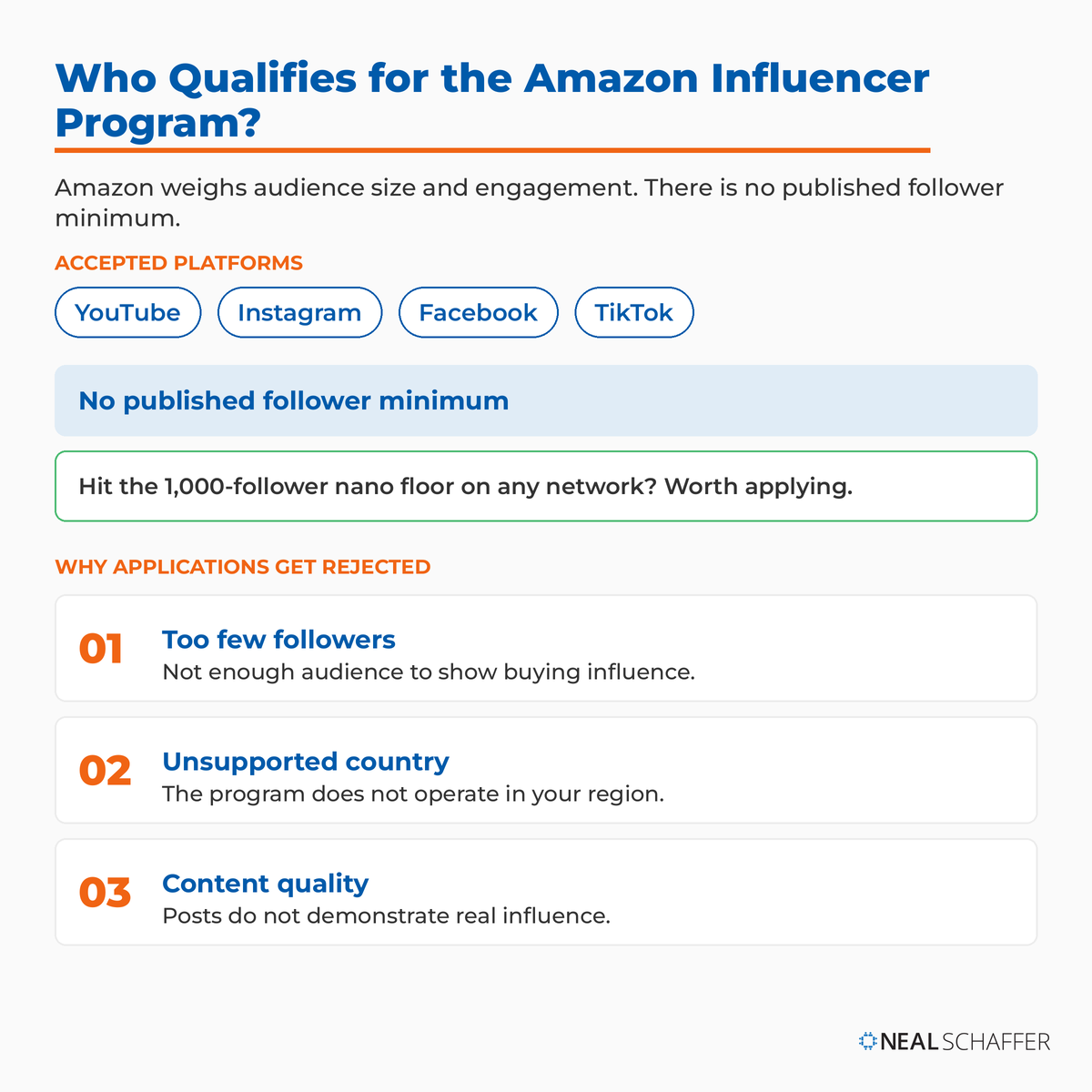
That said, if you qualify as a nano influencer by having at least 1,000 followers on any of those networks, I wouldn’t hesitate to apply. Amazon is always looking to expand its roster of viable social media personalities, and the worst case is a rejection you can reapply past later.
Why do applications get rejected? When readers paste me their rejection emails, the cause is almost always one of three things: too few followers, a country the program does not serve, or content that does not show real influence. The fix is rarely mysterious. Grow the account, post stronger content, and apply again.
How Do Amazon Influencers Actually Make Money?
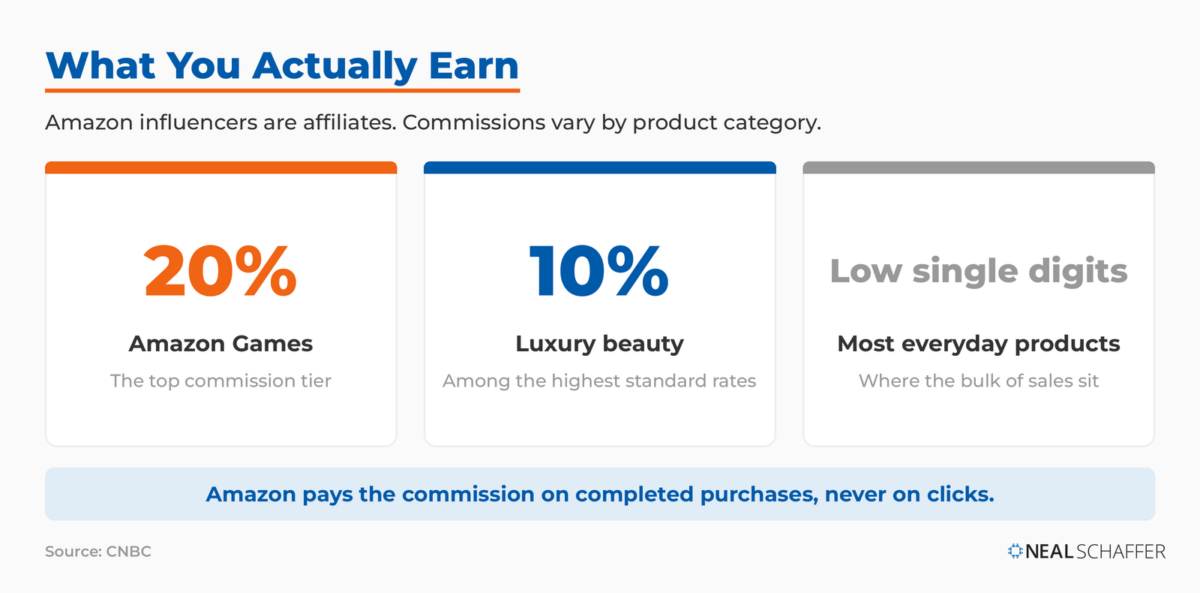
Amazon influencers earn affiliate commissions whenever a shopper buys a product they recommended, through three main channels: their storefront, onsite shoppable videos placed on Amazon product pages, and Amazon Live streams. The commission comes from Amazon, not the third-party seller, and it only pays out on completed purchases, never on clicks.
This is the question I answer most. The name “Amazon Influencer” sounds fancy, but underneath it you are an affiliate earning the same commissions other affiliates earn. Those payouts vary by category. CNBC, which has tracked the program closely, reported that the top categories are Amazon Games at 20% and luxury beauty at 10%, while most everyday products pay low single-digit percentages. The same reporting profiled a livestreamer earning into the low five-figure range each month and quoted Influential CEO Ryan Detert calling creators today “decentralized media companies.” If you want the bigger picture of creator income streams, I lay it out in my post on how influencers make money.
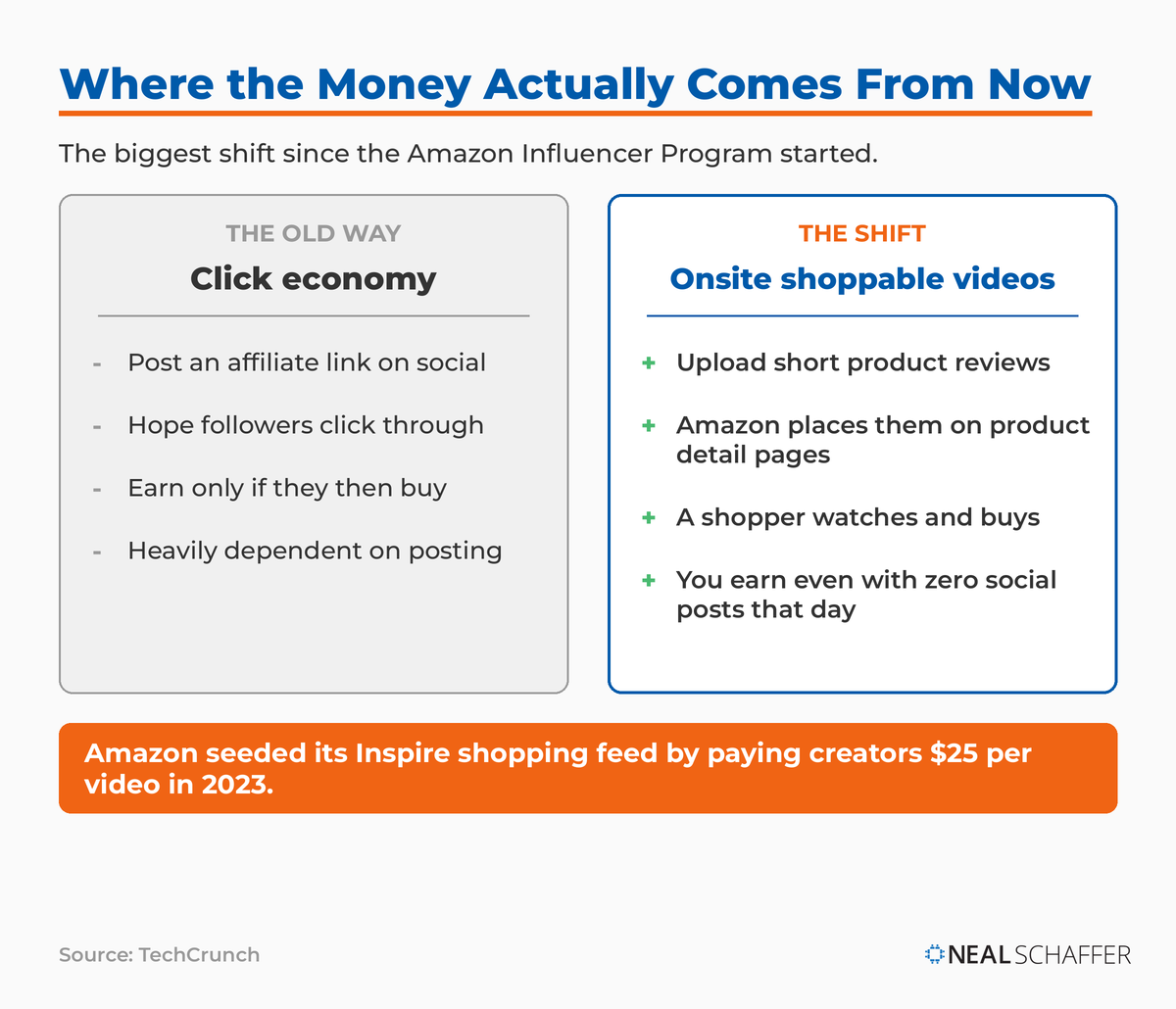
The biggest shift since this program started is where the money now comes from. For most creators, the largest source is onsite shoppable videos: short reviews you upload that Amazon places directly on product detail pages. A shopper watching that video buys the item, and you earn the commission, even if you never posted a thing on social media that day. It rewards being a UGC creator more than being a celebrity. Amazon has leaned hard into this, offering creators $25 per video to seed its Inspire shopping feed back in 2023.
A few honest truths from the questions I get. You get paid only when someone buys after using your link, not for clicks, so a day of 48 clicks and zero sales is normal. Your dashboard numbers will swing day to day as different people see your content. And the commission is Amazon’s to pay, so a seller does not get billed twice for featuring in your store.
| Earning method | How it works | What it takes |
|---|---|---|
| Storefront commissions | Curate products into a shoppable page; earn on purchases through it | Approval and good product picks |
| Onsite shoppable videos | Upload short reviews Amazon places on product pages; earn when viewers buy | A phone and the product in hand |
| Amazon Live | Livestream demos and answer questions in real time | Time and a streaming setup |
| Brand-funded campaigns | Brands add bonus commissions on specific products through Creator Connections | An active storefront |
Once Amazon approves you, setting up a storefront takes minutes. You get a unique URL, add your name and contact details, submit payment and tax information, then customize the page with a photo and bio. From there you search Amazon’s catalog, add products, and organize them into themed collections over time.
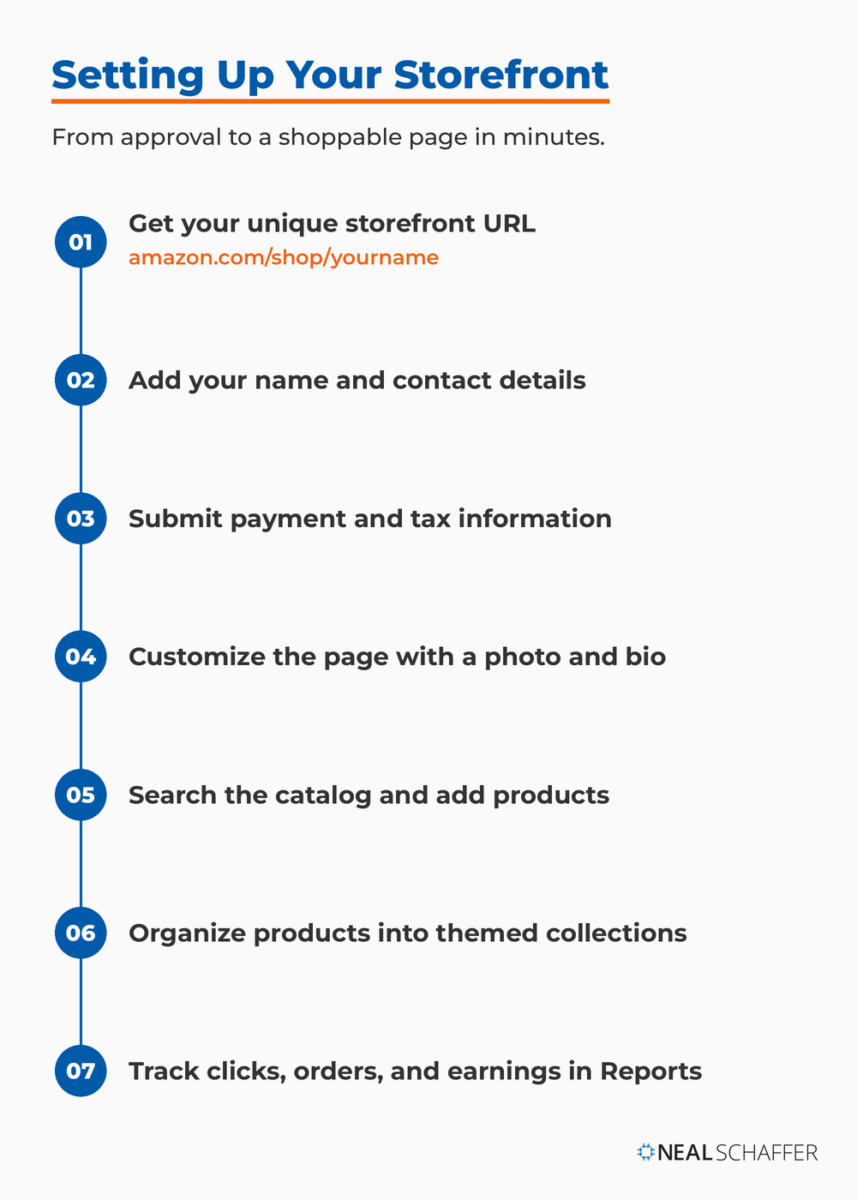
You have full control over what goes in, which is the part affiliates love. Stick to your niche or branch into whatever you genuinely like. Think of it as running a shop without the shipping, stock, or returns: you earn a small commission on each sale as a low-risk revenue stream for your personal brand. Your dashboard’s reports section tracks clicks, orders, and earnings so you can see what is working.
Promotion is where storefronts live or die. The custom URL is your best tool, and the strongest creators place it everywhere. A real example: a kitchen and home blogger at Life’s Little Sweets runs both the affiliate and influencer programs side by side. She sells some products through affiliate links in her posts, and the items she personally curates go in her Amazon storefront, which she links from her site’s top navigation menu. Other creators attach a “shop” link to their Facebook page and Instagram bio to cross-pollinate audiences. Amazon Live adds another layer, letting you livestream product reviews and unboxings and answer questions in real time.
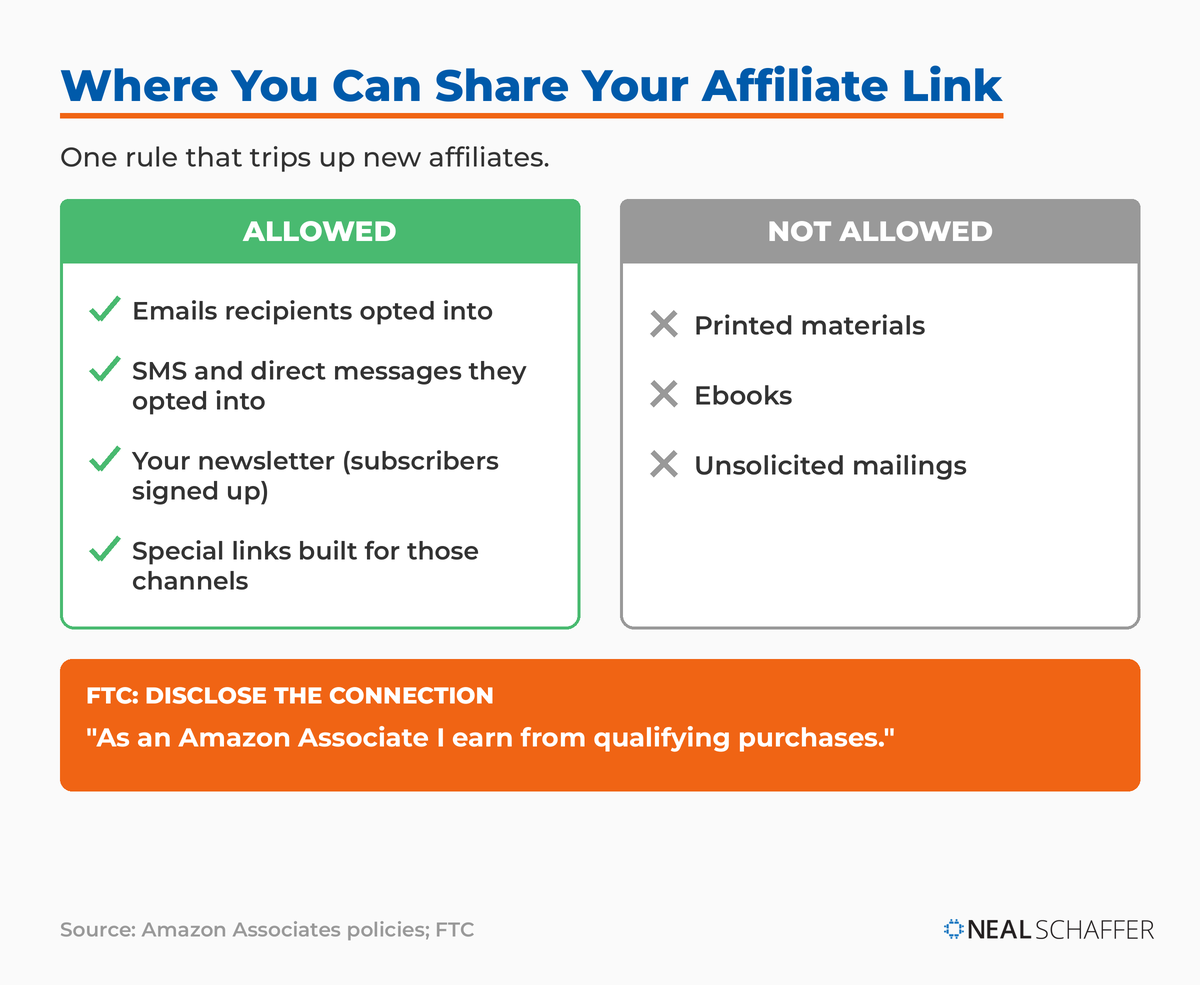
One rule trips people up: where can you share the link? Amazon’s Associates program policies prohibit your affiliate links in printed materials, ebooks, and unsolicited mailings. But they do allow special links in emails, SMS, and direct messages when the recipient opted in. So your newsletter is fair game if subscribers signed up for it. And because you are earning commissions, the FTC requires a clear disclosure of your material connection placed right with the recommendation, not buried on an about page. Amazon’s own required line, “As an Amazon Associate I earn from qualifying purchases,” covers the Amazon side of that.
How Can Brands Work With Amazon Influencers?
Brands can find Amazon influencers through Amazon’s own discovery tools, third-party marketplaces, and their existing customers. The goal is to identify creators who already run storefronts in your niche, then give them a reason to feature your product. With commissions flowing from Amazon, a creator who genuinely likes your item has every incentive to keep selling it.
The LinkedIn Playbook for Real Business Growth
My latest book helps professionals, entrepreneurs, and business owners turn LinkedIn from a static profile into a real source of clients and growth.
Maximizing LinkedIn for Business Growth gives you clear, practical steps to build a profile that gets noticed and a network that actually sends business your way.
Grab your copy on Amazon and put it to work this week. Click the cover or the button below to get started.

Start with Amazon’s #FoundItOnAmazon feed, which surfaces influencer storefronts across different niches and shows you who is already active. Amazon Live is a second hunting ground, where you can browse creators streaming in your category. Dedicated tools help too: Referazon focuses specifically on Amazon influencers, while general marketplaces like Intellifluence let you browse creators by platform, specialty, and country with follower and engagement metrics attached. If you would rather build your own list, start with my post on how to reach out to influencers, and keep your contacts organized in a private influencer database.
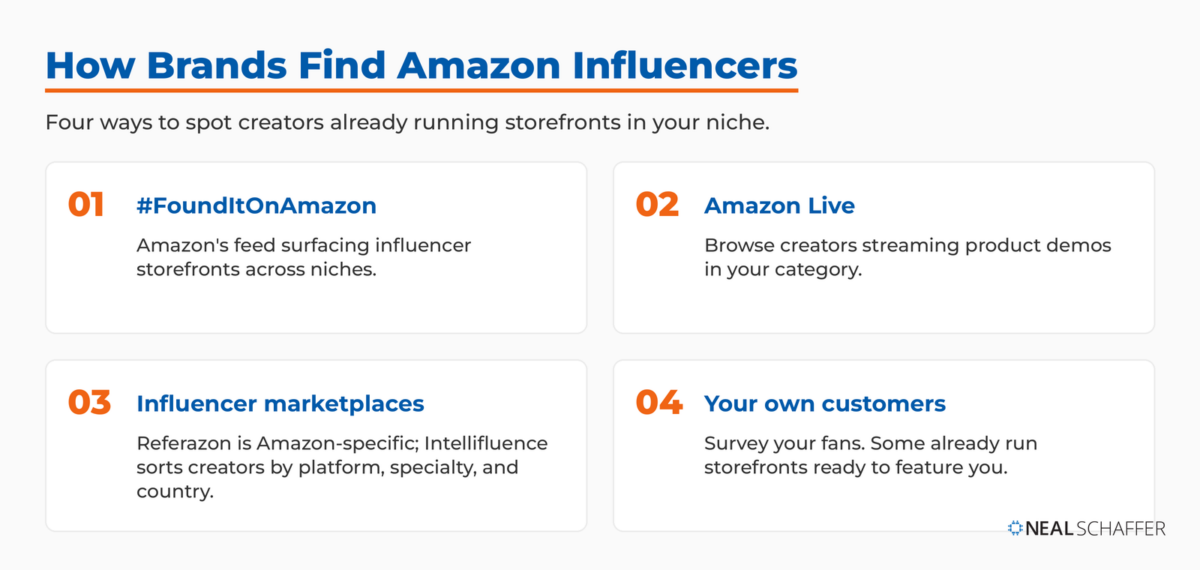
Do not overlook your own customers and fans. Some of them already have Amazon storefronts and would happily add your product. Survey your audience, find out who creates content, and reach out. As the program grows, expect more of your brand advocates to have storefronts ready to go. And the budgets keep climbing: Digiday, citing eMarketer, reports that US influencer marketing spend will top $13 billion by 2027. Brand deals still drive most of influencer marketing, making up roughly 70% of creator revenue, according to Goldman Sachs Research. The relationship matters more than the platform.
Frequently Asked Questions
Amazon pays the commission as part of its affiliate program. An Amazon influencer is an affiliate earning standard Associates commissions, funded through Amazon’s referral economics rather than billed separately to the third-party seller. The rate depends on the product’s category, not on which brand made it.
There is no official minimum that Amazon publishes. The program evaluates your follower count alongside engagement and content quality, and approvals happen across a wide range of audience sizes. If you have a real, engaged following on YouTube, Instagram, Facebook, or TikTok, you meet the spirit of the requirement.
Amazon Associates and Amazon Seller accounts are separate programs with separate teams. A seller issue does not automatically block an influencer application. If your old seller account is tied to a specific email, applying with a different email address is the cleaner path.
Yes, with one condition. Amazon’s policies prohibit affiliate links in unsolicited mailings, printed materials, and ebooks, but they permit special links in emails and direct messages that recipients opted into. A newsletter your subscribers chose to receive qualifies, as long as you follow the rest of the agreement.
Not in the traditional sense. Your storefront can hold products you bought or were sent, and onsite shoppable videos do the selling once they live on Amazon product pages. That passive layer is what makes the program appealing even to creators who post inconsistently.
Should You Join the Amazon Influencer Program?
For most creators with a genuine, engaged following, the answer is yes, because the downside is small and the upside compounds. Apply through Amazon’s influencer sign-up page, build a storefront in your niche, and start uploading onsite videos for the products you already own and love. The earnings build slowly, then surprise you.
Brands should map which creators in their category already run Amazon stores and open a conversation, rather than waiting for a storefront to discover them. Either way, treat this as a long-term channel, not a quick win. If you are ready to go deeper, read more on how to become an Amazon influencer. Bookmark the latest influencer marketing statistics to keep your strategy current. Want a free copy of my thinking on where this is heading? Grab a free preview of The Age of Influence, or if you would like hands-on help building a creator strategy, learn about my Fractional CMO services.
Actionable advice for your digital / content / influencer / social media marketing.
Join 13,000+ smart professionals who subscribe to my regular updates.
