

Ask ten marketers what a brand ambassador is and you will get several different answers. One pictures a celebrity in a fragrance ad. Another pictures the person handing out samples at Costco. Both of them are right, which is exactly the problem with the term.
I have been on the inside of this arrangement rather than only writing about it. I am an official Adobe Express Ambassador today. Years before that, All Nippon Airways brought me on as one of four brand ambassadors for a new service launch. I am Neal Schaffer, I wrote *The Age of Influence* for HarperCollins Leadership, and I teach influencer marketing at UCLA Extension.
So this article gives you the definition first, then how the role differs from an influencer, an advocate, and an affiliate. After that, the types, what ambassadors actually do, and how they get paid. One disclosure that applies directly here: Adobe compensates me for my participation in its ambassador program, and every opinion below is my own.
Key Takeaways
✅ A brand ambassador represents your brand over time, not for one campaign. The relationship is the product. A single sponsored post is something else.
✅ The word has two unrelated meanings. One is the marketing role this article covers. The other is event and retail staffing, and it is a real occupation with its own job listings.
✅ Affinity is the dividing line. Ambassadors usually love the brand before you pay them. Influencers often meet you at the contract.
✅ Your own employees are the most overlooked ambassadors you have, and in B2B they are frequently the only ones with any credibility.
✅ Ambassadors get paid in a mix, typically product plus commission plus access, which is why the arrangement works at a fraction of what one macro-influencer campaign costs.
✅ An ongoing relationship with a brand has to be disclosed, even on a post nobody asked you to write.
What Is a Brand Ambassador?
A brand ambassador is a person who publicly represents a brand over an extended period rather than for a single campaign, usually because they already like the product. Wikipedia describes the role as a positive spokesperson appointed to build awareness and sales, which captures the function accurately.
Why the word “already” matters
What that definition leaves out is the part I find most useful, and it is the word “already.” The ambassador relationship starts from existing affinity. Somebody uses your product, likes it, talks about it without being asked, and you formalize what was happening anyway.
That origin story changes the economics. You are not renting an audience. You are giving structure, rewards, and a reason to keep going to somebody who was already on your side. In *Digital Threads* I make the case that this is where most companies should start, before they ever email an external creator.
It also changes what the person sounds like. An ambassador who genuinely uses the thing does not need a script, and their content carries specifics a briefed creator cannot invent. From what I have seen working with clients as a Fractional CMO, that specificity is the whole advantage.
That is also where the channel gets its power. Nielsen’s 2021 global study of trust in advertising found that 88 percent of respondents trust recommendations from people they know above any other channel. An ambassador program is an attempt to organize that.
What a brand ambassador is not
It also helps to say what a brand ambassador is not. Not an employee, though plenty of employees make good ones. Not a spokesperson reading approved lines either, and the moment you script someone that tightly you have hired an actor.
And not somebody you found last week and paid for a single post. Take away the prior affinity and the ongoing term, and what is left is influencer marketing. That is a fine thing to run, under its own name.
The word is also older than influencer marketing, which is part of why it reads as dated to some people. Brands signed celebrities to long contracts and put them in television and print, and those faces became the brand. As I write in *Digital Threads*, George Clooney has represented Nespresso since 2006. The social version widened who qualifies.
Before going further into how the role works, there is a second meaning of the term worth clearing up, because it sends a lot of searchers to the wrong page.
Does “Brand Ambassador” Also Mean Event Staff?
Yes. Alongside the marketing meaning, brand ambassador is a standard job title in event and retail promotions. O*NET, the US Department of Labor occupation database, lists Brand Ambassador as a reported job title under Demonstrators and Product Promoters, an occupation covering roughly 79,200 US workers.
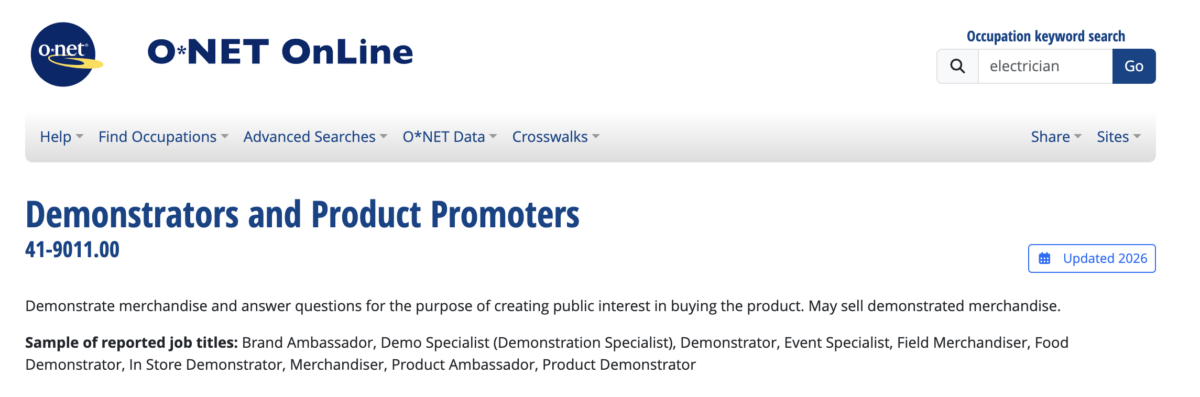
Those are the people running in-store sampling, staffing trade show booths, and working street teams. O*NET puts median pay at $18.91 an hour, and the listed tasks include setting up demonstration areas, distributing samples, and visiting trade shows to answer questions from potential customers.
That is legitimate work in a real industry, and it has almost nothing to do with the marketing role. If you searched for “brand ambassador” hoping to find hourly event work, a staffing agency will serve you better than I will.
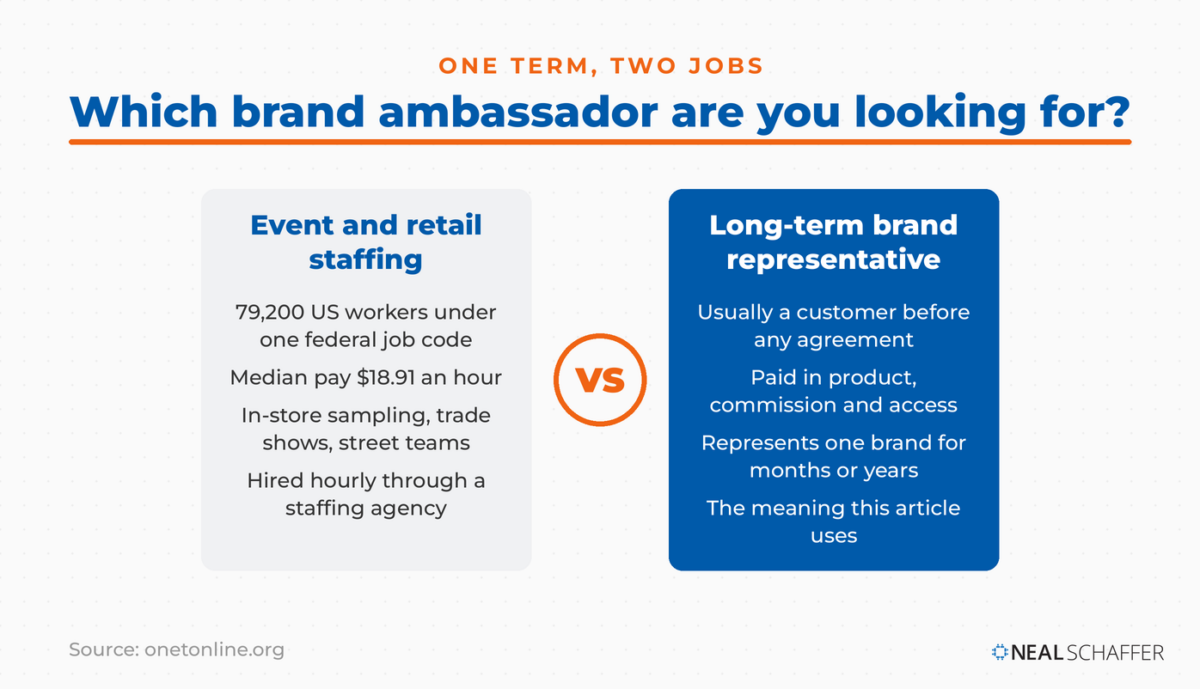
Everything below covers the marketing sense: long-term brand advocates and creator partnerships, run by a brand to build word of mouth.
That leaves one more piece of vocabulary to sort out, and it is the one marketers argue about most.
Brand Ambassador vs Influencer vs Advocate vs Affiliate
An ambassador has prior affinity and an ongoing agreement. An influencer is hired for reach, often with no prior relationship. An advocate promotes you for free with no agreement at all. An affiliate is paid purely on sales. A spokesperson is contracted to speak for the brand as its official voice.
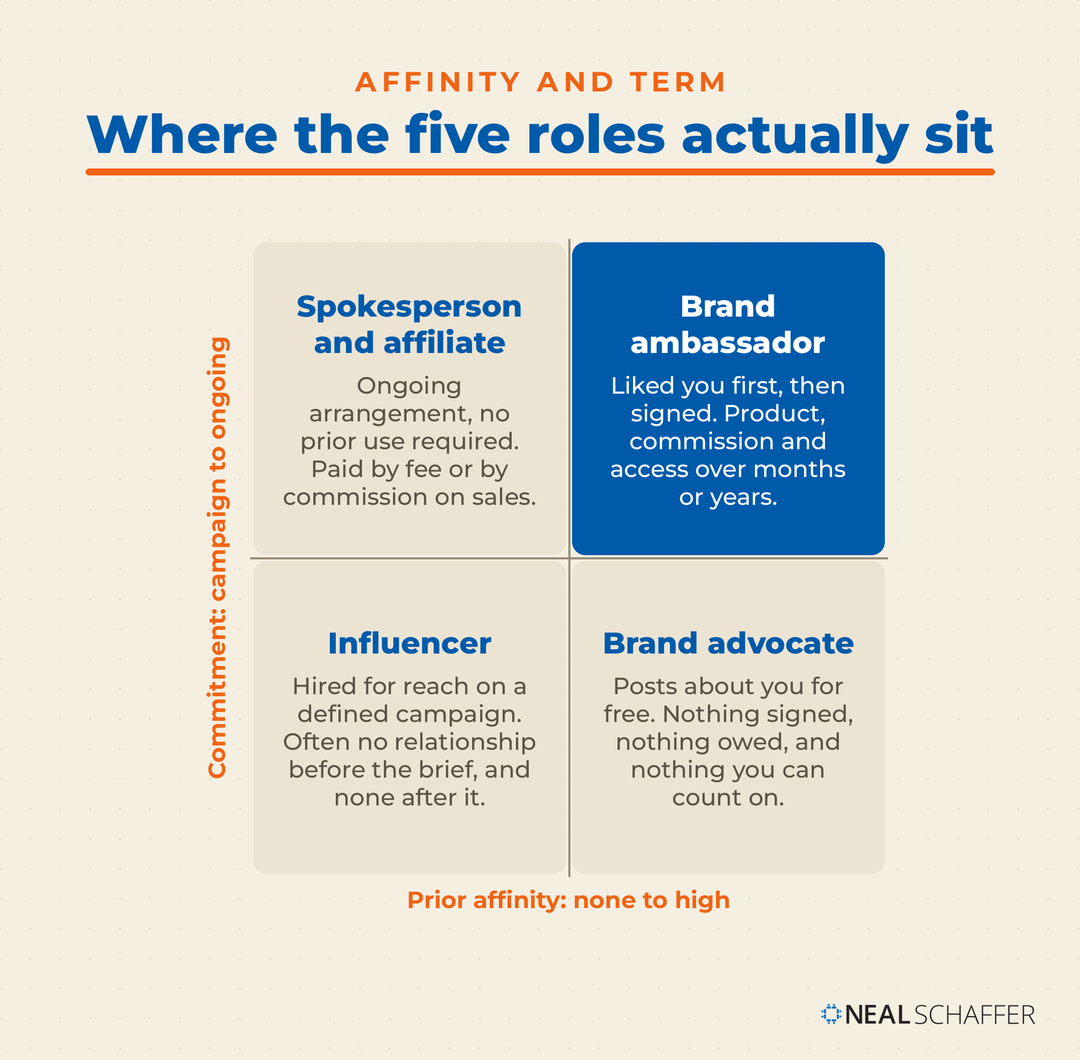
Those five roles overlap in practice, and the same person can move between them. Somebody starts as an advocate posting for free, gets gifted product, then earns a commission link, then signs an ambassador agreement. What separates them is the combination of affinity, term, and how the money works.
Is Your Digital Marketing All Over the Place?
My latest book helps small businesses, entrepreneurs, and marketers bring search, email, and social together into one digital marketing strategy that actually compounds.
Drawing on my work as a Fractional CMO, Digital Threads turns complicated tactics into a clear, practical plan you can follow, whatever your budget or team size.
Grab your copy on Amazon and start weaving your own digital threads. Click the cover or the button below to get started.

| Prior affinity | Relationship length | How they are paid | Brand control | Disclosure required | |
|---|---|---|---|---|---|
| Brand ambassador | Usually yes | Months to years | Product, commission, perks, sometimes retainer | Moderate, guidelines not scripts | Yes |
| Influencer | Often none | One campaign | Flat fee per post or campaign | Higher, brief-driven | Yes |
| Brand advocate | Yes, by definition | Indefinite, informal | Nothing | None | Only if something of value changed hands |
| Affiliate | Not required | Ongoing but transactional | Commission on sales only | Low | Yes |
| Spokesperson | Not required | Contract term | Fee, often substantial | Highest, approved messaging | Yes |
The row I would pay attention to is brand control. Ambassadors sit in the middle on purpose. Script them like a spokesperson and you destroy the credibility you recruited them for. Leave them with nothing and you get inconsistent, occasional posts. Guidelines with room inside them is the setting that works.
If the affiliate row is the one you are weighing, I have written a longer comparison of influencer marketing and affiliate marketing that goes deeper on the payment mechanics.
With the boundaries drawn, the useful question is which kinds of people actually end up in these programs.
What Are the Different Types of Brand Ambassadors?
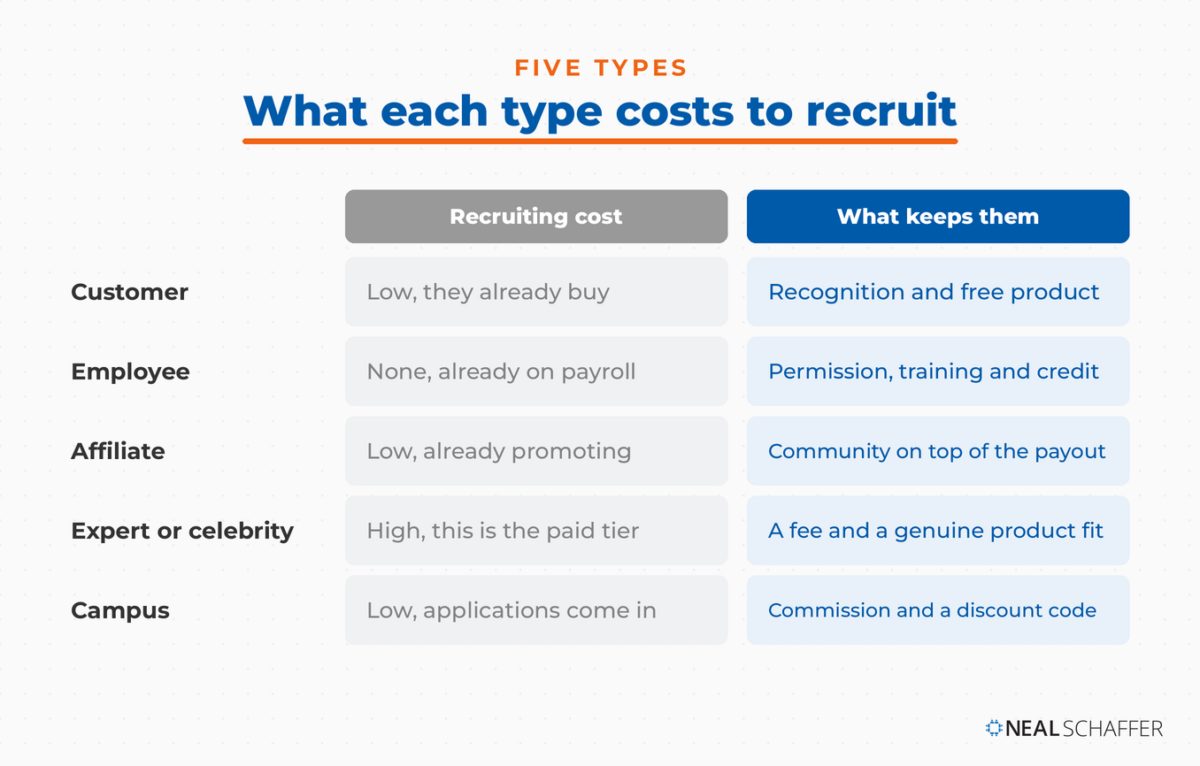
Brand ambassadors sort into five practical groups: customers, employees, affiliates, experts and celebrities, and campus ambassadors. The grouping matters because each type needs a different recruiting approach and a different reward. In *Digital Threads* I lay out these categories as the working structure for building a program.
Customer ambassadors
Most of your ambassadors will come from people already buying from you. They are the heart of any program because your product is already part of their life, so the content writes itself. Start by looking at who tags you, reviews you, and creates user-generated content without being asked.
Employee ambassadors
Employees know the product better than anyone and speak about it without marketing polish. This group is so consistently underused that it gets its own section below.
Affiliate ambassadors
These are people already promoting you for commission. Converting an affiliate into an ambassador is mostly a question of adding community, training, and recognition on top of the payout, so the relationship stops being purely transactional.
Expert and celebrity ambassadors
An expert ambassador, sometimes called a key opinion leader, is well known in a specific field. Their credibility transfers to you. Celebrity ambassadors work the same way at a larger scale and a much larger price, and the fit has to be genuine or the audience notices immediately.
Campus ambassadors
Students representing a brand on their own campus. Princess Polly runs one of the clearer examples: its college ambassador program asks for full-time US students who are at least 18 with an active .edu address and public social accounts, and pays 5 percent commission on qualifying purchases made with each ambassador’s discount code.
Notice that four of those five groups cost very little to recruit, which brings me to the group almost nobody activates.
Why Are Employee Brand Ambassadors So Overlooked?
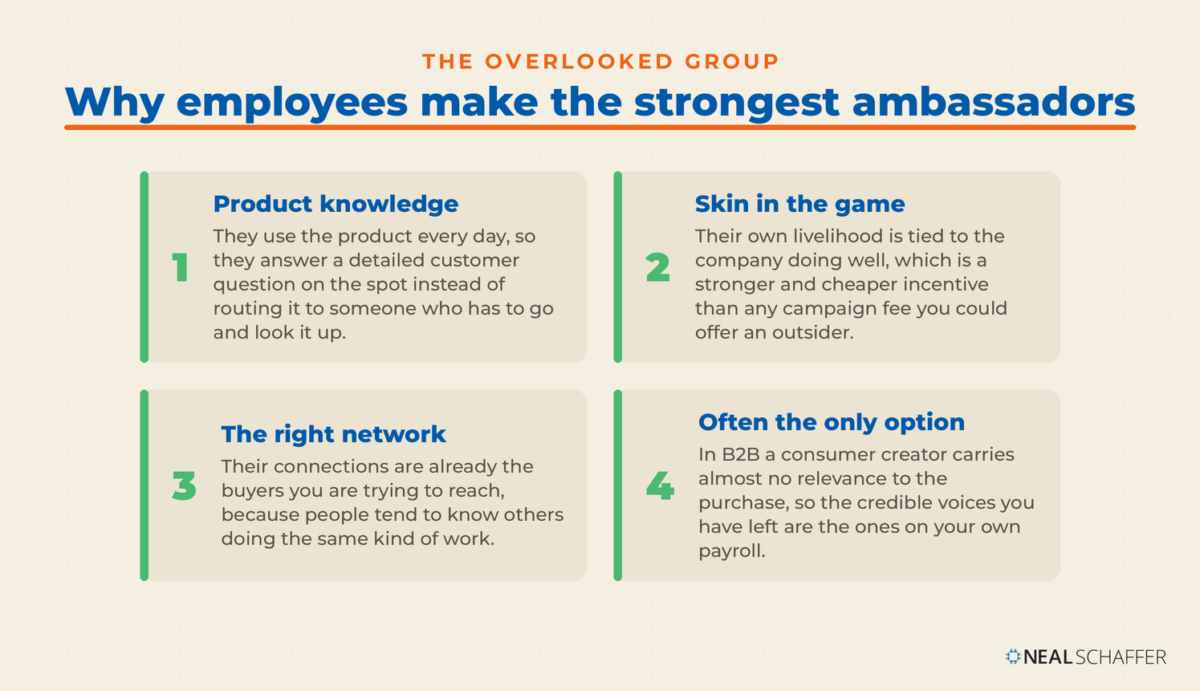
Employees are the highest-affinity ambassadors a company has and the least used. They know the product, their livelihood is tied to the company doing well, and their networks reach exactly the audience you want. In B2B, where consumer creators have little relevance, employees are often the only credible option available.
The trust data supports treating them seriously. The 2026 Edelman Trust Barometer put My Employer at 78 percent trust among employees, the most trusted institution it measured. That runs 14 points ahead of business generally and 25 points ahead of government.
I have been telling a version of this story for years. On my podcast Your Digital Marketing Coach I described buying a phone from a salesperson who ran his own local influence practice on the side. My conclusion about him: “His affinity for the brand and knowledge about the product is a resource that is being drastically underutilized by his employer.”
That is the whole problem in one sentence. Somewhere in your company is a person with a real audience and real product knowledge, and no one has ever asked them to post.
Whichever group you recruit from, the next question is what you would actually be asking them to do.
What Does a Brand Ambassador Actually Do?
Day to day, a brand ambassador creates content featuring the product, shares a personal referral link or discount code, gives product feedback, and answers questions from their own audience. Many also show up at brand events. The cadence is usually light and defined in advance, which keeps the arrangement sustainable for both sides.
What the work looks like day to day
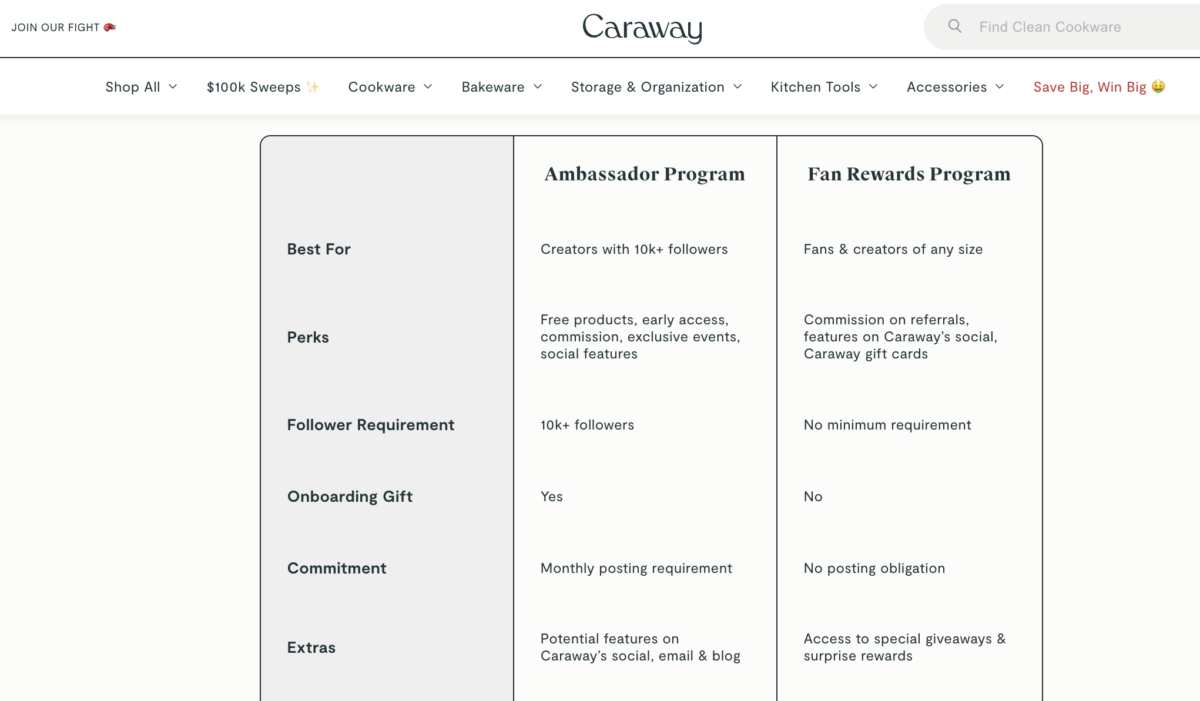
Caraway spells out its expectations plainly on its ambassador page: creators with 10,000 or more followers, and one post featuring the brand each month. Beyond that, ambassadors share whenever and however they like. One post a month is a realistic ask, and roughly what most working programs land on.
That page also draws the line I keep making here. Caraway says outright that the program is for long-term brand representatives, and that applications for one-time projects will not be considered.
Ambassadors also field questions. Somebody in their comments asks whether the pan is oven safe or whether the software exports to a particular format, and the ambassador answers, because they actually know. Treat that as customer service you did not have to staff.
What it looks like from the inside
In February 2012, I was one of four brand ambassadors All Nippon Airways brought in around its 787 launch and its new Inspiration of Japan cabin service. What the role actually involved surprised me.
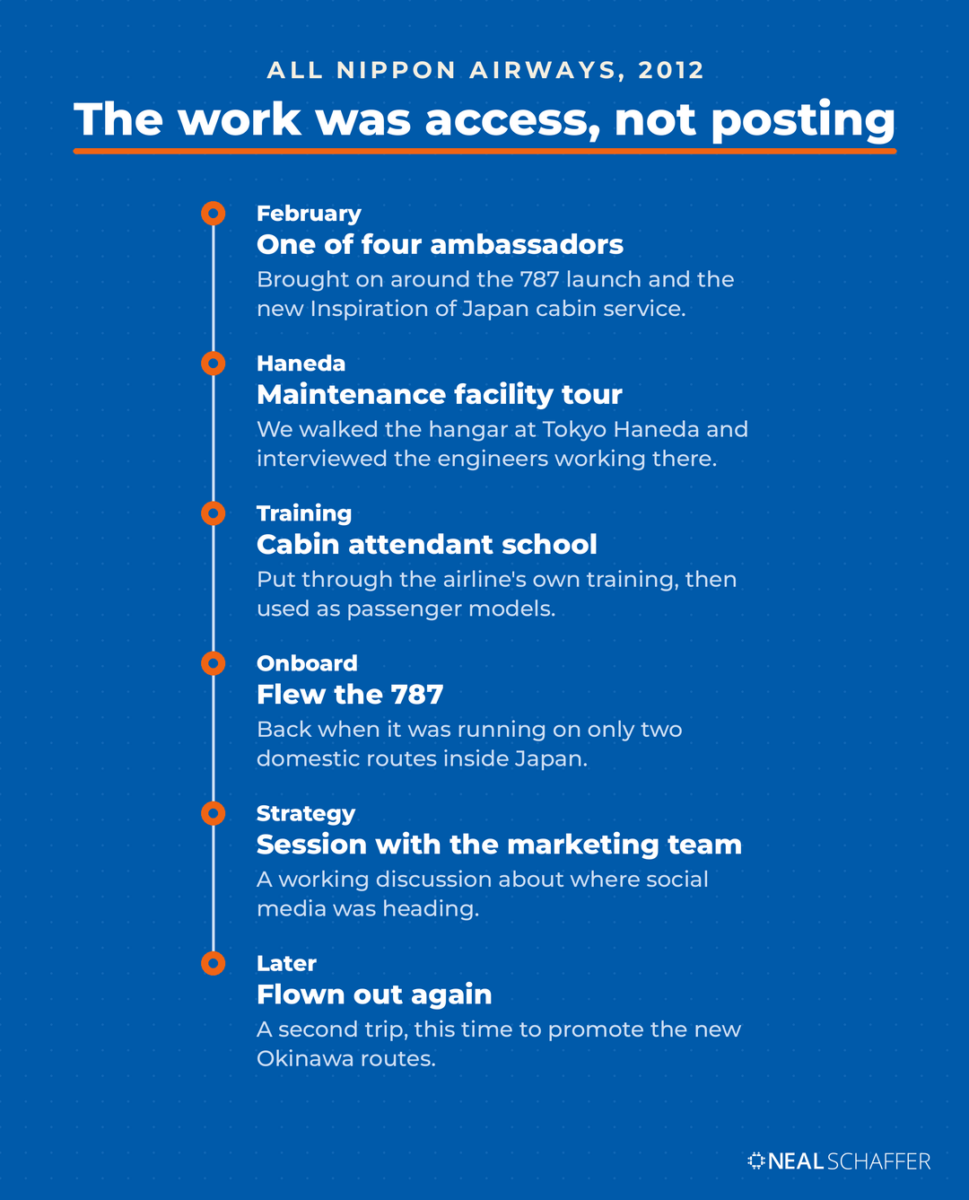
We toured the maintenance facility at Tokyo Haneda and interviewed the engineers there. They put us through cabin attendant school and had us serve as passenger models. I met the brand consultant responsible for the small details of the new inflight service. We flew the 787 back when it was running on only two domestic routes inside Japan.

There was also a working session with their marketing team about where social media was heading. Later they flew us out again to promote the Okinawa routes. Notice how little of that was posting. Almost all of it was access, and the posting followed from the access on its own.
The feedback loop runs both directions, and brands underestimate their side of it. Adobe product managers have told me directly that ambassador feedback helped them ship faster, and surfaced features the team had not thought of. A one-off sponsored post produces nothing like that.
None of which happens for free, so it is worth being specific about what the arrangement costs.
How Do Brand Ambassadors Get Paid?
Brand ambassadors are usually paid in a mix rather than a single fee: free product, commission on sales through their link, points or perks, early access, and occasionally a retainer. That blend is why ambassador programs are cheap relative to their output, and why they compound as the relationship runs longer.
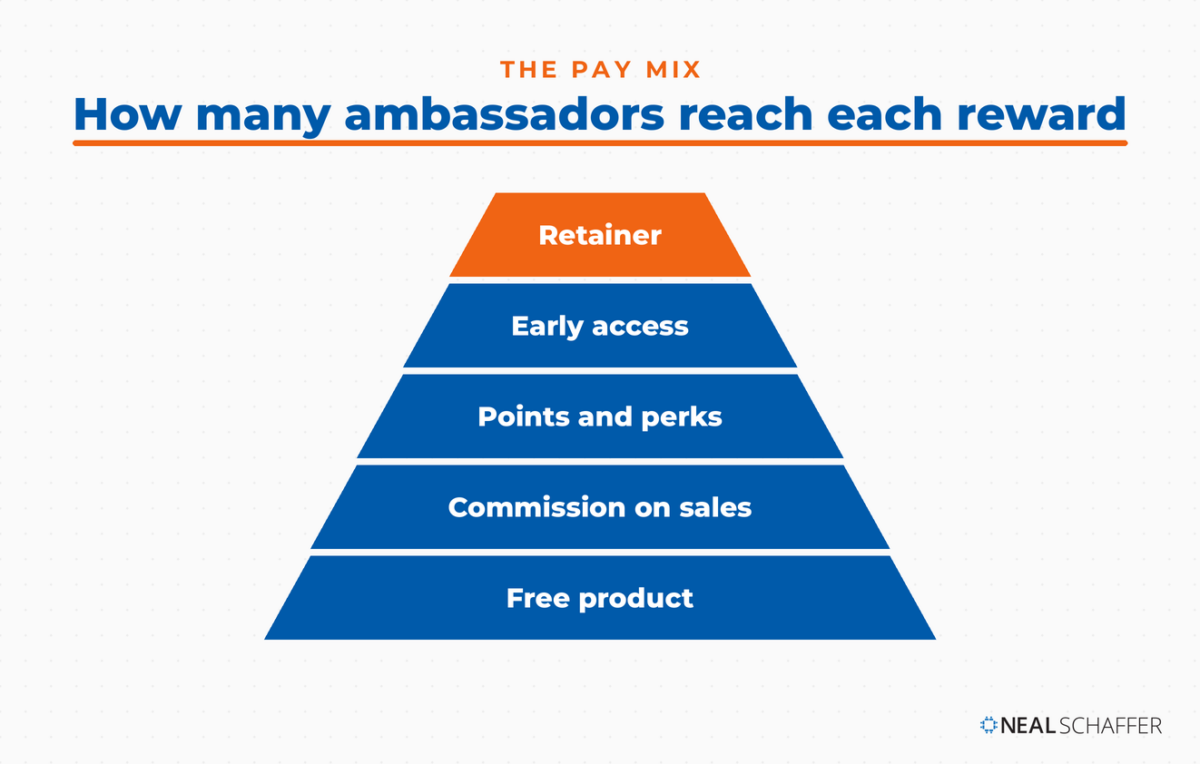
Free product does more work than most marketers expect. Aspire surveyed nearly 900 marketers and creators for its State of Influencer Marketing 2026. It found that 86 percent of creators will still work with a brand for product alone when they love the brand or the product is valuable enough.
| Model | How it works | Best suited to |
|---|---|---|
| Free product | Ongoing gifting, no cash | Nano and micro creators, customer ambassadors |
| Commission | A cut of sales through a personal link or code | Ecommerce, programs that need attributable revenue |
| Points and perks | Redeemable rewards, swag, event access | Large rosters where individual payouts are impractical |
| Early access | First look at launches, input on roadmap | Expert ambassadors and community-driven brands |
| Retainer | Fixed monthly fee for defined deliverables | A small top tier, or B2B experts |
Adobe runs close to the full stack, and publishes the numbers. Its ambassador page sets three tiers by reach, paying up to $500, $1,000, or $1,500 for participation. Every tier also gets swag, early feature access, a community space, and a yearly Creative Cloud membership.
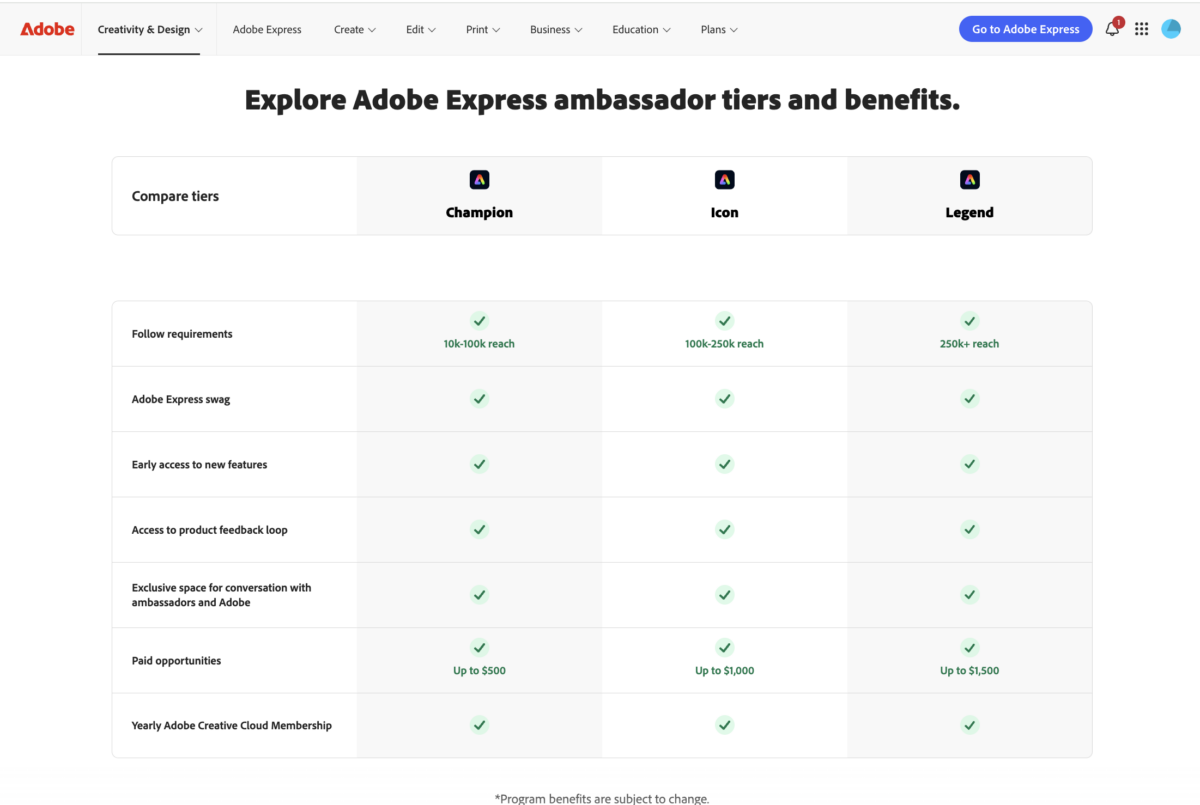
One term there is worth copying. Ambassadors are not required to be exclusive and can work with other brands, as long as Adobe Express stays their preferred tool. Exclusivity demands are where a lot of programs lose their best people.
Access is the reward most brands underrate. The highlight for me is the annual Adobe MAX conference. Ambassadors get a day of our own there, to network, hear product updates, and meet the Adobe people we deal with online all year. Flying dozens of us to Los Angeles is not a small line item, and it buys a group committed to the product and to each other.
Money aside, the harder question is who you should be handing these agreements to.
What Makes a Good Brand Ambassador?
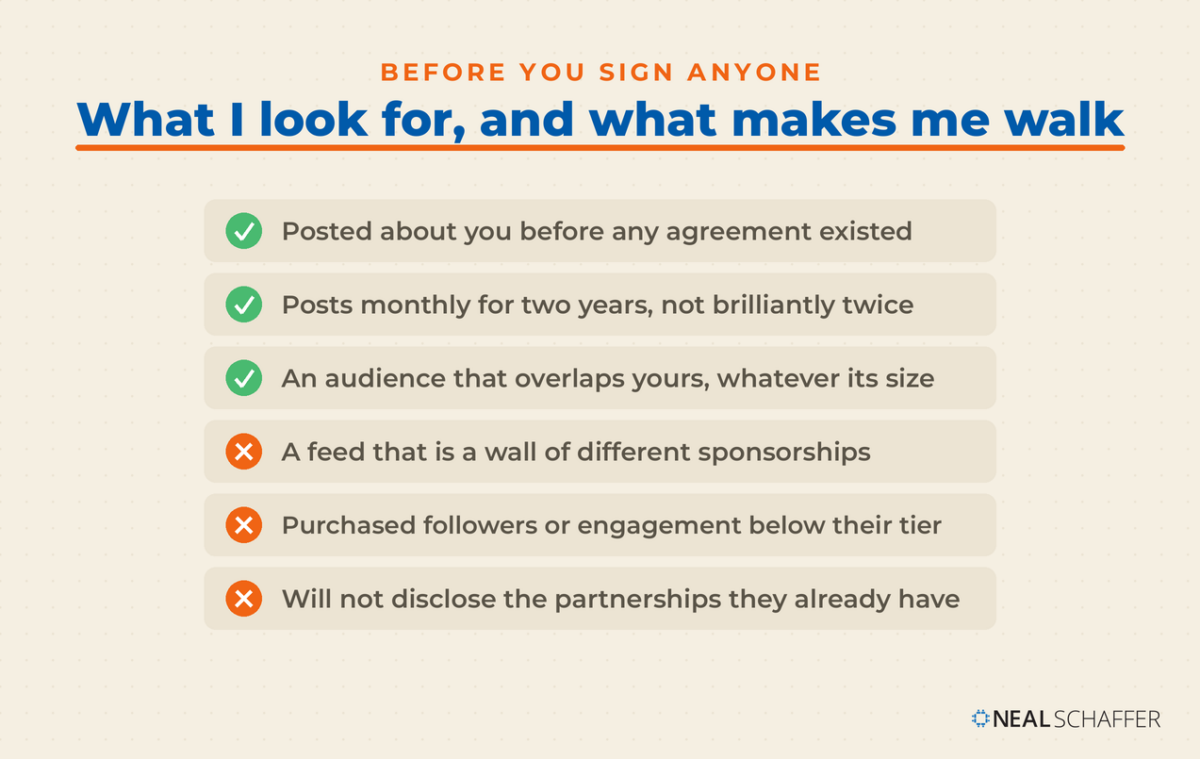
The best ambassadors were customers first, post consistently without prompting, know the product in detail, and have an audience that overlaps with yours. Audience size matters far less than fit. A nano influencer with 3,000 engaged followers in your niche will usually outperform a much larger account with a general audience.
What to look for
Consistency is the trait I would weight most heavily. An ambassador who posts monthly for two years beats one who posts brilliantly twice and disappears. An audience only starts believing the endorsement around the fourth or fifth time it sees it.
Adobe’s original call for ambassadors is worth studying here. It asked for entrepreneurs, small business owners, and community leaders who like helping people in their network learn new skills. Promotion was not the pitch at all. Describe people by what they already enjoy doing, and you attract the ones who will keep doing it.
The red flags
There are red flags, and they are readable before you sign anyone. Someone whose feed is a wall of different sponsorships has no credibility left to lend you. Someone who has never mentioned you organically is an influencer, and should be treated and paid as one. Purchased followers, an engagement rate far below the norm for their influencer tier, and a refusal to disclose partnerships are all reasons to walk.
Put the terms in writing regardless. An influencer contract covering content rights, cadence, exclusivity, and disclosure obligations protects both sides, and the disclosure clause is not optional.
Which raises the legal question that trips up more ambassador programs than any other part of this.
Do Brand Ambassadors Have to Disclose?
Yes. An ongoing ambassador relationship is a material connection under the FTC’s Endorsement Guides and has to be disclosed. FTC staff define a material connection as a personal, family, or employment relationship, or a financial one such as a brand paying you or giving you free or discounted products.
The ambassador case has a wrinkle worth knowing. The FTC’s Endorsement Guides FAQ states that if you have an ongoing relationship with a brand, you should still disclose it even when you bought the product yourself. Paying for the item does not end the connection.
Wording matters too. The same FTC brochure advises against vague abbreviations and against stand-alone terms like “ambassador.” It notes that a construction such as “Acme Ambassador,” with the brand name attached, works on space-limited platforms. “Ambassador” floating on its own tells a reader
nothing.
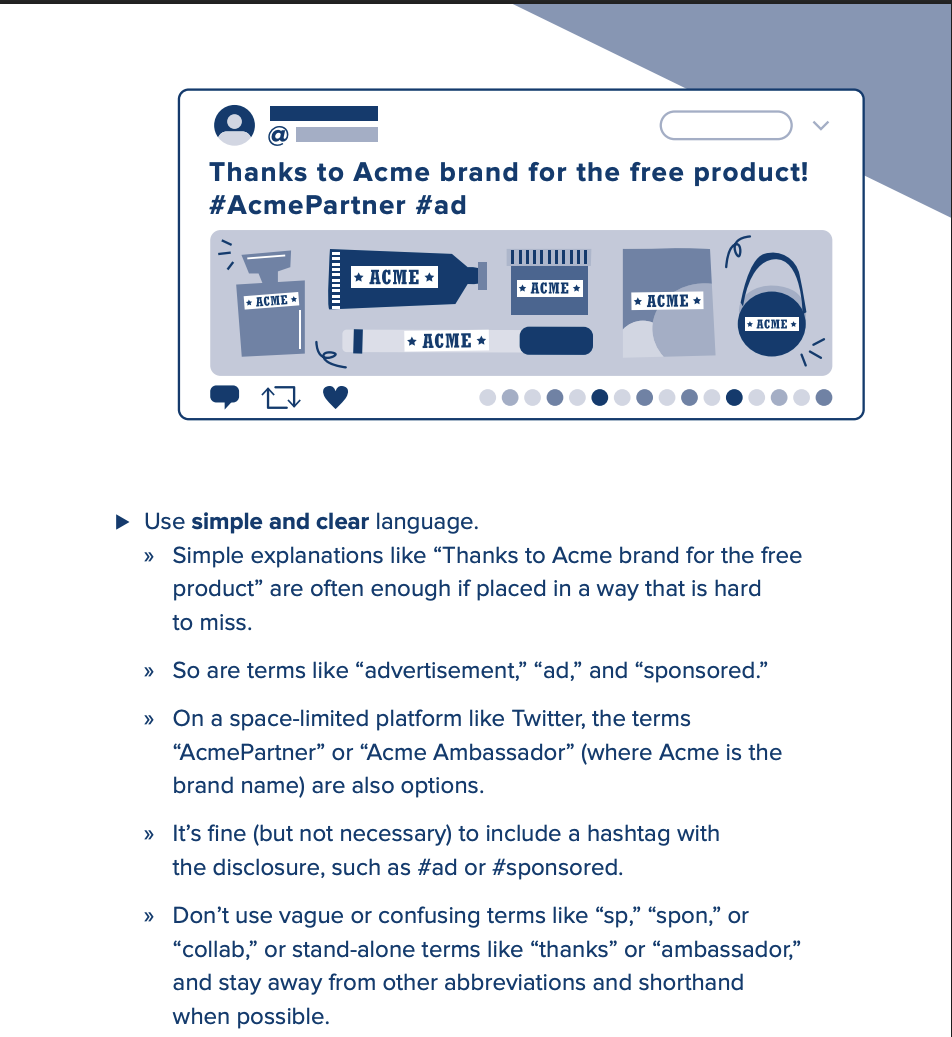
The obligation also sits on the brand, not only on the ambassador. Write the disclosure requirement into the agreement and give people the exact language at onboarding.
Placement rules differ by platform, and I go through them one by one on the FTC influencer guidelines.
Compliance is manageable. Deciding whether you should run a program at all is the part that deserves more thought.
Who Should Not Build a Brand Ambassador Program?
Some brands are not ready for ambassadors, and the tell is simple: nobody is talking about you yet. An ambassador program formalizes existing word of mouth. If there is no word of mouth to formalize, you will spend months recruiting strangers and end up with an expensive, badly disguised influencer campaign.
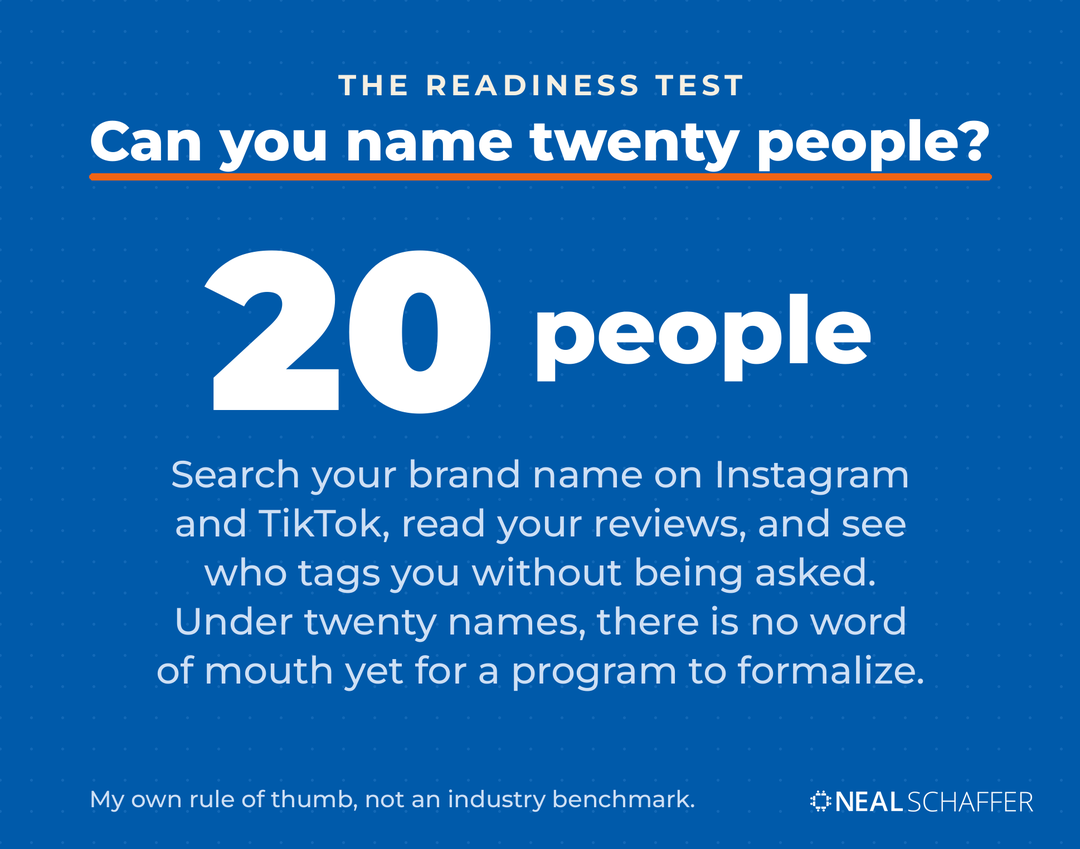
Check your mentions before you build anything. Search your brand name on Instagram and TikTok, read your reviews, and look at who tags you without being asked. If you cannot find twenty people who already talk about you unprompted, spend the next two quarters on the product and on user-generated content instead.
Two other situations argue against it. Brands with genuinely low purchase frequency struggle, because an ambassador who buys from you once every four years runs out of things to say. And teams with nobody assigned to the program will watch it die quietly, since ambassador relationships need a human answering messages.
If none of that describes you, the payoff is well documented. Aspire’s 2026 survey found that brand ambassador programs delivered the highest ROI of any campaign type, and that 63 percent of creators say they prefer long-term partnerships to anything else. Caraway grew from about 35 initial creators to more than 3,500 ambassadors, paying roughly $350,000 in affiliate commissions in 2022, with the program reaching 13 percent of company revenue.
Frequently Asked Questions
Pick brands you genuinely use, then look for an ambassador or creator page on their site and apply there first, since most programs run on inbound applications. Post about the product before you apply so there is evidence of real use. From the brand side, which is the perspective this article takes, that prior evidence is the single thing we look for.
Usually, though rarely in a straight salary. The common structure is free product plus commission on sales through a personal link, with perks, event access, and points layered on top. Larger or more specialized ambassadors sometimes hold a retainer. Event-staffing brand ambassadors, the other meaning of the term, are paid hourly.
It varies by program and plenty have no minimum at all. Caraway asks for 10,000 or more, while Princess Polly’s campus program sets no follower requirement. Brands increasingly recruit micro influencers and smaller because engagement and genuine product use beat raw audience size.
No, though the roles overlap. The differences are affinity and term. Ambassadors usually loved the brand before any agreement and stay for months or years. Influencers are typically hired for a defined campaign, with or without any prior relationship.
Most run six to twelve months with the option to renew, which is long enough for an audience to register the relationship as genuine. Shorter than about three months and you have really run a campaign. Term length is one of the choices I work through on influencer collaborations.
Turn the People Who Already Love You Into a Program
You now have the definition, the types, the pay structures, and the disclosure obligation. The word “brand ambassador” carries two unrelated meanings. In the marketing sense it describes a person with genuine affinity for your brand, representing it over time rather than for one paid post.
The next step is mechanical. Go find the people already talking about you, on your review pages, in your tagged photos, and in your customer list, and write down twenty names.
From there it becomes a question of building the thing: recruiting, onboarding, rewards, and tracking. That is a separate body of work, and where the execution risk concentrates.
If you want the strategic frame first, my thinking on influencer marketing strategy sets up where ambassadors fit alongside external creators. For the numbers behind all of this, I keep a running set of influencer marketing statistics and a companion set on the creator economy.
And if you would like to go deeper, download a free preview of *The Age of Influence*, my book on building an influencer marketing strategy. If you want help building advocacy into a coordinated marketing plan for your company, that is what I do as a Fractional CMO.
Actionable advice for your digital / content / influencer / social media marketing.
Join 13,000+ smart professionals who subscribe to my regular updates.
