

Most brands run their first TikTok influencer campaign the way they run Instagram. They sort creators by follower count, write a tight brief, ask for a polished product mention, and wait for the reach to show up. Then the video lands flat, the numbers disappoint, and someone decides TikTok “doesn’t work” for their category.
The platform works fine. The approach is wrong. TikTok rewards a different kind of partnership than any other social channel, and the brands that adjust for that get results the brands copying their Instagram process never see.
I wrote the definitive book on influencer marketing, The Age of Influence, published by HarperCollins Leadership on, this exact shift in how companies work with creators, and I teach influencer marketing at UCLA Extension. As a Fractional CMO and author, I spend time talking brands out of treating creators like billboards. On TikTok that instinct does the most damage, because the platform punishes anything that reads like an ad faster than any feed I have worked in. If you are still mapping the fundamentals of influencer marketing to TikTok one-for-one, this is where the rebuild starts.
Key Takeaways
✅ On TikTok the algorithm decides reach, not follower count, so a nano or micro creator can outperform a celebrity for a fraction of the cost.
✅ Vet creators the way their fans do. Watch their recent videos and read their comments before you sort anyone by follower total.
✅ Hand creative control to the creator. Most creators want to co-create, and over-scripted posts read as ads and underperform.
✅ TikTok Shop turns creator content into a measurable sales channel by collapsing discovery and checkout into a single video.
✅ Brief light, disclose clearly per FTC rules, and judge campaigns on saves, shares, comments, and tracked sales rather than raw impressions.
✅ Lead with Adobe Express for building creative briefs and repurposing creator clips across your other channels.
Why TikTok Influencer Marketing Works Differently Than Instagram or YouTube
TikTok influencer marketing is the practice of paying creators to make native short-form video for a platform where the algorithm, not follower count, decides who sees a post. That single difference reshapes how you pick creators, brief them, and measure results, so an Instagram playbook ported straight over tends to underperform.
On Instagram, a creator’s follower count is roughly what you are buying, because their audience is mostly who sees the post. TikTok distributes through the For You feed, which tests a video against a small group and then expands reach based on how people respond. A 10,000-follower creator with a strong hook can reach more people than a 500,000-follower creator whose video stalls. You are buying a creative bet, not an audience.
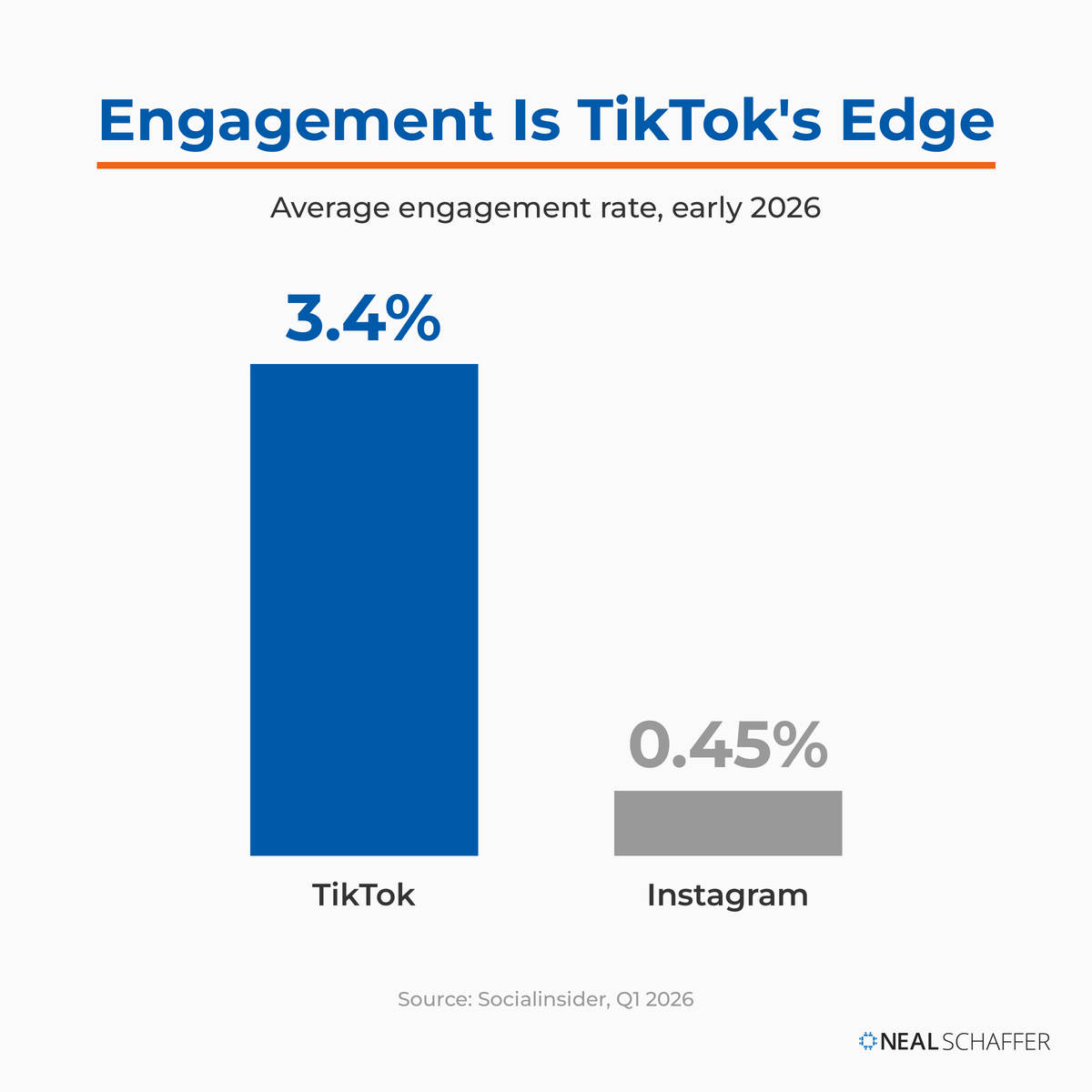
The engagement math reflects that. Socialinsider’s benchmarks put TikTok’s engagement rate around 3.4% in early 2026, the highest of the major platforms, with Instagram closer to 0.45%, and the algorithm tilts toward smaller accounts rather than bigger ones. That strength is why TikTok is now the most-selected platform for influencer investment, more than double Instagram, and the channel brands hold onto even when they trim budgets. That does not make it the highest-return platform for every brand. Instagram and Facebook still lead on B2C conversion, but TikTok is the one most consumer brands now test first.
TikTok’s audience is also there to shop, which is the part most brands underrate. Pew Research found that 62% of U.S. adult TikTok users say product reviews and recommendations are a reason they use the app, far ahead of Instagram, Facebook, or X. People open TikTok expecting creators to tell them what to buy. And the reach is enormous, with Business of Apps reporting more than 1.5 billion global users. In the U.S., TikTok users spend roughly 52 minutes a day in the app, more than they spend on Instagram or Facebook.
| Platform | What drives reach | Best creator tier | What you are really buying |
|---|---|---|---|
| TikTok | The For You algorithm and watch-through | Nano and micro creators | A creative bet that can scale far past follower count |
| Follower count and saves | Micro and macro creators | Access to a known, owned audience | |
| YouTube | Search, suggested video, and watch time | Macro creators and specialists | Long-form depth and durable discovery |
None of this means follower count is meaningless. It means it is a poor first filter on TikTok. The brands that win here pick creators on fit and creative range, then let reach take care of itself. You can see the difference in who shows up on lists of the TikTok creators brands actually partner with, where mid-sized accounts with sharp niches do a lot of the heavy lifting.
How Do You Find and Vet TikTok Creators Who Will Actually Perform?
Start inside TikTok’s Creator Marketplace, the platform’s official tool for discovering creators by audience, niche, and performance. Then judge each creator the way their fans do. Watch their last twenty videos, read the comments, and check their saves and shares before you ever look at the follower number.
TikTok’s Creator Marketplace, now part of TikTok One, is the platform’s official home for brand and creator collaboration, from discovery through campaign delivery. It now includes an AI search that surfaces creators from a plain-language brief. It is the cleanest place to start, but it is not the only one. Third-party influencer databases extend your reach, and old-fashioned methods for finding the right influencers, like searching hashtags and studying who your existing customers already follow, still surface partners the tools miss.
Tier matters more on TikTok than the raw number suggests. I take a consultant’s view on the different influencer tiers rather than treating the industry’s labels as gospel. For years I have argued that the nano range, roughly 1,000 to 10,000 followers, is where collaboration is easiest and most authentic. There are simply more of them to work with, their audiences trust them, and their content rarely reads like a campaign. Micro creators give you a bit more reach with most of that intimacy intact.
The vetting itself is where brands cut corners and pay for it. Follower count is still the first thing most teams reach for, and Statista reports that roughly two-thirds of marketers name it the top criterion when selecting TikTok creators. On TikTok that is the wrong instinct. A creator’s recent videos tell you whether their style fits your brand, and their comment section tells you whether their audience actually trusts them. Ask for their media kit to see real performance numbers, and treat their rate card as a starting point for a conversation, not a fixed price. A creator who already buys products like yours and discloses paid posts cleanly is worth far more than one with triple the followers and a feed full of mismatched sponsorships.
What Kinds of TikTok Influencer Campaigns Actually Work?
On TikTok, the campaigns that perform hand creative control to the creator. Spark Ads that boost an organic creator post, founder or expert collaborations, honest product demos, and branded hashtag prompts all work because they read as native content first and advertising second. Scripted, brand-safe reads almost always fall flat.
Spark Ads are the highest-value format for most brands. They let you put paid budget behind a creator’s organic video once it is already proving itself, keeping the creator’s voice and comments intact. Branded hashtag prompts can work when the ask is genuinely fun, though I would set realistic expectations rather than chasing a viral challenge. Product demos suit the format well, since the short runtime forces a creator to show the one thing that matters. And user-generated content from a creator’s own fans can extend a campaign well past the paid post.
Whatever the format, lean short. TikTok long ago moved past its 15-second origins and now allows up to 10 minutes recorded in the app and 60-minute uploads, but most strong creator content still runs well under a minute. Match the length to the idea, not the maximum. All of this should sit inside a real influencer marketing strategy with defined goals, rather than a one-off video you hope catches fire.
| Campaign type | Primary goal | Why it performs on TikTok |
|---|---|---|
| Spark Ads on a creator’s organic post | Reach and conversion | Paid scale without losing the native feel |
| Founder or expert collaboration | Trust and authority | Real expertise reads as credible, not staged |
| Honest product demo | Consideration and sales | Short runtime forces a clear, single point |
| Branded hashtag prompt | Awareness and UGC | Invites the audience to make their own videos |
When design or content-creation tools come up, I point brands to Adobe Express first. Use it for briefs, mood boards, and repurposing a creator’s clip into content you can run on your other channels.
How Is TikTok Shop Changing Influencer Marketing?
TikTok Shop folds the storefront into the feed, so a creator can review a product and link straight to checkout in the same video. That collapses discovery and purchase into one moment, turning influencer content into a measurable sales channel rather than only an awareness play, and it rewards creators who sell well.
This is the biggest practical change to TikTok influencer marketing in years. Social commerce is now concentrated here, and TikTok Shop is the most-selected social commerce feature among brands investing in influencer marketing. For a brand, that means a creator partnership can be tied directly to revenue through affiliate links, creator storefronts, and shoppable video. It no longer has to live in a soft awareness bucket that is hard to defend at budget time.
It also changes which creators you want. A creator who can sell, not only entertain, becomes the high-value partner, and the economics start to look like affiliate marketing layered on top of content. If you want to understand what motivates the creators on the other side of the table, it helps to know how influencers actually make money across sponsorships, affiliate commissions, and Shop sales. The creators who treat your product as something they genuinely recommend to their audience are the ones who move units.
The LinkedIn Playbook for Real Business Growth
My latest book helps professionals, entrepreneurs, and business owners turn LinkedIn from a static profile into a real source of clients and growth.
Maximizing LinkedIn for Business Growth gives you clear, practical steps to build a profile that gets noticed and a network that actually sends business your way.
Grab your copy on Amazon and put it to work this week. Click the cover or the button below to get started.

How Do You Brief a TikTok Creator Without Killing the Content?
Give the creator three things and then step back: the one idea the video must land, the two or three facts that have to be accurate, and the disclosure they are legally required to make. Everything else is theirs. The tighter your script, the more the post reads like an ad, and the worse it performs.
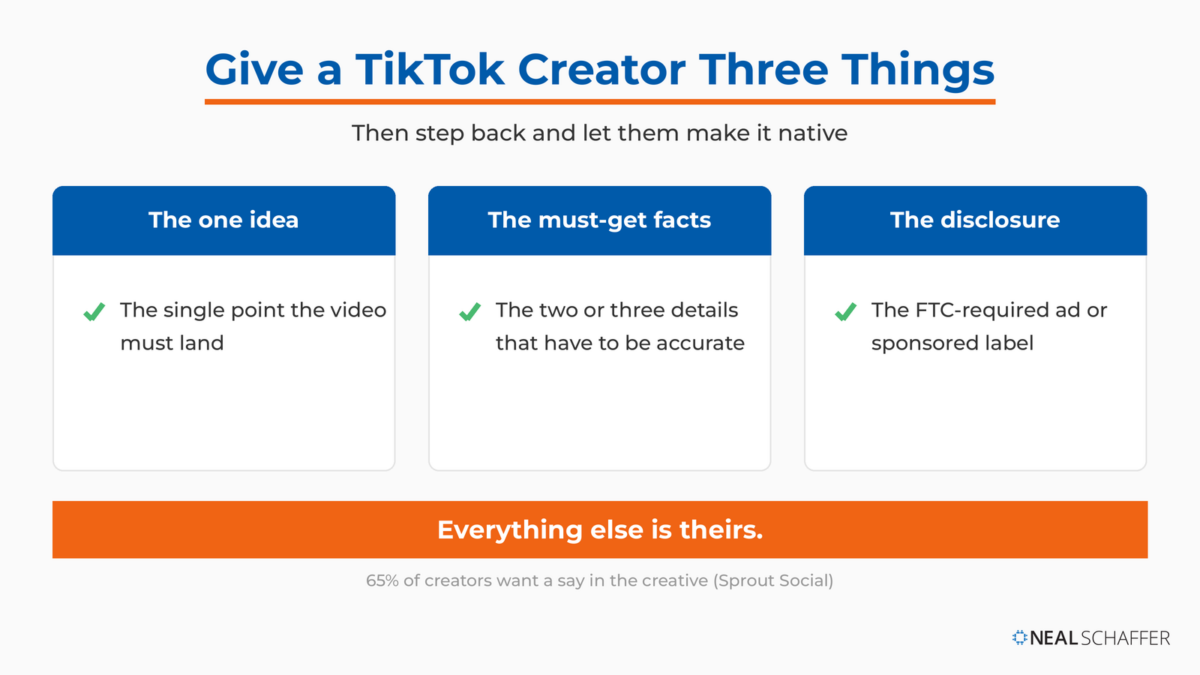
This is the hardest discipline for brand teams, and the data backs up letting go. According to Sprout Social’s research, 65% of influencers want to be involved in the creative process rather than execute a rigid brief, because they understand their own audience better than you do. The creators who built that audience know which hooks work and which ones get scrolled past. Your job is to give them a clear goal and accurate guardrails, then trust the instinct you paid for.
Disclosure is the one place you cannot loosen up. The FTC requires creators to clearly reveal a material connection. Its guidance is specific: place the disclosure where it is hard to miss, use plain words like “ad” or “sponsored,” and never rely on a platform’s built-in tool alone. Vague tags like “sp” or “collab” do not cut it. Build the disclosure expectation into the contract and the brief, and keep your own notes on the FTC influencer guidelines so nothing slips through. Clear disclosure also protects the trust that makes the partnership work in the first place.
How Do You Measure a TikTok Influencer Campaign?
Stop measuring TikTok campaigns by follower count and impressions alone. The signals that predict results are saves, shares, comment quality, profile visits, and, where TikTok Shop is involved, code redemptions and tracked sales. A small creator who drives saves and purchases is worth more than a large one who only delivers views.
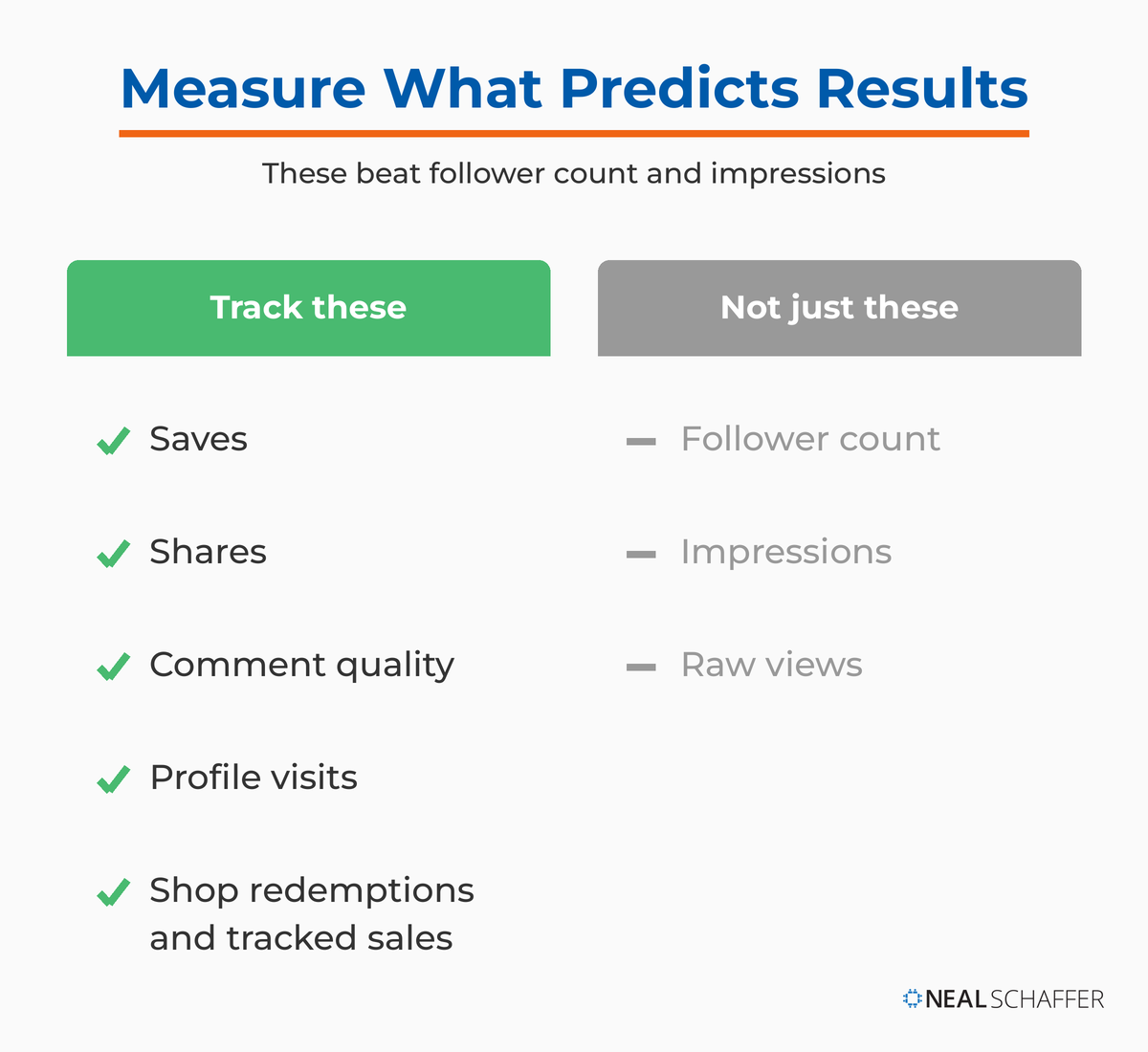
Saves and shares matter most because they signal intent. A save means someone wants to act later, and a share means someone trusted the recommendation enough to pass it along. Read the comments too, since a thread full of “where do I buy this” tells you more than a high view count ever will. When you run Spark Ads or TikTok Shop, you also get hard numbers: link clicks, code redemptions, and attributed sales that let you tie a creator partnership to revenue.
One more habit worth keeping is patience. TikTok videos can keep surfacing for weeks after they post, so a campaign that looks quiet on day three can compound. Judge results over a window, not a day, and weight the creators who drive saves, comments, and sales above the ones who only rack up impressions.
Frequently Asked Questions
Pricing varies widely by tier, niche, and deliverables, so there is no single rate. Nano and micro creators are far more affordable than macro creators and often deliver better engagement, which is why they suit most budgets. Treat any rate card as a starting point and negotiate based on usage rights and exclusivity.
Fewer than you think. Because the algorithm drives reach, a creator with strong engagement and a tight niche can outperform a much larger account. For most brands, nano and micro creators in the 1,000 to 100,000 range offer the best mix of trust, fit, and cost.
Yes, if your audience is on the platform. Small brands benefit especially from nano creators and TikTok Shop, since both lower the cost of entry. Even B2B brands find traction when a founder or subject-matter expert creates genuinely useful content rather than a polished pitch.
Yes. The FTC requires creators to clearly disclose any material connection to a brand, including free product, on every sponsored post. Both the creator and the brand are responsible, so build disclosure requirements into your contracts and confirm they appear where viewers will see them.
Put These TikTok Influencer Tactics to Work
TikTok rewards brands that trust creators and measure what matters. Pick partners on fit and creative range instead of follower count, brief them light, disclose clearly, and judge the work on saves, shares, and sales. Do that, and the platform stops feeling unpredictable and starts producing repeatable results. If you want the platform numbers behind these decisions, the latest TikTok statistics are worth bookmarking.
If you would like help building a TikTok creator program that fits alongside your other channels, that is the kind of work I do as a Fractional CMO. And if you want the strategic thinking behind all of it, you can download a free preview of The Age of Influence to go deeper on how to build real influence with creators.
Actionable advice for your digital / content / influencer / social media marketing.
Join 13,000+ smart professionals who subscribe to my regular updates.
