

Most businesses focus on selling what they have. Industry leaders focus on creating what customers will want next.
That’s the core difference between upstream and downstream marketing. Upstream marketing shapes your future through research and innovation. Downstream marketing drives today’s sales and conversions. Master both? You’ll build a business that wins now and later.
Here’s the thing: I’ve spent over two decades helping companies get this balance right. As a Fractional CMO, author of six books including Digital Threads, and someone who’s taught marketing at universities across three continents, I’ve watched businesses struggle when they lean too heavily on one approach. The companies that thrive? They integrate both strategies intentionally. Let me show you how.
Key Takeaways
✅ Upstream marketing focuses on long-term strategy, market research, and product development before you go to market
✅ Downstream marketing handles immediate sales, promotions, and customer conversion through tactical execution
✅ Research shows the optimal balance is roughly 60% brand-building (upstream) and 40% activation (downstream)
✅ Companies with strong market research see 10% higher success rates on product launches
✅ Both approaches require different metrics, timelines, and resources, but work best when integrated
What Is Upstream Marketing?
Upstream marketing is the strategic work that happens before a product or service hits the market. It involves identifying future opportunities, understanding evolving customer needs, analyzing competitive gaps, and shaping product development. Think of it as the “what should we build and for whom?” phase of marketing.
A tech company spotting growing demand for wearable health devices? That’s upstream thinking. They’re researching trends, analyzing customer pain points, and positioning products before development even begins.

Peter Drucker famously said, “Business has only two functions: marketing and innovation.” Upstream marketing is where those two functions meet.
What Are the Key Components of Upstream Marketing?
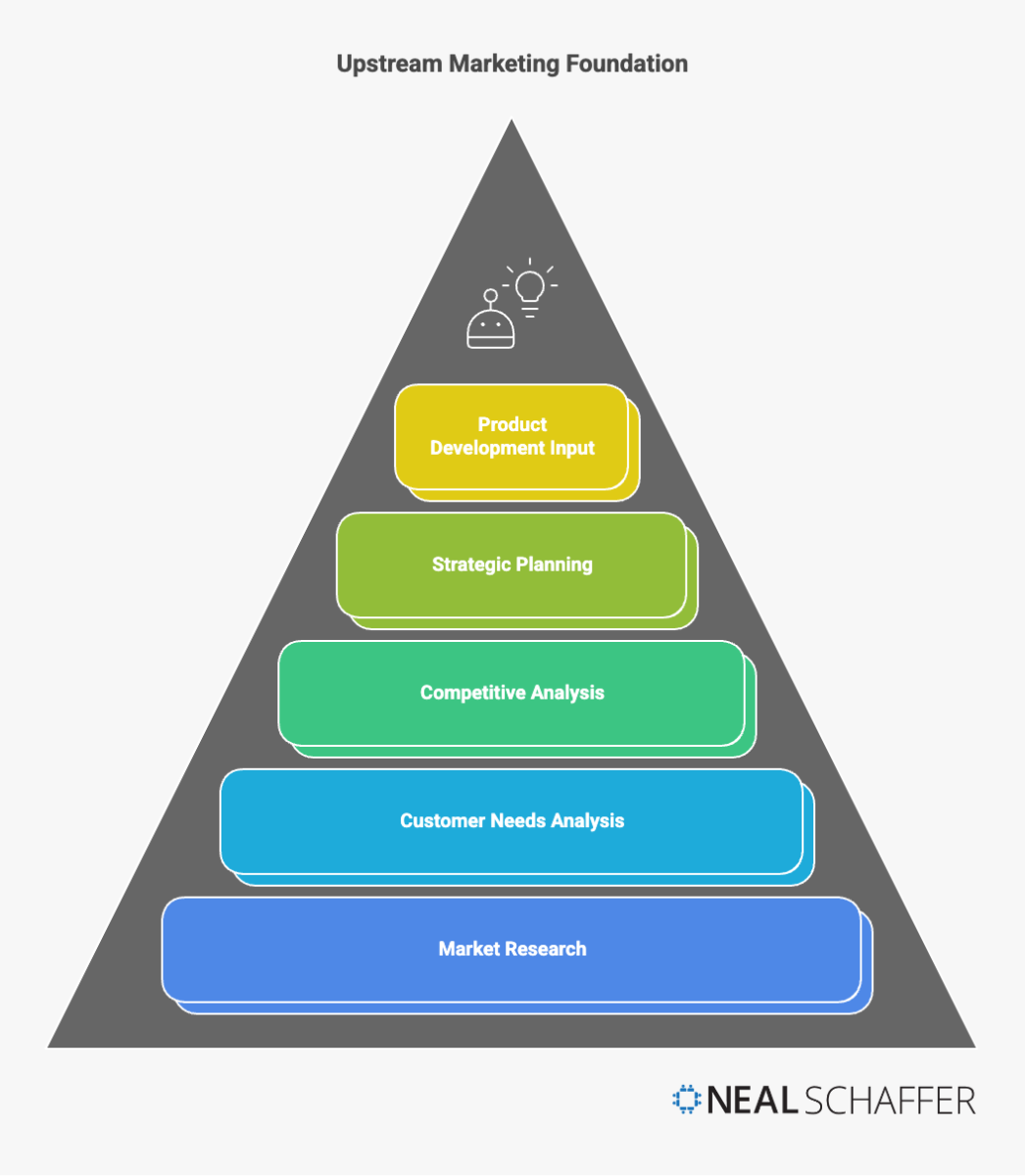
The building blocks of upstream marketing set the foundation for everything else:
| Component | What It Does | Business Impact |
|---|---|---|
| Market Research | Identifies untapped opportunities and analyzes trends | Informed product decisions |
| Customer Needs Analysis | Reveals evolving preferences and pain points | Better product-market fit |
| Competitive Analysis | Maps competitor positioning and gaps | Differentiation opportunities |
| Strategic Planning | Defines long-term goals and resource allocation | Sustainable growth trajectory |
| Product Development Input | Guides innovation based on market insights | Higher launch success rates |
Here’s a stat that should get your attention: according to G2 research, products backed by solid market research are significantly more likely to succeed. Meanwhile, 34% of failed startups cite lack of proper product-market fit as a key reason for failure. That’s upstream work they skipped.
Why Does Upstream Marketing Matter for Long-Term Growth?
Upstream marketing creates value that compounds over time. When you invest in understanding where your market is heading (not just where it is today), you position yourself to lead rather than follow.
Consider what this looks like in practice:
- Brand positioning that establishes authority before competitors even enter the space
- Product innovation driven by actual customer demand, not assumptions
- Market entry timing that captures emerging opportunities early
- Strategic partnerships built on shared market intelligence
I’ve written extensively about how understanding what a CMO does connects strategy to execution. The upstream work is where CMOs earn their keep: setting direction, not just optimizing tactics.
What Is Downstream Marketing?
Downstream marketing converts market opportunities into actual sales. It’s the execution phase where strategic insights become campaigns, promotions, and customer interactions that drive immediate revenue. This is “how do we sell what we’ve built?” territory.
When you’re running Facebook ads, optimizing your email marketing campaigns, or refining your sales funnel, you’re doing downstream work. It’s tactical, measurable, and focused on near-term results.
What Tactics Define Downstream Marketing?
Downstream marketing lives in the specifics. Here’s what it looks like in action:
| Tactic | Immediate Goal | How to Measure Success |
|---|---|---|
| Targeted Advertising | Reach potential customers | Conversion rates, CPM, ROAS |
| Sales Promotions | Boost short-term revenue | Revenue lift, units sold |
| Content Marketing | Engage and nurture leads | Engagement, lead quality |
| Email Campaigns | Drive direct response | Open rates, click-through, conversions |
| Social Media Marketing | Build awareness and engagement | Reach, engagement rate, traffic |
The beauty of downstream marketing? Everything is measurable. You can see exactly how your content marketing ROI stacks up or whether your LinkedIn marketing strategy is actually moving the needle.
Is Your LinkedIn Not Delivering Results?
Just released: my new book to help professionals, entrepreneurs, and business owners maximize LinkedIn for real growth.
With years of LinkedIn expertise, Maximizing LinkedIn for Business Growth offers actionable steps to build your brand, expand your network, and drive results.
Start leveraging LinkedIn like never before—grab your copy now! Click the cover or button below to buy on Amazon.

What Metrics Should You Track for Downstream Success?
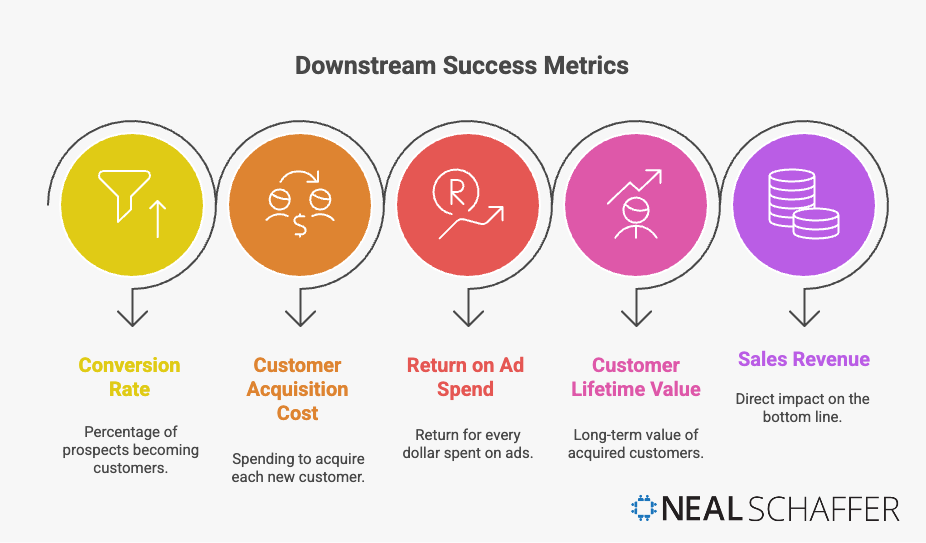
Focus on these numbers:
- Conversion Rate: What percentage of prospects become customers?
- Customer Acquisition Cost (CAC): How much are you spending to get each new customer? Industry benchmarks vary widely, but knowing your number is essential.
- Return on Ad Spend (ROAS): For every dollar in, how much comes back?
- Customer Lifetime Value (CLV): What’s the long-term value of customers you acquire?
- Sales Revenue: The ultimate downstream metric: direct impact on the bottom line.
Here’s something I remind my Fractional CMO clients: downstream metrics are only useful if you’re tracking them against clear goals. Random numbers mean nothing without context.
What Are the Key Differences Between Upstream and Downstream Marketing?
Understanding where upstream marketing ends and downstream marketing begins helps you allocate resources, set expectations, and measure the right things at the right time.
How Do Upstream and Downstream Marketing Compare?
| Aspect | Upstream Marketing | Downstream Marketing |
|---|---|---|
| Time Horizon | Long-term (months to years) | Short-term (days to months) |
| Primary Focus | Identifying opportunities, innovation | Driving sales, conversions |
| Key Activities | Research, strategic planning, product development | Advertising, promotions, sales enablement |
| Success Metrics | Brand awareness, market positioning, innovation pipeline | Conversion rates, ROI, revenue |
| Team Involvement | Strategy, R&D, product teams | Sales, marketing execution, customer service |
| Budget Allocation | Research, development, analysis tools | Advertising, campaigns, CRM systems |
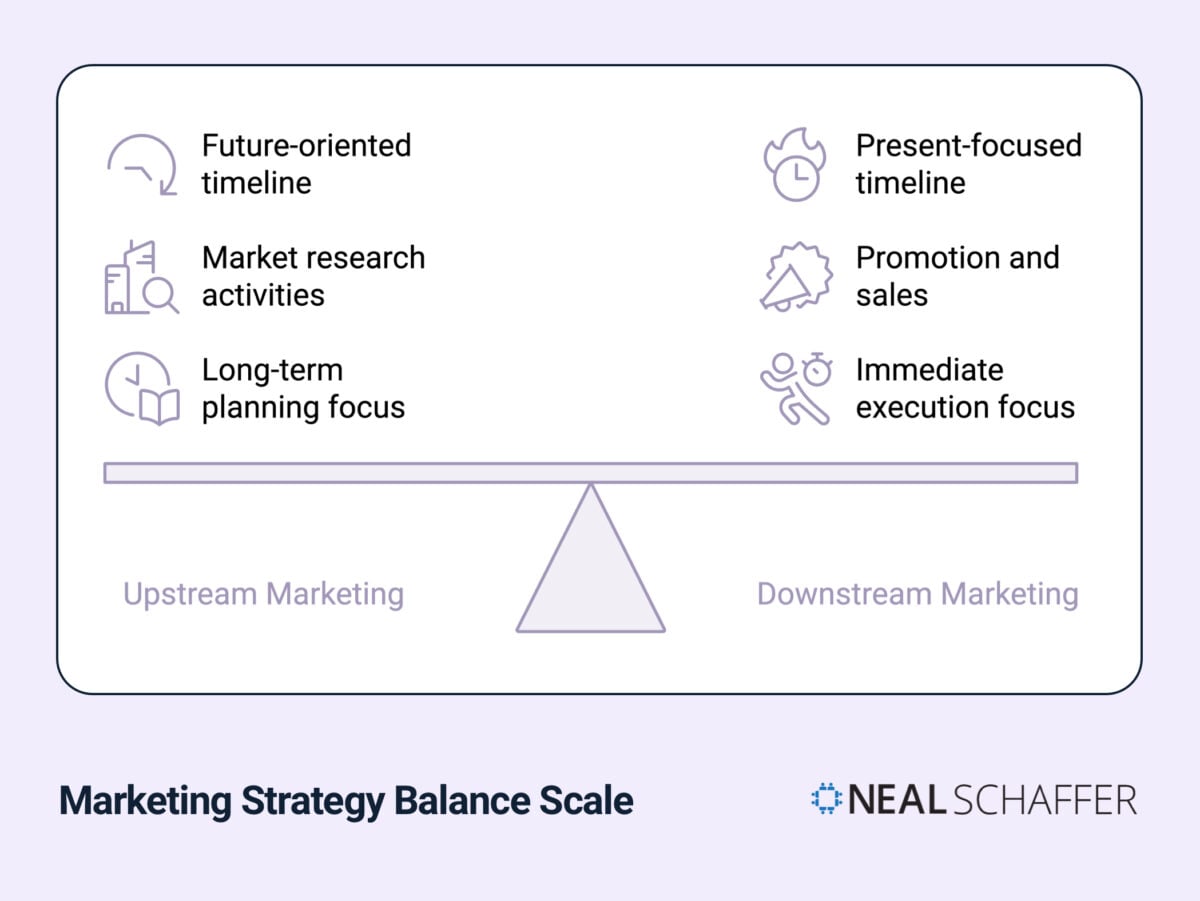
According to Shopify: “Upstream marketing focuses on understanding and influencing the desires of the consumer over time, while downstream marketing aims to drive near-term sales.”
How Should You Balance Both Approaches?
Les Binet and Peter Field’s landmark research, The Long and the Short of It, found that optimal marketing effectiveness comes from splitting investment roughly 60% toward brand-building (upstream) and 40% toward activation (downstream).
That ratio isn’t arbitrary. Their analysis of hundreds of campaigns showed that companies over-indexing on short-term activation eventually hit diminishing returns. Brand investment creates the base that makes activation work harder.
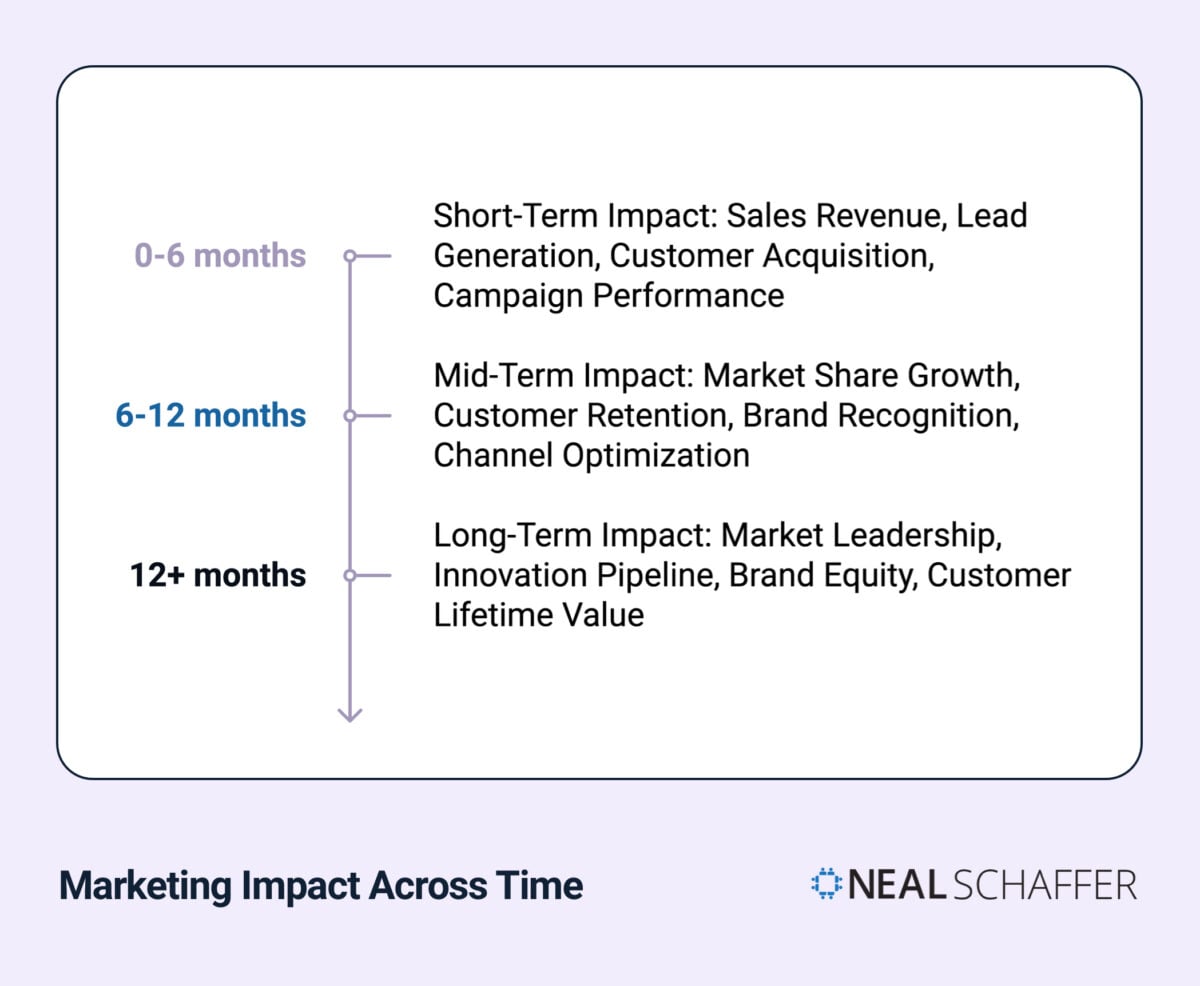
But here’s where it gets practical: Gartner’s CMO Spend Survey found marketing budgets dropped to 7.7% of company revenue. When budgets tighten, most companies cut upstream work first. That’s a mistake. You’re trading future growth for today’s survival.
How Do You Integrate Upstream and Downstream Marketing?
The real competitive advantage comes from making these approaches work together. Not upstream OR downstream. Upstream AND downstream, connected by shared goals and feedback loops.
What Does Effective Integration Look Like?
| Phase | Upstream Focus | Downstream Focus | Integration Point |
|---|---|---|---|
| Planning | Market research, opportunity identification | Campaign strategy, channel selection | Shared customer insights |
| Development | Product positioning, messaging framework | Creative assets, sales materials | Consistent brand story |
| Execution | Strategic timing, market entry | Campaign launch, promotion timing | Coordinated go-to-market |
| Measurement | Brand metrics, market position | Performance metrics, revenue | Unified analytics dashboard |
What Are the Critical Success Factors?
- Aligned Objectives: Your upstream insights should directly inform downstream tactics. If research shows customers care about sustainability, your campaigns better reflect that.
- Shared Data: Market research can’t live in a silo. The insights your strategic team uncovers need to flow into your social media strategy and content plans.
- Coordinated Timing: Launch campaigns when market conditions (upstream insight) align with business readiness (downstream capability).
- Feedback Loops: Downstream performance data should inform upstream strategy. What’s converting? What’s not? That’s valuable market intelligence.
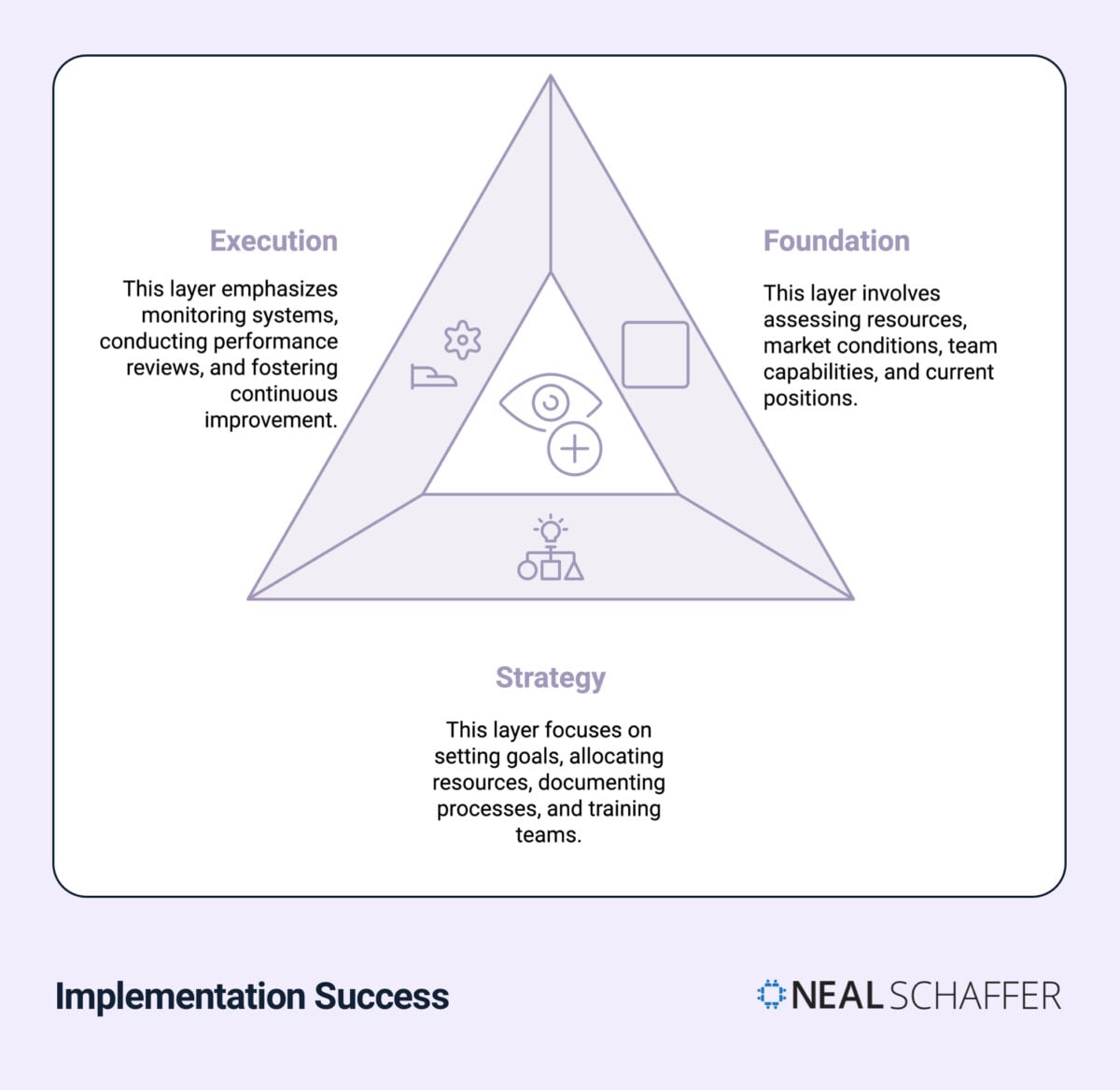
This integration is where most companies fail. They treat upstream and downstream as separate departments instead of connected phases of the same process.
What Are Real Examples of Upstream vs Downstream Marketing?
Theory is useful. Examples are better.
Upstream Marketing Examples
- Apple researching smartphone user frustrations before developing the iPhone, not just making a better flip phone
- Netflix analyzing streaming behavior data to decide which original content to produce
- Tesla identifying growing environmental concerns and infrastructure gaps before entering the EV market
- A B2B SaaS company conducting customer interviews to identify an underserved market segment before building a new product tier
Downstream Marketing Examples
- Amazon’s personalized product recommendations based on browsing history
- Coca-Cola’s “Share a Coke” campaign putting names on bottles to drive social sharing and immediate sales
- Your company’s email marketing campaign promoting a flash sale to existing customers
- Retargeting ads reaching people who abandoned their shopping cart
The pattern? Upstream asks “what should exist?” Downstream asks “how do we sell what exists?”
How Do You Get Started with Both Approaches?
If you’re reading this thinking “we’re way too heavy on one side,” here’s how to rebalance:
For Companies Lacking Upstream Marketing
- Audit your customer knowledge: When’s the last time you actually talked to customers about their evolving needs (not just satisfaction surveys)?
- Monitor market trends: Set up systems to track where your industry is heading. Marketing technology trends change fast.
- Analyze competitors strategically: Not just what they’re doing now, but where they’re positioning for the future.
- Connect product and marketing: If these teams don’t talk regularly, you’re missing integration opportunities.
For Companies Lacking Downstream Marketing
- Measure what matters: If you can’t tell me your CAC, conversion rate, or content marketing ROI, start there.
- Build repeatable campaigns: Document what works. Create templates. Stop reinventing the wheel.
- Optimize your funnel: Where are prospects dropping off? Fix the leaks before pouring in more traffic.
- Invest in execution tools: The right social media management tools and analytics platforms make downstream work scalable.
FAQ: Upstream vs Downstream Marketing
Upstream marketing focuses on strategic planning, market research, and product development before going to market. Downstream marketing handles promotional activities, sales optimization, and customer conversion after products are ready. Upstream is about “what to build and for whom,” while downstream is “how to sell what you’ve built.”
Both are essential and work together. Research from Les Binet and Peter Field suggests an optimal balance of roughly 60% brand-building (upstream) and 40% activation (downstream). Overemphasizing either leads to diminishing returns.
Key upstream activities include market research, competitive analysis, customer needs assessment, product development input, brand positioning strategy, and long-term planning. These activities shape what you bring to market and how you position it.
Upstream marketing success is measured through brand awareness metrics, market positioning studies, share of voice, innovation pipeline health, and long-term market share growth. These metrics take longer to show results than downstream conversions.
Yes. Upstream marketing doesn’t require massive budgets. Customer conversations, competitive research, and strategic planning are accessible to any size business. The key is making time for strategic thinking alongside tactical execution.

Ready to Transform Your Marketing Strategy?
Understanding upstream vs downstream marketing is just the start. The real work is building systems that connect both approaches into a cohesive strategy.
If you’re serious about getting this right, I can help. Grab a copy of Digital Threads for a practical playbook on modern marketing strategy, or download the free preview to see if it’s right for you.
Need hands-on strategic guidance? Learn more about my Fractional CMO services and how I help businesses build marketing that actually works, both today and tomorrow.
Actionable advice for your digital / content / influencer / social media marketing.
Join 13,000+ smart professionals who subscribe to my regular updates.
