

People ask me some version of the same question almost every week: what is influencer marketing, and is it actually worth the effort for a business like mine? I wrote a whole book about it, The Age of Influence, and I teach the subject at UCLA Extension. So I have strong opinions about where most explanations get it wrong. Most of them treat it as a transaction. You find someone with a big following, you pay them, they post. That version works about as well as you would expect, which is to say not very well.
Influencer marketing done right is a practice, not a purchase. It is a strategy for building relationships with the people your customers already trust, then collaborating with them so your message reaches an audience that has reasons to listen. That distinction is the whole game. Get it, and the channel becomes one of the most efficient things you can do in marketing. Miss it, and you join the long list of brands who spent money on a single sponsored post and wondered why nothing happened. I am Neal Schaffer, and after more than a decade of working in this space as a Fractional CMO and writing the book on it, let me walk you through what the practice really is and how to do it well.
Key Takeaways
✅ Influencer marketing is a strategy of collaborating with content creators who hold trust with a community, not a one-off transaction where you pay for a post and hope for sales.
✅ It works because people trust recommendations from other people far more than they trust advertising, a finding Nielsen has documented for years.
✅ The money has followed that trust. US influencer marketing spending passed $10 billion in 2025, and 87% of marketers expect to raise their budgets again.
✅ The smart move is rarely the biggest name. Brands are shifting down-market toward nano and micro creators, and toward people who already have affinity with the brand.
✅ Treat it like a relationship and measure it honestly. The brands that win define their goal first, then pick the creators and metrics that match it.
What is influencer marketing?
Influencer marketing is a marketing strategy in which a brand collaborates with content creators who hold influence over a community, so those creators can introduce the brand to an audience that trusts them. The collaboration usually involves co-creating or sharing content. The point is borrowed trust: the creator’s audience listens to the creator, and that attention transfers to you.
That is a different question from “what is an influencer.” If you want the definition of the person, I cover that in detail in what is an influencer. Here we are talking about the practice. One of my own answers, the one I have given on stages for years, is that influencer marketing is what happens when people introduce great products to their audience for some form of compensation or through a genuine relationship. The compensation part matters less than the relationship part, which is the piece most brands skip.
It helps to place this in context. In my SES framework from Digital Threads, the three workhorses of modern marketing are search, email, and social. Influencer marketing lives inside social, but its real value is that it borrows credibility you cannot manufacture on your own channels. You can say you are great. It lands very differently when someone your customer already follows says it for you.
Why does influencer marketing work?
Influencer marketing works because trust does not transfer from brands the way it transfers from people. Audiences discount advertising almost automatically, but they extend real credibility to creators they choose to follow. When a trusted creator vouches for you, you inherit a slice of that credibility, which is something no amount of ad spend can buy outright.
This is not a new idea, it is just a measurable one. Nielsen has found for years that recommendations from friends and family remain the most trusted form of advertising, well ahead of paid formats. Influencer marketing is the structured version of that instinct. You are not buying an ad slot. You are paying to be recommended by someone whose recommendation already carries weight.
The reach of that trust has grown enormous. Creators have become a primary way people learn about, well, almost everything. Pew Research Center found that about one in five US adults regularly get their news from influencers, and among adults aged 18 to 29 that share rises to 38%. If creators now shape how people understand current events, it is no surprise they shape which products people buy. Goldman Sachs Research sized the broader creator economy at roughly $250 billion, with a projection to nearly double to $480 billion by 2027 and around 50 million people creating worldwide. Brand deals already account for about 70% of how those creators earn. That is the practical center of gravity for the whole field, and it is why influencer marketing stopped being a fad a long time ago.
How big is influencer marketing in 2026?
Influencer marketing is now a core marketing channel, not an experiment funded with leftover budget. US influencer marketing spending crossed $10 billion in 2025, and budgets keep climbing. The clearest signal is not the size of the number but the direction of intent: marketers are deciding this works and committing more money to it.
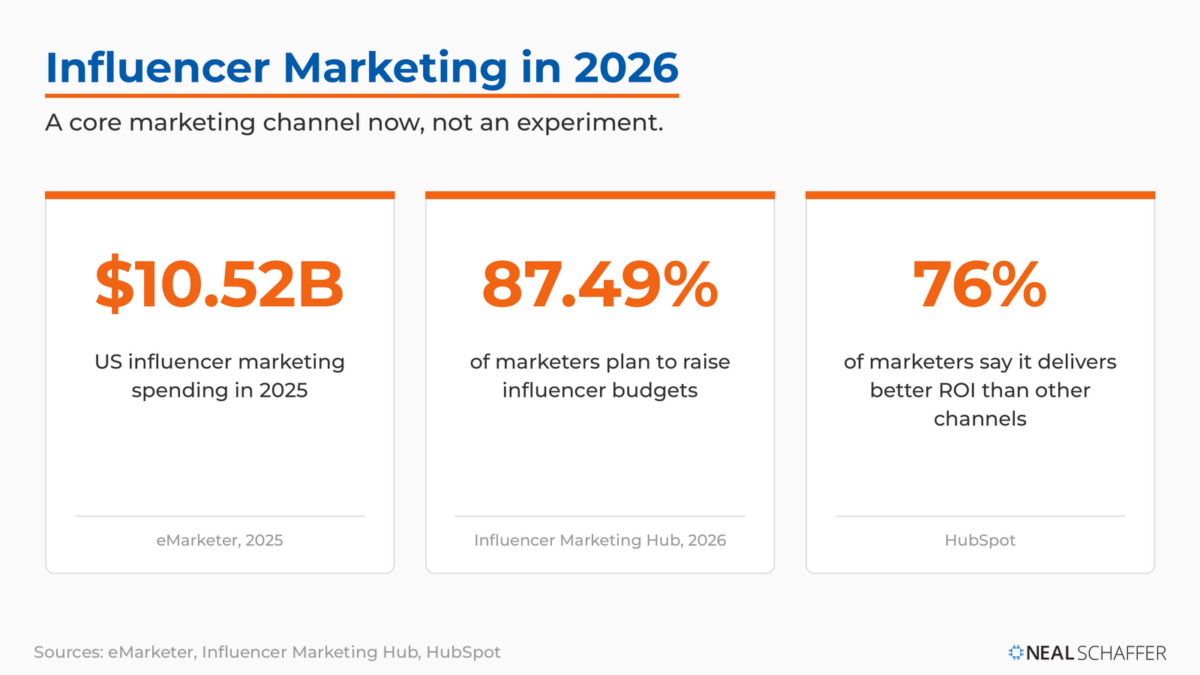
The hard figures back that up. eMarketer reported that US influencer marketing spending surpassed $10 billion in 2025, reaching about $10.52 billion, a year earlier than its own analysts had forecast. As eMarketer’s Jasmine Enberg put it, “Influencer marketing is maturing and diversifying.” On the brand side, the Influencer Marketing Hub’s 2026 benchmark found that 87.49% of marketers expect to increase their influencer budgets, and 72.22% plan to raise them by 50% or more. If you want the full picture of where the numbers are heading, I keep a running breakdown of the influencer marketing statistics.
The return is a big part of why budgets are growing. HubSpot’s research found that 76% of marketers say influencer marketing delivers better ROI than their other channels, with smaller creators often producing the strongest returns. I will be honest about the catch, though, because too many guides skip it: that ROI is not automatic. It shows up for brands that set a clear goal and measure against it, and it stays invisible for brands that post and pray.
What are the different types of influencers?
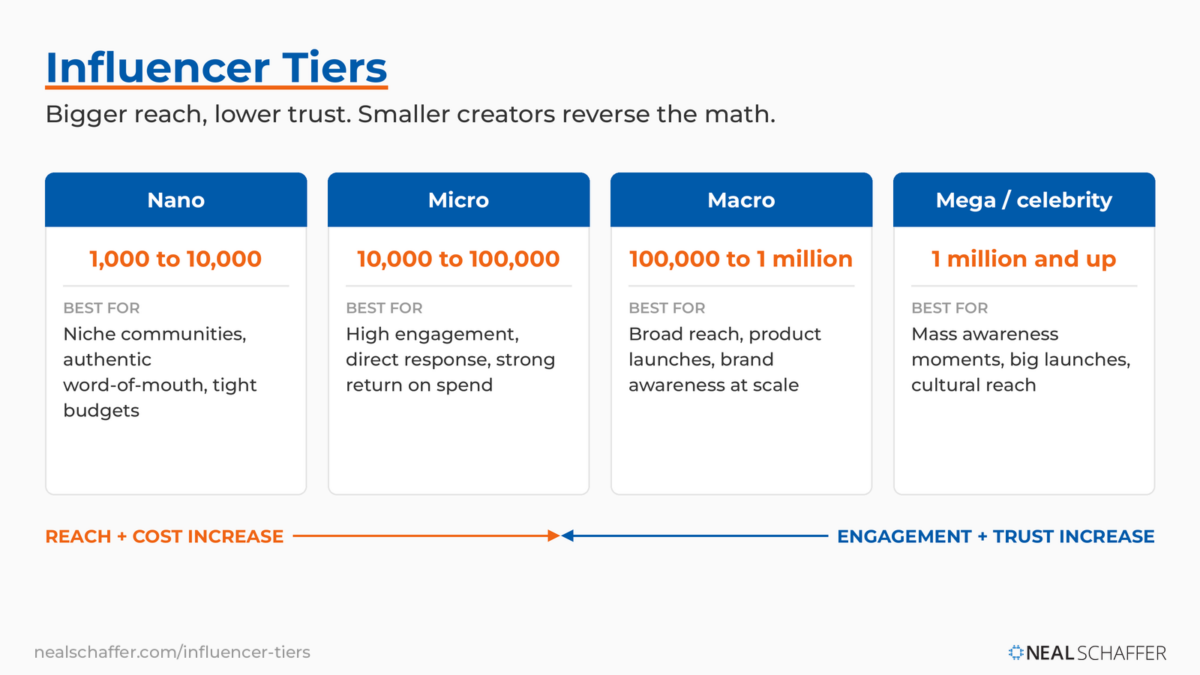
Influencers are commonly sorted by audience size, from nano creators with a few thousand followers up through micro, macro, mega, and celebrity tiers. Each tier trades reach for intimacy. The bigger the audience, the broader the reach and the higher the cost, but usually the lower the engagement and the weaker the personal trust. Smaller creators reverse that math.
I break the size tiers down in full under influencer tiers, but here is the practical shape of it:
| Tier | Rough follower range | Best for |
|---|---|---|
| Nano | 1,000 to 10,000 | Niche communities, authentic word-of-mouth, tight budgets |
| Micro | 10,000 to 100,000 | High engagement, direct response, strong return on spend |
| Macro | 100,000 to 1 million | Broad reach, product launches, brand awareness at scale |
| Mega / celebrity | 1 million and up | Mass awareness moments, big launches, cultural reach |
The market is voting clearly with its budget. The Influencer Marketing Hub’s 2026 data shows expansion intent concentrated in the nano and micro tiers while macro and celebrity usage sits roughly flat. That tracks with what I see in client work: a portfolio of nano influencers and micro influencers usually outperforms a single expensive macro influencer for anything beyond pure awareness.
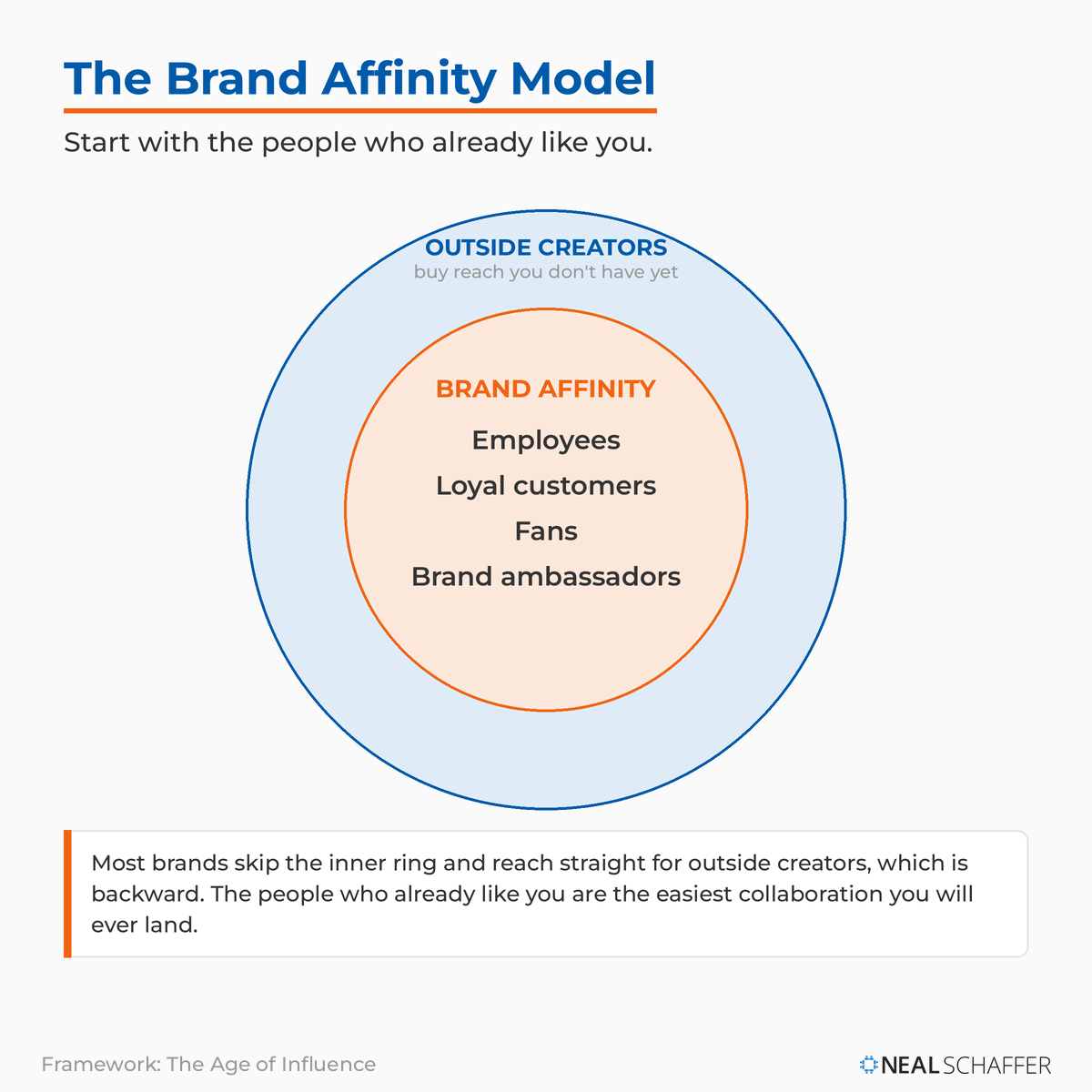
But follower count is only one lens, and frankly it is the one most people overuse. In The Age of Influence I argue for sorting influencers two other ways. The first is by content type, because a podcaster, a YouTuber, and a newsletter writer reach you in very different modes. The second, and the one I care about most, is by brand affinity. Some influencers already have a relationship with your brand. Your employees. Your loyal customers. Your fans. The brand ambassadors who would talk about you whether you paid them or not. Most brands ignore this group entirely and reach straight for outside creators, which is backward. The people who already like you are the easiest collaboration you will ever land, and often the most credible. A newer category is worth watching too: fully AI-generated virtual influencers, which a handful of brands now use as always-on creators.
How do you build an influencer marketing strategy?
Building an influencer marketing strategy starts with a goal, not a creator. Before you reach out to anyone, decide what you want: brand awareness, reusable content, direct sales, or a new audience. That goal determines which tier, platform, and type of influencer fit. Skip it and you pay for the wrong thing.
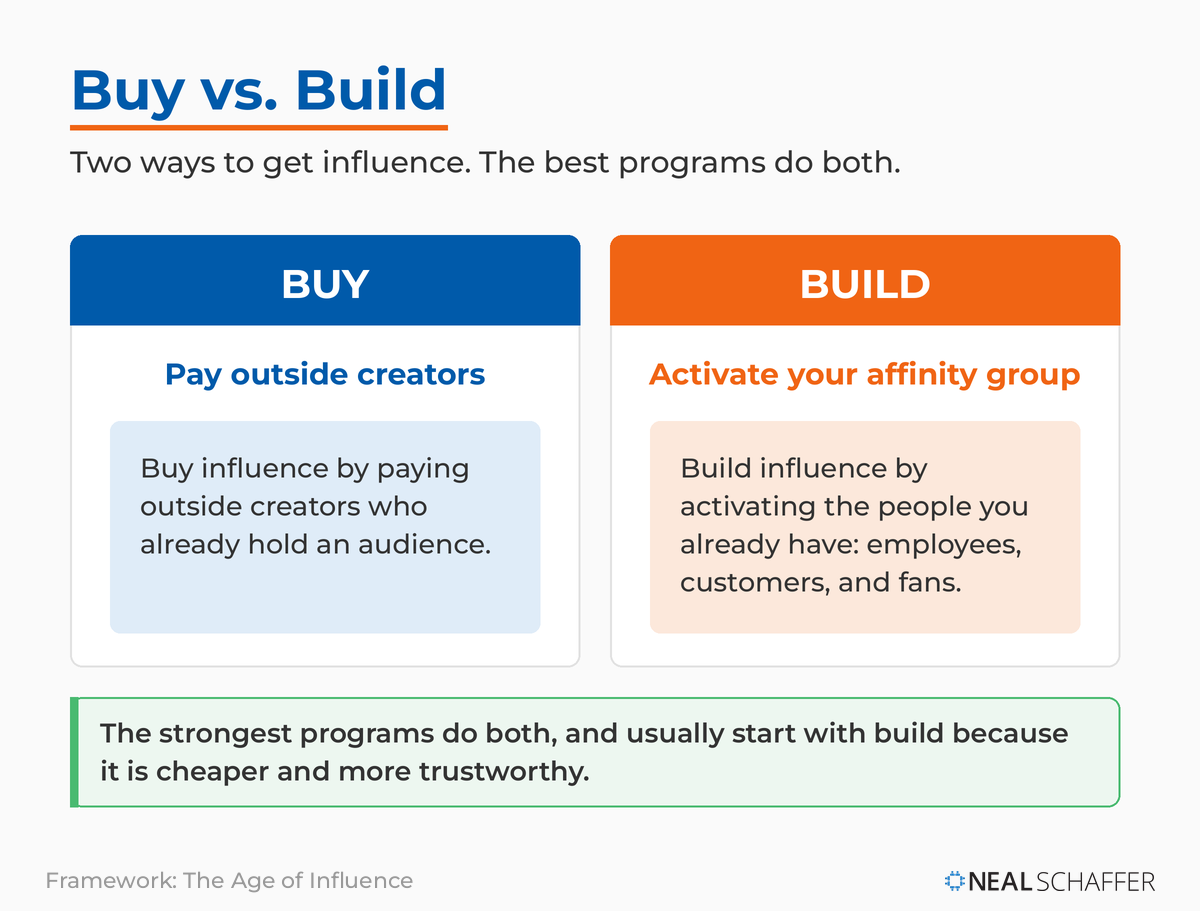
Once the goal is set, I think about it as a buy-versus-build decision, which is a framework I lay out in The Age of Influence. You can buy influence by paying outside creators, or you can build it by activating the affinity group you already have, your employees, customers, and fans. The strongest programs do both, and they usually start with the build side because it is cheaper and more trustworthy. When you are starting an influencer marketing program around the brand affinity model, a good chunk of your early participants will come from that group, which makes nano-level creators a natural place to begin.
For finding outside creators, you have plenty of options, and I walk through the methods for finding influencers. Whatever route you take, do your homework on social listening first. I lean on a social listening tool like Brand24 to see who is already talking about my brand and my niche, because those people are warm leads. A broader social media management platform like Agorapulse then helps me fold influencer outreach into the rest of my social activity instead of running it as a silo. For the wider stack of options, I track the influencer marketing tools I have tried.
A few things to keep in mind as you reach out:
- Ask creators how they like to collaborate. They have worked with other brands and can tell you what works in your space.
- Pay on a model that matches your goal. How influencers make money ranges from flat fees to affiliate commissions to free product, and the right structure depends on whether you want awareness or sales.
- Think in relationships, not campaigns. The real returns come from an ongoing partnership with a creator who genuinely gets your brand, not from a single post. That long-term mindset is the core argument I make in The Age of Influence.
One more thing. If you are reading this as someone who wants to be on the other side of the table, becoming an influencer follows a lot of the same principles in reverse, and it is more attainable than most people assume.
Make LinkedIn Your Best Source of Clients
My latest book helps professionals, entrepreneurs, and business owners turn LinkedIn from a static profile into a real source of clients and growth.
Maximizing LinkedIn for Business Growth gives you clear, practical steps to build a profile that gets noticed and a network that actually sends business your way.
Grab your copy on Amazon and put it to work this week. Click the cover or the button below to get started.

How do you measure influencer marketing ROI?
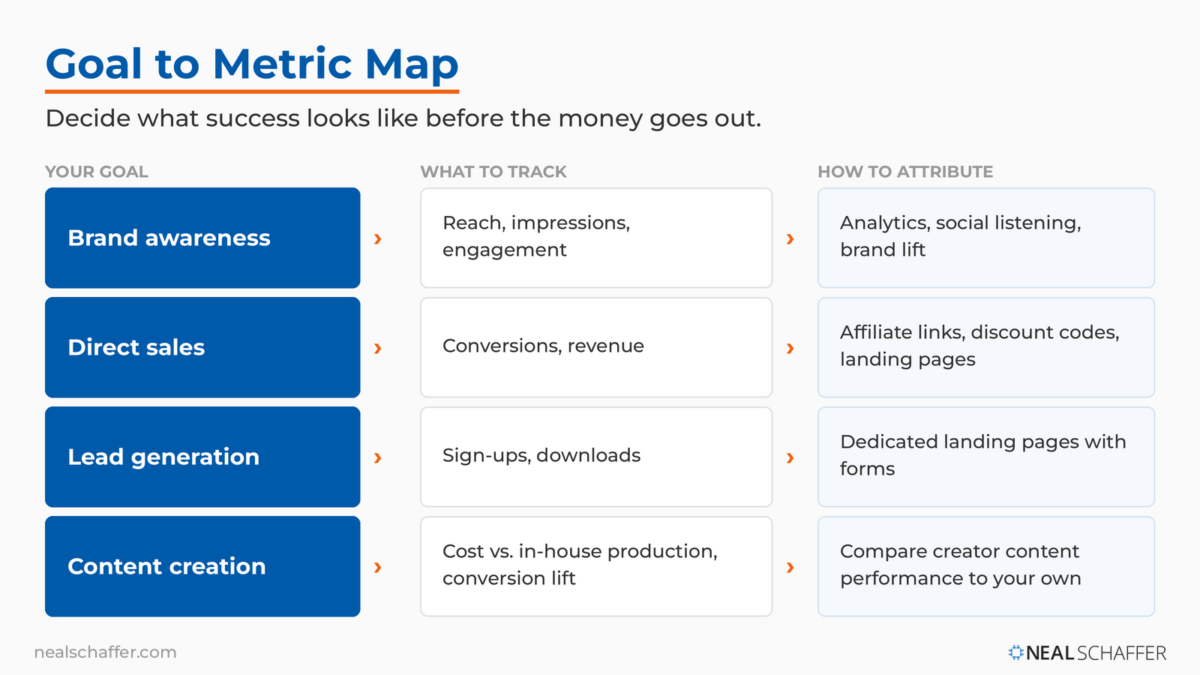
You measure influencer marketing ROI by tying each campaign to the specific goal you set, then choosing the metric that proves it. Awareness campaigns get measured on reach and engagement, direct-response campaigns on cost per lead or per sale, and content collaborations on the value of the assets produced versus what they would have cost you to make in-house.
In practice, this is where most programs fall apart. Promo codes and affiliate links are the most common ways brands track results, which works well for sales but says little about awareness. The Influencer Marketing Hub flagged exactly this caution in its 2026 report: the budget surge reflects planned investment, not confirmed performance, and intent can outrun a team’s readiness to deliver. Decide what counts as success before the money goes out, not after.
Here is how I map goals to metrics:
| Your goal | What to track | How to attribute |
|---|---|---|
| Brand awareness | Reach, impressions, engagement | Analytics, social listening, brand lift |
| Direct sales | Conversions, revenue | Affiliate links, discount codes, landing pages |
| Lead generation | Sign-ups, downloads | Dedicated landing pages with forms |
| Content creation | Cost vs. in-house production, conversion lift | Compare creator content performance to your own |
Goals run the full funnel, which is why no single metric works for everyone. Sprout Social’s data on B2B brands shows brand awareness leading the goal list, with credibility, engagement, and revenue spanning the rest of it. When direct attribution is hard, earned media value, the estimated cost of buying ads to match a creator’s organic reach, is a reasonable stand-in. Just do not confuse a vanity metric with a business result. If your real goal is sales, impressions are a clue, not a scoreboard.
What are the FTC rules for influencer marketing?
In the United States, the FTC requires anyone with a material connection to a product, meaning they were paid, gifted, or compensated, to clearly and conspicuously disclose it. This applies to both the brand and the creator, and to every post in a campaign, not just the first. Buried hashtag disclosures do not count.
The agency spells this out in plain language in its Disclosures 101 for Social Media Influencers, and it tightened the standard in its 2023 update to the Endorsement Guides, which clarified what “clearly and conspicuously” actually means across platforms. Compliance is not just a legal checkbox. A clear disclosure protects the trust that makes the whole channel work, and a sloppy one can damage both your brand and your creator. I pulled together the practical version of all this for FTC influencer guidelines so your team and your creators stay on the right side of it.
Frequently Asked Questions
No. The perception that influencer marketing belongs to large B2C brands comes from how Instagram-centric the early industry was. B2B companies work with industry thought leaders, and small businesses get strong results from nano and micro creators in tight niches. The brand affinity approach, activating employees and loyal customers, works for organizations of any size and budget.
It ranges from free product to six-figure deals, depending on the creator’s audience size and your goals. Nano and micro creators are far more affordable than macro names, which is part of why brands are shifting toward them. The better question is not what it costs but what return you are setting it up to deliver, since a cheap campaign with no measurement is the most expensive kind.
Influencer marketing is the practice, the strategy a brand uses to collaborate with creators. A social media influencer is the person, someone with a dedicated following who shapes their audience’s decisions. One is the activity, the other is the partner you do it with.
Not to start, but it helps to grow. You can begin by manually identifying creators already talking about your brand. As you scale, a social listening tool and a social media management platform save real time, and dedicated influencer platforms help with discovery and tracking once your program is large enough to justify them.
It depends on your goal. A direct-response campaign with a discount code can show results in days. Awareness and relationship-building compound over months. The brands that get the most out of the channel treat it as an ongoing relationship rather than expecting a single post to move the needle overnight.
Start Building Your Influencer Marketing the Right Way
If you take one thing from this, let it be the mindset shift: influencer marketing is a relationship business, not a transaction. Define your goal, start with the people who already have affinity for your brand, collaborate instead of dictating, disclose honestly, and measure against the outcome you care about.
That is the entire playbook, and it is more durable than any tactic that happens to be working this quarter.
When you are ready to go deeper, building an influencer marketing strategy is the next move, with the steps laid out in order. For the complete framework, including the brand affinity model and the buy-versus-build decision, grab a free preview of The Age of Influence. And if you would rather have a hand building a coordinated program alongside your other digital channels, that is exactly what I do as a Fractional CMO.
Actionable advice for your digital / content / influencer / social media marketing.
Join 13,000+ smart professionals who subscribe to my regular updates.
